




Bringing a puppy home is one of those life changes that can be exciting, adorable, and slightly chaotic all at once. One minute you’re imagining cuddles and playful adventures; the next, you’re wondering why your puppy is chewing the corner of a table.
Preparing before your puppy arrives can make those first few weeks much easier. The goal isn’t to buy every pet product available. Instead, you want to create a safe environment, establish healthy routines, prepare for veterinary care, and give your puppy appropriate opportunities to learn and explore.
This complete new-puppy checklist covers what to do before your puppy arrives, what to prepare for the first day, and how to build good habits during the first few weeks.
Before Your Puppy Comes Home
A little preparation can prevent many common problems once your puppy arrives.
1. Puppy-Proof Your Home
Puppies investigate the world with their mouths, noses, and paws. Objects that seem harmless to an adult dog can become dangerous when a curious puppy decides to chew or swallow them.
Before bringing your puppy home, inspect every room from a puppy’s perspective.
Pay particular attention to:
- Electrical cables and chargers
- Small toys and household objects
- Cleaning products
- Medications
- Toxic plants
- Human foods that are unsafe for dogs
- Trash cans
- Loose strings and cords
- Sharp objects
- Open windows or unsafe balconies
- Accessible chemicals
- Small objects that could be swallowed
Keep potentially dangerous items behind closed doors or somewhere your puppy cannot reach.
Don’t forget the bathroom, kitchen, garage, and laundry area. These spaces often contain products that aren’t safe for pets.
2. Set Up a Safe Puppy Zone
Your puppy doesn’t need immediate access to the entire house.
Create a designated area where they can eat, sleep, play, and relax while learning the household rules.
Depending on your home, this could include:
- A puppy crate
- A playpen
- A baby gate
- A comfortable bed
- Water
- Safe chew toys
- A washable floor covering
The area should be comfortable but not isolated from family life.
A safe puppy zone also gives you somewhere to place your puppy temporarily when you need to cook, clean, answer the door, or do something that requires your full attention.
3. Prepare the Essential Supplies
You don’t need an enormous shopping list. Start with the basics.
Feeding
- Puppy-appropriate food
- Food bowl
- Water bowl
- Measuring cup or feeding scoop
Walking and Identification
- Properly fitted collar
- Leash
- Identification tag
- Harness if appropriate
Sleeping and Containment
- Comfortable bed
- Appropriately sized crate
- Puppy gate or playpen if needed
Training
- Small training treats
- Treat pouch
- Enrichment toys
- Poop bags
- Cleaning supplies
Grooming
- Puppy-appropriate brush
- Nail-care equipment
- Mild dog shampoo if needed
- Dog toothbrush and toothpaste
Buy according to your puppy’s size, coat type, and individual needs rather than assuming every puppy needs exactly the same products.
4. Choose Your Puppy Food Beforehand
Changing a puppy’s diet suddenly can cause digestive upset.
If possible, find out what food your puppy has already been eating and discuss any planned change with your veterinarian.
Choose a complete and balanced food appropriate for puppies and suitable for your dog’s expected size and life stage.
Large-breed puppies, for example, can have different nutritional requirements from small-breed puppies.
Avoid creating a complicated homemade diet unless it has been properly formulated with veterinary nutritional guidance.
5. Find a Veterinarian
Don’t wait until your puppy becomes sick to figure out where the veterinary clinic is.
Choose a veterinarian before your puppy arrives and schedule an initial wellness appointment.
During the first visit, your veterinarian can assess your puppy’s general health and discuss:
- Vaccinations
- Parasite prevention
- Deworming
- Nutrition
- Growth
- Dental care
- Spaying or neutering
- Microchipping
- Exercise
- Socialization
- Breed-specific health concerns
Bring any vaccination, deworming, or medical records you received when you collected your puppy.
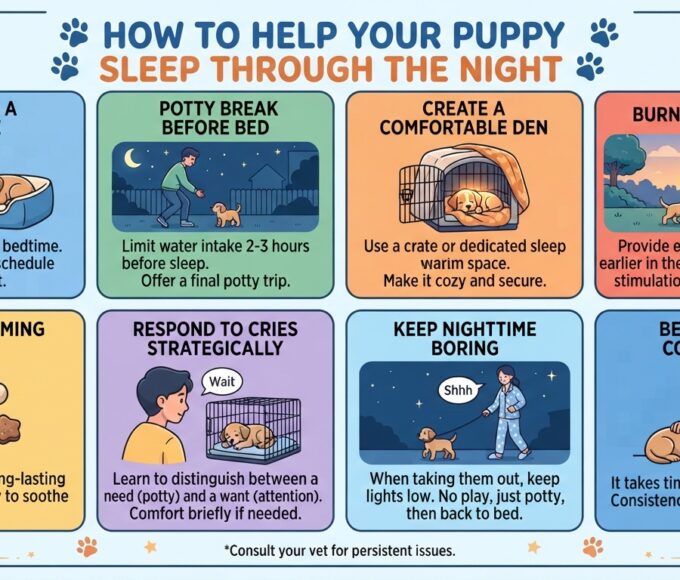
6. Prepare for the First Night
The first night away from a puppy’s mother and littermates can be unsettling.
Your puppy may cry, whine, or have difficulty settling down.
Prepare a comfortable sleeping area before bedtime. Keep the environment calm and establish a predictable routine.
A crate or puppy-safe sleeping area near your bedroom can help you monitor your puppy and make nighttime potty trips easier.
Don’t expect your puppy to sleep through the entire night immediately. Young puppies have small bladders and may need nighttime bathroom breaks.
Your First Day With the Puppy
The first day should be about helping your puppy feel safe rather than overwhelming them with activities.
7. Give Your Puppy Time to Adjust
Your puppy has just experienced a major transition.
They may be excited, nervous, sleepy, curious, or a mixture of all of these.
Give them time to explore their new surroundings at their own pace.
Avoid inviting a large crowd of visitors on the first day. Your puppy needs opportunities to rest and learn that their new home is a safe place.
8. Introduce the House Gradually
Instead of immediately allowing access to every room, start with the puppy’s safe area and gradually expand their access as they become more reliable.
This makes supervision easier and can help with house training.
Keep doors closed or use gates to prevent access to unsafe areas.
9. Begin Potty Training Immediately
You don’t have to wait several days before starting house training.
Take your puppy to the appropriate bathroom area frequently, particularly:
- After waking up
- After eating
- After drinking
- After playing
- Before bedtime
- After periods of excitement
When your puppy goes in the correct location, calmly praise them and offer an appropriate reward.
Accidents are normal.
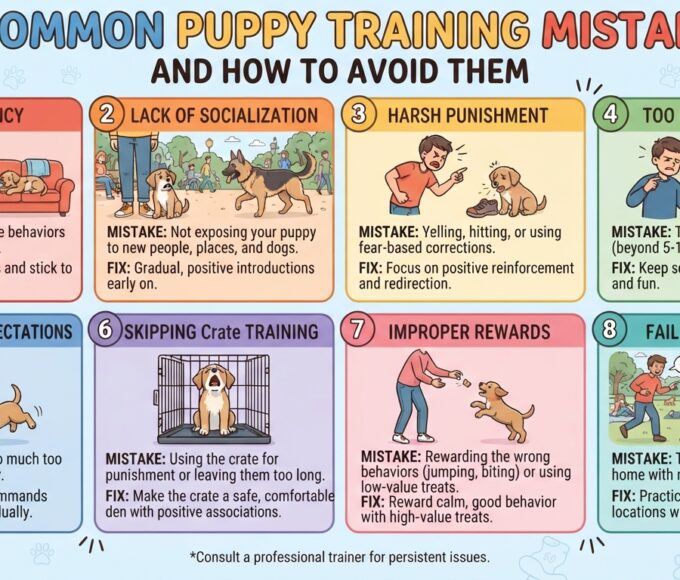
Never hit, yell at, or rub your puppy’s face in an accident. Punishment can create fear without teaching the puppy where you actually want them to eliminate.
Clean accidents thoroughly using an appropriate enzymatic cleaner so lingering odors don’t encourage repeat accidents.
Establish a Predictable Routine
10. Create a Daily Schedule
Puppies tend to benefit from predictable routines.
A typical day might include:
Morning: Potty break, breakfast, gentle play, training, and another potty opportunity.
Midday: Rest, food if appropriate for the puppy’s feeding schedule, potty breaks, enrichment, and short play sessions.
Afternoon: Training, exploration, play, and plenty of naps.
Evening: Dinner, calm interaction, potty breaks, and preparation for bedtime.
Your puppy’s exact schedule will depend on age, breed, health, feeding plan, and your household.
The important thing is consistency rather than following an exact clock.
11. Teach Basic Skills From Day One
Training doesn’t need to involve long sessions.
Young puppies often learn best through short, positive interactions.
Start with simple skills such as:
- Responding to their name
- Coming when called
- Sitting
- Waiting briefly
- Leaving objects alone
- Walking calmly
- Accepting gentle handling
Reward behaviors you want to see repeated.
For example, when your puppy voluntarily sits instead of jumping on you, reward the calm behavior.
These tiny moments throughout the day can become the foundation for excellent manners later.
Socialization: One of the Most Important Puppy Priorities
12. Introduce Your Puppy to the World Carefully
Socialization isn’t simply making your puppy meet as many people and animals as possible.
The goal is to help them develop positive associations with different experiences.
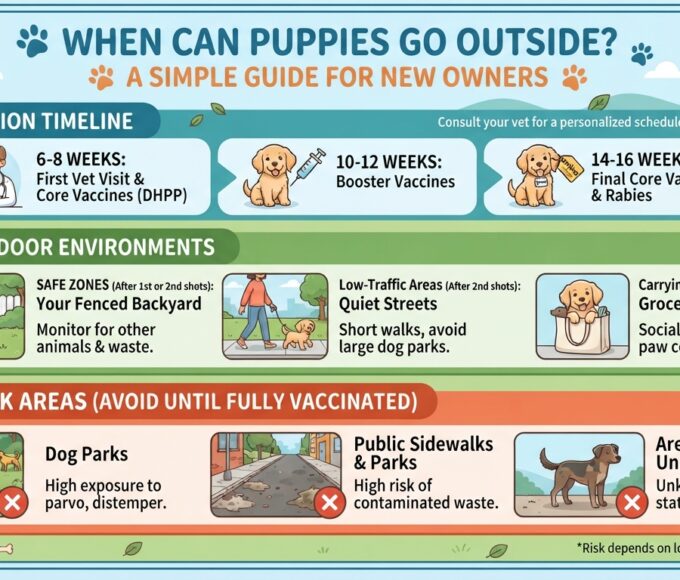
Depending on your veterinarian’s advice and your puppy’s vaccination status, gradual exposure can include:
- Different household sounds
- Car rides
- People wearing hats or uniforms
- Different floor surfaces
- Grooming equipment
- Household appliances
- Calm, healthy dogs
- Different environments
- Gentle handling
- New sights and smells
Keep experiences positive and don’t force your puppy into situations that clearly frighten them.
If your puppy becomes overwhelmed, give them distance and allow them to recover.
13. Talk to Your Veterinarian About Puppy Classes
Well-run puppy classes can provide structured training and controlled social experiences.
However, puppies have different vaccination statuses and local disease risks. Ask your veterinarian when and where socialization activities are appropriate in your area.
Socialization shouldn’t necessarily be postponed until every vaccine is complete, but safety precautions matter.
Exercise and Play
14. Don’t Try to Exhaust Your Puppy
Puppies have plenty of energy, but their growing bodies also require significant rest.
Avoid assuming that more exercise is always better.
Age, breed, size, health, and individual development all affect how much physical activity is appropriate.
Good puppy activities can include:
- Gentle play
- Short walks when appropriate
- Sniffing and exploring
- Basic training
- Food puzzles
- Supervised play with suitable dogs
- Simple retrieve games
Avoid forcing a young puppy to run long distances or perform repetitive, high-impact activities.
15. Make Mental Stimulation Part of the Routine
A puppy’s brain needs exercise too.
You can provide mental enrichment through:
- Snuffle mats
- Food puzzles
- Short training sessions
- Hide-and-seek games
- Name games
- Safe chew toys
- Simple scent games
Mental stimulation doesn’t have to be complicated. Even teaching your puppy to touch your hand with their nose can become a fun learning exercise.
Monitor Your Puppy’s Health
16. Learn What’s Normal for Your Puppy
Spend time observing your puppy’s normal behavior.
Pay attention to:
- Appetite
- Water consumption
- Energy
- Stool consistency
- Urination
- Sleep
- Breathing
- Skin and coat
- Weight gain
- Behavior
Knowing what’s normal makes it easier to notice when something changes.
17. Know When to Contact the Veterinarian
Puppies can become ill quickly, so don’t ignore significant changes.
Contact your veterinarian if your puppy develops concerning symptoms such as:
- Repeated vomiting
- Persistent diarrhea
- Severe lethargy
- Refusal to eat
- Difficulty breathing
- Collapse
- Significant pain
- Bloody stool
- Seizures
- Sudden weakness
- Possible poisoning or ingestion of a foreign object
For emergencies, contact an emergency veterinary service rather than waiting to see whether symptoms disappear.
Puppy Identification and Safety
18. Get Your Puppy Properly Identified
Puppies can be surprisingly good at finding opportunities to escape.
Use appropriate identification measures, such as:
- An ID tag
- A registered microchip
- Secure doors and gates
- Updated owner contact information
If your phone number or address changes, update your pet’s identification records.
19. Check Your Yard
If your puppy will have access to a yard, inspect it carefully.
Look for:
- Holes underneath fences
- Gaps in gates
- Toxic plants
- Sharp objects
- Chemicals
- Standing water
- Unsafe garden equipment
- Areas where the puppy could become trapped
Don’t assume a fence that contains an adult dog will automatically contain a determined puppy.
Grooming and Handling
20. Teach Your Puppy That Handling Is Normal
Even if your puppy has a short coat, they still need to become comfortable with routine handling.
Gently and briefly practice touching:
- Paws
- Ears
- Mouth
- Tail
- Legs
- Face
- Collar area
Pair handling with praise and treats.
This can make future nail trims, grooming appointments, veterinary examinations, and medication administration much easier.
Never force prolonged handling when a puppy is frightened. Keep sessions brief and gradually build their confidence.
Create a Puppy Emergency Kit
Having basic supplies available can save time when something unexpected happens.
Consider keeping:
- Gauze
- Clean towels
- Disposable gloves
- Pet-safe cleaning supplies
- Tweezers for appropriate minor uses
- Your veterinarian’s contact information
- Emergency veterinary clinic details
- A carrier or safe transport method
A first-aid kit doesn’t replace veterinary treatment. Its purpose is to help with basic first-response needs while you seek professional advice.
New Puppy Checklist
Use this quick checklist before your puppy arrives:
Home Preparation
- Puppy-proof the house
- Secure electrical cords
- Remove dangerous objects
- Store medications and chemicals
- Check plants for toxicity
- Secure doors, windows, and balconies
- Prepare a puppy-safe area
Supplies
- Puppy food
- Food bowl
- Water bowl
- Bed
- Crate or playpen
- Collar
- ID tag
- Leash
- Appropriate harness
- Safe toys
- Chew toys
- Training treats
- Grooming supplies
- Puppy-safe dental supplies
- Cleaning supplies
- Poop bags
Veterinary Care
- Choose a veterinarian
- Schedule the first wellness visit
- Gather medical records
- Discuss vaccinations
- Discuss parasite prevention
- Discuss microchipping
- Ask about nutrition
- Ask about spay/neuter timing
- Save emergency veterinary contact information
Training and Socialization
- Start name recognition
- Begin potty training
- Introduce crate or safe area positively
- Practice gentle handling
- Begin basic reward-based training
- Plan safe socialization
- Provide age-appropriate enrichment
- Establish a consistent routine
Frequently Asked Questions
What should I buy before bringing a puppy home?
Start with the basics: appropriate puppy food, food and water bowls, a comfortable bed, a crate or safe area, collar, identification tag, leash, appropriate toys, chew toys, grooming supplies, cleaning products, and training treats.
You can purchase additional products later once you understand your puppy’s individual preferences and needs.
When should a new puppy see a veterinarian?
Arrange an initial veterinary appointment soon after bringing your puppy home. Your veterinarian can review existing records and establish a care plan based on your puppy’s age, health, vaccination history, lifestyle, and local disease risks.
How do I start potty training?
Take your puppy to the appropriate bathroom area frequently, especially after waking, eating, drinking, playing, and before bedtime. Reward successful potty trips and clean indoor accidents thoroughly without punishment.
How do I make my puppy comfortable on the first night?
Create a quiet, comfortable sleeping area and maintain a calm bedtime routine. Keeping the puppy’s sleeping space near you initially can make it easier to monitor them and respond to nighttime potty needs.
How much exercise does a puppy need?
There isn’t one exercise schedule that works for every puppy. Age, breed, size, health, and development all matter. Focus on short, age-appropriate activities, play, exploration, training, and plenty of rest.
Should I socialize my puppy before all vaccinations are complete?
Ask your veterinarian about the disease risks in your area and which socialization activities are safe. Carefully controlled exposure can be valuable during puppyhood, but contact with unknown or unvaccinated animals and high-risk environments may need to be avoided.
How do I stop my puppy from chewing everything?
Provide appropriate chew toys, supervise your puppy closely, keep tempting objects out of reach, and redirect chewing toward an acceptable item. Reward your puppy when they choose an appropriate toy.
Is crate training necessary?
No. A crate can be a useful training and management tool, but it isn’t mandatory for every household. A puppy-safe room or gated area can also provide a secure place to rest.
Final Thoughts
Preparing for a puppy is about much more than buying a cute bed and a collection of toys. Your new companion needs a safe environment, appropriate nutrition, veterinary care, training, socialization, enrichment, exercise, rest, and plenty of patience.
The first few weeks may involve accidents, interrupted sleep, chewing, and plenty of questions. That’s normal. Your puppy is learning how to live in a completely new environment, and you’re learning how to care for them.
Take things one step at a time. Establish predictable routines, reward desirable behavior, introduce new experiences gradually, and give your puppy plenty of opportunities to rest.
With thoughtful preparation and consistent care, those challenging early weeks can become the foundation for a confident, healthy, and happy lifelong companion.







Leave a comment