




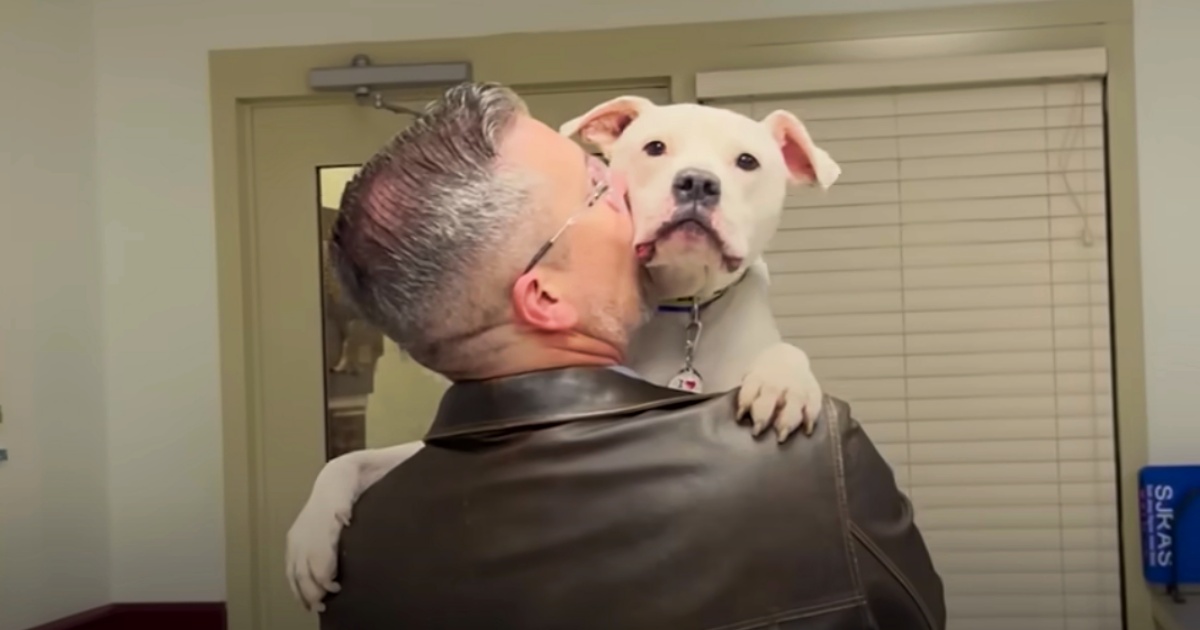
When Christopher visited a shelter hoping to adopt his first rescue dog, he wasn’t expecting to meet a puppy who would eventually become his partner in helping others.
The puppy, Cole, was deaf.
Some people might have looked at Cole’s disability and focused on the challenges it could create. Christopher saw something very different. Because his nephew had also been born deaf, the puppy immediately gave him a personal connection to the experience of living without hearing.
Instead of seeing Cole as a dog who needed to be “fixed,” Christopher saw an opportunity to understand him, train him, and show other people that a disability doesn’t determine an individual’s ability to make a difference.
What began as a rescue adoption eventually became a remarkable partnership.
A Deaf Puppy Made an Immediate Impression
Christopher had planned to adopt a rescue dog, but meeting Cole changed the direction of his search.
Cole’s deafness wasn’t something Christopher ignored. Instead, it became part of understanding how the puppy experienced the world.
Because Cole couldn’t hear spoken commands, Christopher had to find other ways to communicate with him.
That meant learning to rely on visual signals, body language, consistent routines, and other forms of communication.
The experience also gave Christopher a deeper appreciation for the similarities between Cole’s situation and that of his deaf nephew.
The puppy wasn’t simply joining his household.
Christopher began to realize that Cole could potentially help other people rethink what disability means.
Christopher Saw Potential Where Others Saw a Limitation
The idea of a deaf dog becoming a therapy dog might initially sound unusual.
Therapy dogs need to interact safely and appropriately with people in a wide variety of environments. They may encounter children, older adults, medical patients, people using mobility equipment, unfamiliar sounds and movements, and crowded spaces.
For Christopher, Cole’s temperament mattered more than his hearing ability.
Instead of asking what Cole couldn’t do, he began considering what the dog could do.
That change in perspective became an important part of their journey.
With appropriate training and preparation, Cole developed into a working therapy dog and began spending his time helping people in settings where his calm presence could make a difference.
Cole’s Deafness Changed How He Communicated
A deaf dog can learn to understand visual cues rather than spoken commands.
For Cole, communication with Christopher developed around signals and other visual information.
This required patience and consistency.
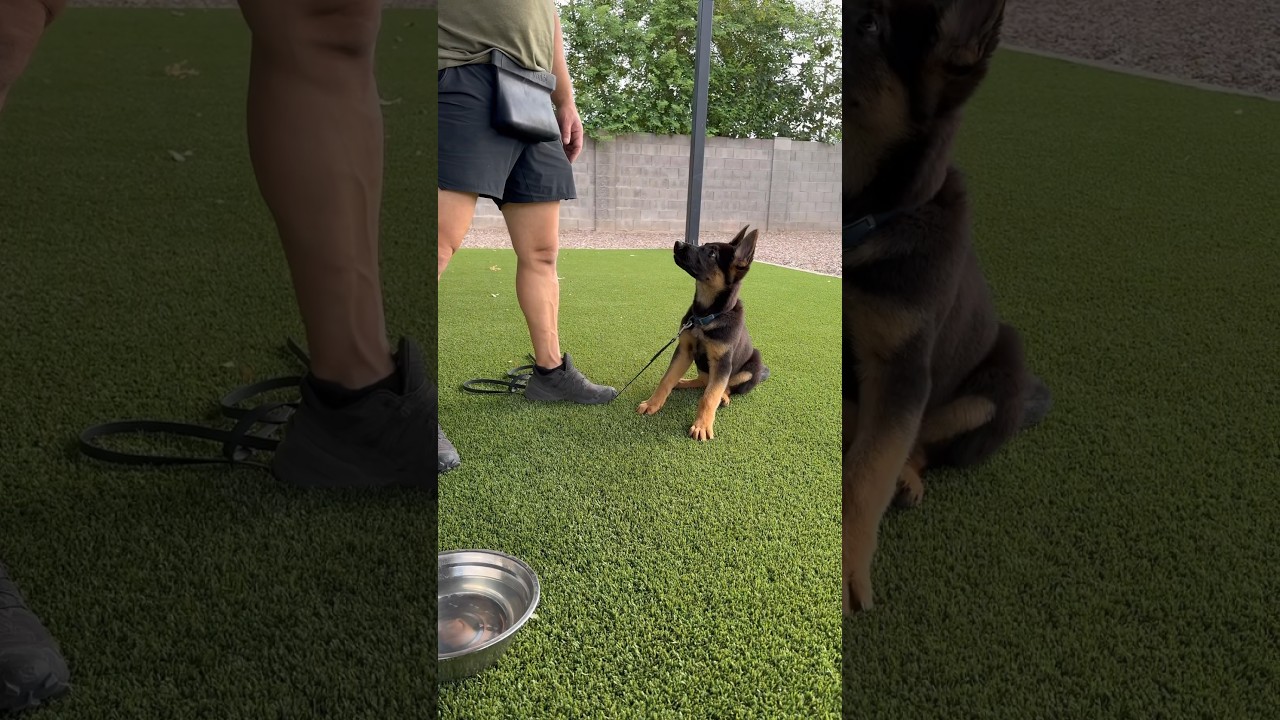
Rather than saying a command such as “sit” and expecting Cole to hear it, Christopher could use a hand signal. Once the dog understood that a particular gesture had a particular meaning, it could become part of their communication system.
Deaf dogs can also be taught important everyday skills using:
- Hand signals
- Visual markers
- Consistent gestures
- Touch cues
- Positive reinforcement
- Predictable routines
Training methods need to be adapted to the individual dog.
Cole Found a New Role as a Therapy Dog
Cole eventually began working extensively as a therapy dog.
According to the story, he spent five days a week working in an elementary school. He also visited hospice patients and appeared as a mascot at a local veterans’ home.
His work didn’t stop there.
Cole also participated in traveling school programs that helped children learn about acceptance, differences, and disability awareness.
Instead of simply being an example of a dog living with deafness, Cole became part of conversations about how people view disabilities.
His presence allowed children to see firsthand that being different doesn’t automatically mean being incapable.
Why Therapy Dogs Can Be So Meaningful
Therapy dogs work in many different environments, including schools, hospitals, nursing facilities, and community programs.
Their role isn’t the same as that of a service dog.
A service dog is specially trained to perform tasks that mitigate a person’s disability. A therapy dog, on the other hand, generally provides comfort, companionship, or positive interactions to people in settings such as schools and healthcare facilities.
The presence of a calm, appropriately trained animal can create opportunities for interaction and emotional comfort.
For Cole, his role appears to have gone beyond simply sitting beside people.
His story also helped create opportunities to talk about disability and acceptance.
Cole’s Deafness May Have Offered Some Unexpected Differences
Christopher described Cole’s deafness as providing certain advantages in his work.
One example is that Cole isn’t distracted by sounds in the same way a hearing dog might be.
In a busy environment, a hearing dog may naturally react to doors opening, people talking, equipment operating, or other noises.
Cole doesn’t receive those auditory distractions.
That doesn’t mean deafness is universally an advantage. Deaf dogs face real challenges and need owners who understand how to keep them safe.
But Cole’s story demonstrates an important point: a disability can change the way an individual experiences the world without eliminating its ability to learn, connect, or contribute.
Deaf Dogs Need Special Safety Considerations
While Cole has accomplished remarkable things, living with a deaf dog requires thoughtful management.
One of the biggest concerns is safety.
A deaf dog may not hear:
- A vehicle approaching
- Someone calling its name
- Another animal approaching from behind
- A doorbell
- A warning sound
- Household noises
- An alarm
For that reason, reliable visual communication is particularly important.
Deaf dogs should generally be kept securely contained outdoors unless they are in an appropriately safe environment. Off-leash freedom in an unfenced area can be especially dangerous because the dog cannot hear verbal warnings or recall cues.
Identification is also important.
A collar tag or other identification should make it clear that the dog is deaf so that someone who finds the dog understands why verbal commands may not work.
Training Helped Build the Partnership
Cole’s success didn’t happen simply because he was naturally friendly.
Training and trust were important parts of the process.
A dog working around children, hospice patients, veterans, and other members of the public needs to understand how to behave appropriately.
That can include learning to:
- Remain calm around unfamiliar people
- Follow visual cues
- Walk politely on a leash
- Avoid jumping on people
- Accept appropriate handling
- Stay focused around distractions
- Relax when necessary
- Respond reliably to learned signals
Positive reinforcement can be particularly useful because it allows the dog to understand which behaviors produce desirable outcomes.
Six Years of Working Together
Christopher and Cole reportedly spent six years working together as a team.
During that time, the pair encountered countless people through their school, hospice, veterans’ home, and educational work.
Every visit provided another opportunity for Cole to interact with people and for Christopher to share his perspective.
For children especially, meeting a deaf dog can turn an abstract discussion about disability into something concrete and memorable.
Instead of simply hearing that differences shouldn’t define someone, they can see a dog communicating in a different way while still learning, working, playing, and connecting with people.
Cole Became More Than a Rescue Dog
When Christopher first considered adopting Cole, he couldn’t have known where the journey would lead.
The puppy who might have been viewed primarily through the lens of his disability eventually became a therapy dog and an ambassador for acceptance.
His story demonstrates why rescue animals shouldn’t be judged solely by their medical conditions, disabilities, age, appearance, or other differences.
At the same time, adopting a dog with special needs is a serious responsibility.
Potential adopters should understand the animal’s specific requirements and make sure they have the time, resources, and knowledge necessary to provide appropriate care.
What Can We Learn From Cole’s Story?
Cole’s journey offers several meaningful lessons.
Disability doesn’t erase ability
A dog that cannot hear can still learn, play, bond with people, and participate in many activities.
Communication can take different forms
Dogs already communicate heavily through body language. Deaf dogs make visual communication even more important.
Patience can change a relationship
Training a dog with different needs may require creativity and consistency, but the process can strengthen the bond between dog and owner.
Don’t judge an animal by one characteristic
A disability is only one part of an individual animal.
Temperament, intelligence, personality, adaptability, and the relationship between the dog and its caregiver all matter.
Rescue dogs can surprise us
Shelter animals can go on to become beloved family members, working dogs, therapy animals, and much more.
Could a Deaf Dog Make a Good Companion?
A deaf dog can absolutely become a loving companion, but prospective owners should be prepared to make some adjustments.
Visual training, secure fencing, appropriate identification, and careful supervision are particularly important.
It’s also worth remembering that deafness can have different causes, and a veterinarian should be involved in assessing a newly adopted dog’s health and needs.
A deaf dog isn’t necessarily a difficult dog.
It is simply a dog whose owner needs to communicate differently.
Frequently Asked Questions
Can deaf dogs be trained?
Yes. Deaf dogs can learn using visual signals, hand gestures, touch cues, and positive reinforcement. Training should be consistent and adapted to the individual dog.
Can a deaf dog become a therapy dog?
Potentially, yes. Hearing ability is only one consideration. A therapy dog’s temperament, training, behavior, health, and ability to remain comfortable in the intended environment are all important.
How do you communicate with a deaf dog?
Many owners use hand signals and visual cues. Consistency is essential because the dog needs to learn what each signal means.
Are deaf dogs more difficult to care for?
They require some additional safety considerations, particularly outdoors. A deaf dog cannot hear verbal warnings or approaching hazards, so secure environments and visual communication are especially important.
Should a deaf dog be allowed off leash?
Off-leash activity should only happen in a secure environment where the dog cannot wander into danger. A deaf dog may not hear a recall command, a vehicle, or another potential hazard.
Can deaf dogs live normal lives?
Deaf dogs can enjoy rich and active lives when their needs are understood and appropriate safety measures are in place. Their inability to hear doesn’t prevent them from forming strong relationships or learning many behaviors.
Final Thoughts
When someone questioned why Christopher would choose a dog who was deaf, they may have been focusing on what they believed Cole couldn’t do.
Christopher chose to look at what the puppy could become.
Through training, patience, and a strong bond, Cole became far more than a rescued puppy. He became a therapy dog who spent years interacting with children, hospice patients, veterans, and families while helping people understand disability in a different way.
Cole’s story is a reminder that every dog has its own abilities and personality.
Sometimes, the biggest difference comes not from changing the animal, but from changing the way we see it.





Leave a comment