



For a stray dog searching for something to eat, an ordinary attempt to find food turned into a terrifying ordeal.
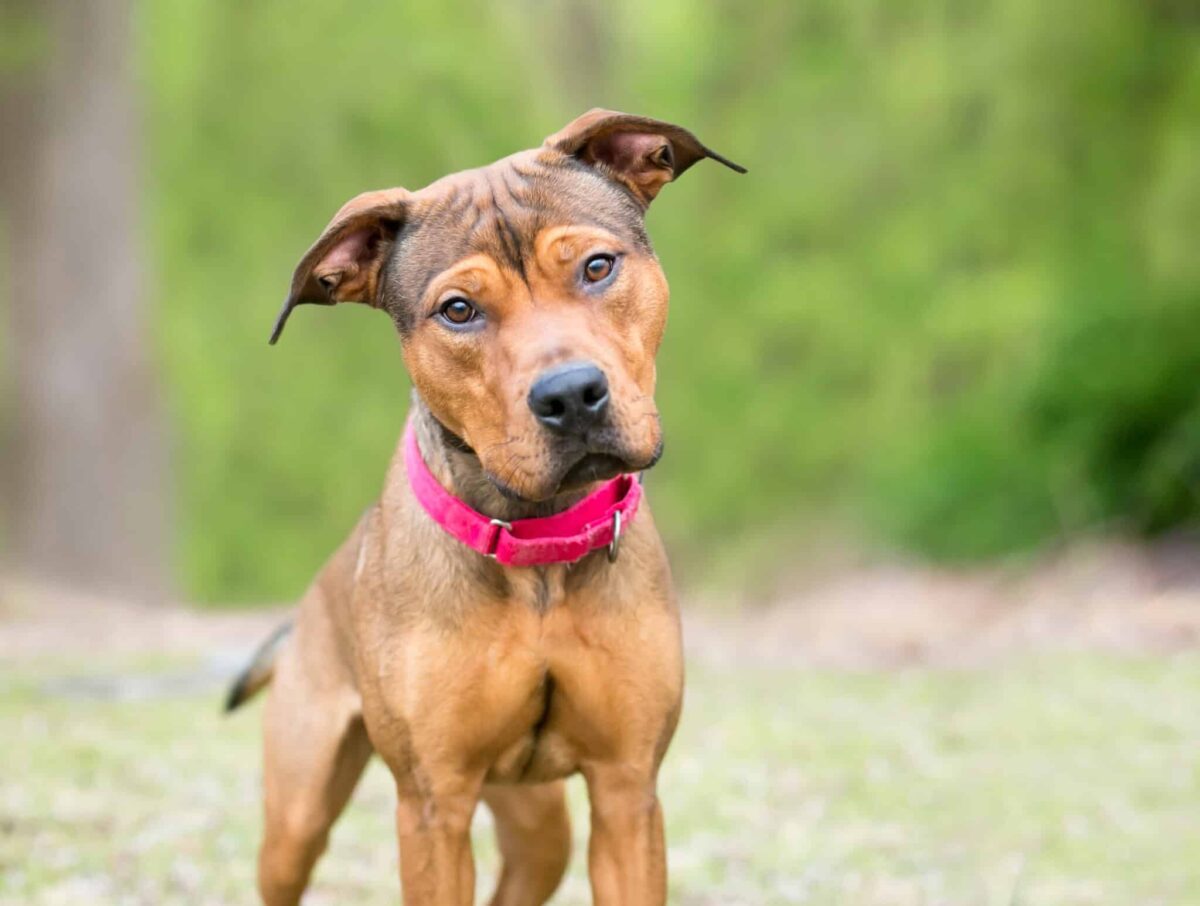
A Pit Bull was discovered wandering around with a jar firmly stuck over his head. Unable to free himself, the frightened dog was facing a dangerous situation that could have ended much worse without human intervention.
Fortunately, two women named Stacy and Marie noticed him and refused to leave him struggling alone.
The dog, later named Jughead, would eventually find safety, a loving home, and something he desperately needed after his ordeal: the reassurance that food would always be available.
A Frightening Discovery
Stacy and Marie were out when they spotted something unusual in the distance.
A dog was wandering around with a jar stuck over his head.
The situation was immediately concerning. The container prevented the dog from seeing properly and made it difficult for him to eat or drink. Every movement must have been confusing and frightening for an animal already trying to survive on the streets.
The women wanted to help, but removing the jar wasn’t as simple as pulling it away.
It was firmly lodged around the dog’s head.
Getting the Jar Off Wasn’t Easy
Stacy and Marie tried to figure out how they could safely free the frightened dog.
Because the jar wouldn’t budge, they realized they needed the right tools and additional help.
One of the women contacted her husband and asked him to bring a pair of shears so they could carefully cut the container away.
The goal was to free the dog without accidentally injuring him.
Eventually, they succeeded.
The jar was removed, and the exhausted dog was finally able to see and move normally again.
It was a huge relief for everyone involved.
Meet Jughead
After being rescued, the dog was given the name Jughead.
He appeared exhausted and badly affected by his time on the streets. According to the rescuers’ account, they believed he may have gone for an extended period without reliable access to food or water.
Regardless of exactly how long he had been without adequate nourishment, it was clear that Jughead needed immediate care.
He needed food, water, rest, veterinary attention, and—perhaps most importantly—a safe place where he could recover without having to worry about where his next meal would come from.
Marie decided to take him home.
A Safe Home Brings Out His Gentle Side
Once Jughead was indoors, his personality began to emerge.
Despite everything he had experienced, he was described as a remarkably well-behaved dog when Marie was around.
But another problem soon became apparent.
When Marie left the house for work, Jughead struggled to cope with being alone.
He became destructive, suggesting that he was having difficulty adjusting to his new environment and may have been experiencing significant stress or anxiety.
For Marie, this wasn’t a reason to give up on him.
Instead, she recognized that Jughead might need a different environment and additional companionship.
That’s when Stacy stepped in.
Jughead Finds His New Family
Jughead eventually moved into Stacy’s home, where he was introduced to her other dogs.
The change was remarkable.
Instead of struggling on his own, Jughead suddenly had a canine family around him.
He settled into the household and began acting as though he had always belonged there.
Having other dogs around appeared to give him companionship and helped him feel more comfortable.
Over time, his fearful behavior began to fade.
Stacy started to see the affectionate personality hidden underneath all the stress and uncertainty.
And before long, she realized something important:
Jughead had found his forever home.
His Past Still Affected His Relationship With Food
Although Jughead’s life had improved dramatically, his difficult past didn’t simply disappear.
One of the clearest reminders was his reaction to food.
After experiencing life without reliable access to meals, Jughead seemed to worry that food might disappear again.
When Stacy prepared his meals, he would greet her affectionately, sometimes giving her gentle kisses as though he were expressing gratitude.
He also developed a habit of carrying around empty dog-food cans.
To people who saw the behavior, it was more than just a funny quirk. It seemed connected to his history of food insecurity.
For a dog who once had to search for something to eat, having a full bowl waiting every day was a completely new experience.
Stacy continued reassuring him that he didn’t need to worry about going hungry again.
Jughead’s Funny Side Returns
Jughead’s story wasn’t only about recovery and fear.
As he became more comfortable, his playful personality started to shine through.
But he apparently retained one amusing habit: getting his head into things he probably shouldn’t.
At one point, Jughead managed to get his head stuck inside a treat container.
Fortunately, this time someone was nearby and could help him quickly.
The incident was certainly a reminder of his earlier ordeal, but it also showed just how different his circumstances were.
The first time, Jughead had been a vulnerable stray wandering around with a container stuck on his head.
The second time, he had a family watching over him and ready to help.
Why Rescue Dogs May Behave Differently After Adoption
Jughead’s experience highlights something important about adopting a dog with an unknown or difficult history.
A rescue dog may enter a home carrying experiences that aren’t immediately obvious.
Some dogs may:
- Guard food or toys
- Eat extremely quickly
- Become distressed when left alone
- Follow their new owner constantly
- Hide when frightened
- Become destructive when stressed
- Struggle to understand household routines
- Take time to trust people
- React strongly to certain situations
These behaviors don’t necessarily mean a dog is badly behaved.
They may be signs that the animal hasn’t yet learned that its new environment is safe and predictable.
How Pet Parents Can Help a Traumatized Dog
Patience can make a major difference when welcoming a rescue dog into a new home.
Establish a predictable routine
Regular mealtimes, walks, play sessions, and rest periods can help a dog understand what to expect.
Avoid punishment for fear-based behavior
Punishment can increase stress and make trust harder to build. Reward calm, appropriate behavior instead.
Give the dog a safe space
A quiet bed, crate, or designated area can provide somewhere the dog can retreat when they need a break.
Introduce changes gradually
New people, animals, environments, and experiences can be overwhelming. Slow introductions often work better than forcing interaction.
Work with a professional when needed
A veterinarian or qualified reward-based behavior professional can help when anxiety, resource guarding, separation problems, or other serious behavioral concerns appear.
Let trust develop naturally
Not every rescue dog becomes confident immediately. Some need weeks or months before they fully relax.
From Street Survival to a Loving Home
Jughead’s transformation is what makes his story so memorable.
He began as a vulnerable stray struggling to survive with a jar trapped over his head.
Two people noticed his situation and took action.
From there, his life changed step by step.
First came the rescue.
Then food and water.
Then a safe home.
Then companionship.
And eventually, a family that understood his quirks and accepted him for who he was.
His fear of running out of food may still occasionally appear, but now he has something he didn’t have before: security.
He knows where his next meal is coming from.
He has people looking after him.
And he has a home where someone will notice when he gets himself into trouble.
The Importance of Helping Stray Animals Safely
Jughead’s story also highlights the dangers stray animals can face while searching for food.
Containers, plastic packaging, fences, discarded objects, and other human-made hazards can trap curious or hungry animals.
If you encounter an animal stuck in an object, approach carefully. A frightened animal may bite or panic even when it desperately needs help.
When possible:
- Contact an animal rescue organization or animal-control service
- Ask a veterinarian for advice
- Keep the animal away from traffic
- Avoid forcing an object off if it is tightly lodged
- Use appropriate protective equipment when necessary
- Keep other people and animals at a safe distance
- Seek veterinary care after the animal is freed
The safest solution depends on the animal and the situation.
Frequently Asked Questions
What happened to the dog with the jar on his head?
A stray Pit Bull was discovered with a jar stuck over his head. Stacy and Marie helped arrange for the container to be removed, after which the dog was named Jughead and taken into care.
Why was Jughead so concerned about food?
His behavior was consistent with a dog that had experienced significant food insecurity. He sometimes appeared worried that food might disappear again, despite having regular meals in his new home.
Did Jughead find a permanent home?
Yes. After initially staying with Marie, Jughead moved into Stacy’s home and settled in with her dogs. Stacy eventually decided that he belonged with her permanently.
Can rescue dogs develop unusual food habits?
Yes. Dogs that have experienced unreliable access to food may eat quickly, guard food, search for food, or become anxious when meals are finished. A veterinarian or behavior professional can help if the behavior is severe.
How long does it take a rescue dog to adjust?
There is no universal timeline. Some dogs settle quickly, while others need weeks or months to become comfortable. A predictable routine, patience, positive reinforcement, and appropriate professional support can help.
Final Thoughts
Jughead’s story began with a frightening discovery: a stray dog wandering around with a jar trapped over his head and no obvious way to free himself.
Thankfully, Stacy and Marie noticed him and took action.
After the jar was removed, Jughead was given the opportunity to recover. He eventually found his way into a loving home where he could relax, build confidence, and discover that he no longer had to struggle for his next meal.
His habit of worrying about food may be a reminder of what he experienced before his rescue, but his life today is very different.
Jughead’s journey shows what can happen when a vulnerable animal is given something every dog deserves—a safe place to recover, patient people who understand them, and a second chance at a happy life.





Leave a comment