


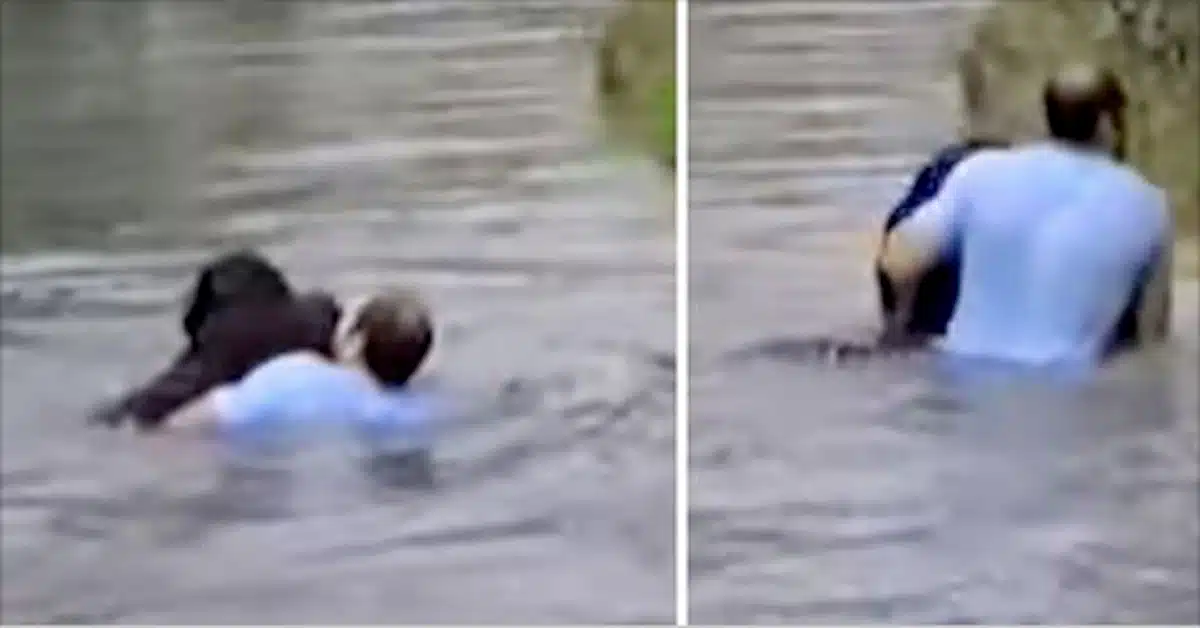
A peaceful day at the zoo suddenly became a frightening rescue when a chimpanzee fell into the water surrounding its enclosure and struggled to stay afloat.
Visitors watched in shock as the animal appeared unable to get itself out of the moat. Then, as the situation unfolded, one man made a decision that put him directly in danger.
Rick Swope, a visitor at the Detroit Zoo, climbed into the chimpanzee enclosure and entered the murky water in an attempt to save the struggling animal.
His actions would become one of the most memorable animal rescue stories associated with the zoo.
A Normal Zoo Visit Takes a Dangerous Turn
The incident happened while visitors were gathered around the chimpanzee exhibit at the Detroit Zoo.
The chimpanzees had been moving around their enclosure as visitors watched them. The atmosphere was ordinary until one of the animals fell into the moat surrounding the exhibit.
The chimpanzee struggled in the water, creating an alarming situation for everyone watching from above.
Swope was standing near the front of the exhibit when he noticed what was happening.
From his position, he could see that the chimpanzee was having difficulty staying above the water.
Rather than simply watching, Swope decided to intervene.
Rick Swope Decides to Enter the Enclosure
Entering an animal enclosure at a zoo is extremely dangerous. Large primates are powerful animals capable of causing serious injuries, and visitors are normally kept separated from them for their own safety.
Despite the risk, Swope climbed into the enclosure and entered the water.
According to his later account, the water was so murky that he couldn’t clearly see what was beneath the surface.
He searched through the water until he located the chimpanzee.
The animal appeared weak and was struggling to remain conscious, but Swope could tell that it was still alive.
He managed to reach the chimpanzee and attempted to keep the animal from drowning.
A Frightening Encounter in the Water
The situation was far from safe.
Swope had no idea how the chimpanzee might react to him. A frightened or injured chimpanzee could potentially become aggressive, especially when approached by an unfamiliar human inside its enclosure.
Yet the animal did not attack him during the rescue attempt.
Swope later described the surreal experience of being in the water with the chimpanzee and wondering what he could possibly do next.
His immediate goal was simply to keep the animal alive long enough for the situation to be brought under control.
Another Chimpanzee Appears
While Swope was still inside the enclosure, the danger increased.
Another chimpanzee began approaching.
The animal reportedly displayed its teeth as it moved toward the area where Swope and the other chimpanzee were located.
Swope couldn’t know exactly what the approaching chimpanzee intended to do.
It might have been reacting to the unusual situation, attempting to reach its companion, or simply responding to the presence of an unfamiliar person inside its territory.
Whatever the reason, Swope knew that remaining in the enclosure could put him in even greater danger.
He decided it was time to get out.
The Rescue Ends With Swope Leaving the Enclosure
After reaching the struggling chimpanzee, Swope made his way back out of the enclosure.
The rescue had been brief, but it was an extraordinary risk for a zoo visitor to take.
People gathered around Swope after he emerged, reacting to what they had just witnessed.
For Swope, however, the incident wasn’t about becoming famous.
He had seen an animal struggling in the water and felt compelled to try to help.
Why Chimpanzees Are So Dangerous to Approach
The story may sound like a simple case of one person helping an animal, but approaching a chimpanzee in an enclosed environment can be extremely dangerous.
Chimpanzees are exceptionally strong primates with complex social behavior. They can bite, grab, scratch, and inflict serious injuries when frightened, threatened, or agitated.
That’s why professional animal-care teams use carefully designed barriers, procedures, and specialized training when working with them.
A zoo visitor entering an enclosure is therefore putting themselves at considerable risk.
Swope’s decision was an emergency response to a situation he believed required immediate action, rather than something that should be copied by other zoo visitors.
A Story About Compassion and Risk
The story of Rick Swope continues to stand out because of the unusual circumstances surrounding the rescue.
Most people watching an animal in distress would hope that trained professionals could handle the situation. Swope instead found himself making a split-second decision while watching the chimpanzee struggle.
His actions demonstrated how strongly people can respond when they see an animal in danger.
At the same time, the story highlights an important lesson about wildlife and zoo safety: compassion should always be balanced with personal safety and respect for trained animal-care procedures.
What Should You Do If You See an Animal in Danger at a Zoo?
If an animal appears injured or trapped at a zoo, visitors should normally alert zoo staff immediately rather than entering an enclosure.
Professional animal-care teams have procedures for dealing with emergencies involving dangerous or frightened animals.
Visitors can help by:
- Immediately notifying the nearest zoo employee
- Using emergency communication systems if available
- Clearly explaining what happened
- Keeping away from restricted areas
- Following staff instructions
- Keeping children away from barriers and enclosure edges
- Avoiding attempts to physically rescue wildlife themselves
Even when an animal appears helpless, entering an enclosure can create additional danger for both the person and the animal.
The Lasting Impact of an Extraordinary Rescue
What began as an ordinary visit to a zoo became a moment that Rick Swope and the surrounding visitors would never forget.
A chimpanzee had fallen into the water and appeared to be struggling to survive. Swope responded by entering the enclosure and searching through the murky water until he reached the animal.
His decision carried considerable personal risk, particularly once another chimpanzee approached.
The incident remains a striking example of the powerful instinct many people have to help animals in distress.
It also serves as a reminder that encounters involving wildlife can become unpredictable in seconds.
Final Thoughts
The rescue of the drowning chimpanzee at the Detroit Zoo became memorable because of one visitor’s extraordinary decision to intervene.
Rick Swope saw an animal in serious trouble and chose to take a significant personal risk in an attempt to help. His actions sparked widespread interest because of the unusual and dangerous circumstances surrounding the rescue.
While the story highlights compassion and courage, it also reinforces an important safety lesson: when an animal is in danger, trained professionals are generally the safest people to handle the situation.
For zoo visitors, the best response is usually to alert staff immediately and allow trained animal-care professionals to respond.





Leave a comment