




Taking your dog on vacation for the first time can feel exciting and slightly overwhelming.
There are more things to think about than simply packing a leash. You’ll need to consider transportation, accommodation, food, bathroom breaks, safety, exercise, and how your dog handles unfamiliar environments.
The good news is that careful planning can make the process much easier.
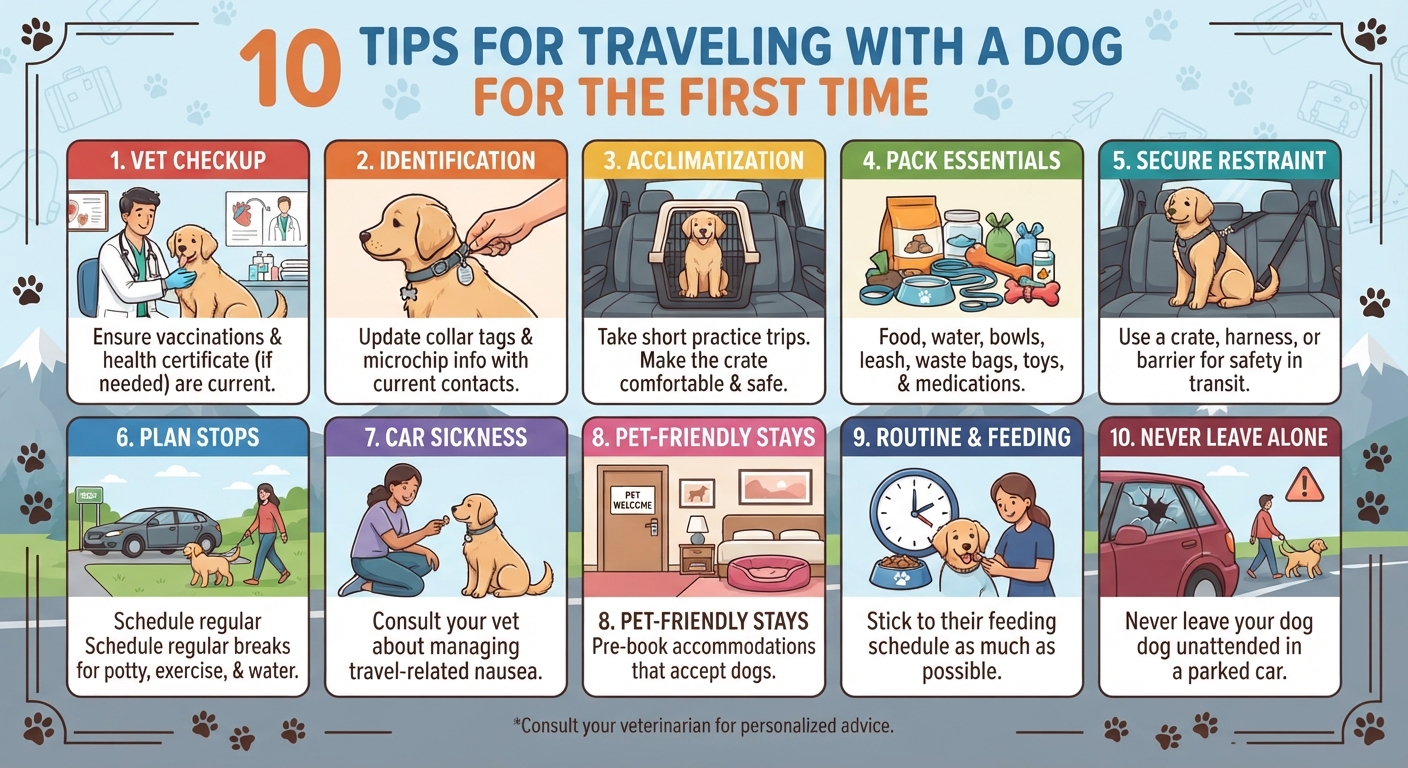
If you’re traveling with a dog for the first time, these 10 tips can help you prepare for a more comfortable experience.
1. Choose a Destination That Welcomes Dogs
Before booking anything, check whether dogs are actually allowed.
Look at the specific rules for:
- Hotels
- Apartments
- Beaches
- Parks
- Restaurants
- Tourist attractions
- Public transportation
A destination described as “pet-friendly” may still have restrictions.
Check the property’s current rules before making a reservation.
2. Consider Your Dog’s Personality
Not every dog enjoys traveling.
Some dogs love new places and meeting people.
Others may become stressed by unfamiliar surroundings.
Think about how your dog normally reacts to:
- Car rides
- Crowded areas
- New people
- Other animals
- New environments
- Loud noises
If your dog becomes extremely anxious in unfamiliar situations, speak with a veterinarian or qualified behavior professional before planning a demanding trip.
3. Practice Before the Real Trip
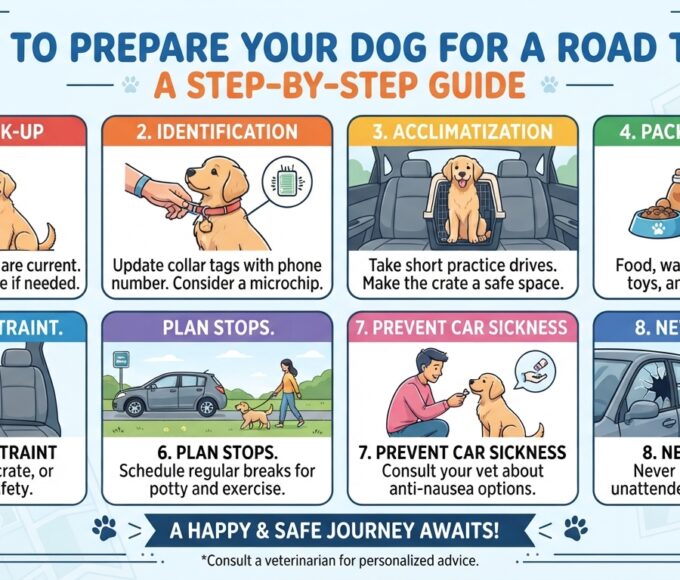
If you’re traveling by car, start with short journeys.
If your dog will stay in a crate, introduce the crate gradually.
If you’re staying somewhere unfamiliar, practice spending time away from home.
Small practice sessions can help identify problems before you’re hundreds of miles from home.
4. Pack a Dedicated Dog Travel Bag
Keep your dog’s supplies together.
A useful travel bag may contain:
- Food
- Water
- Bowls
- Leash
- Harness
- Identification
- Waste bags
- Medication
- Treats
- Toys
- Bedding
- Towels
- Grooming supplies
Pack familiar food rather than making a sudden dietary change during travel.
5. Keep Identification Current
Check your dog’s identification before leaving.
Make sure their collar tag contains current information.
If your dog is microchipped, confirm that the registration information is current.
You can also keep a recent photograph of your dog on your phone in case you ever need to identify them quickly.
6. Plan Bathroom and Exercise Breaks
Travel can disrupt a dog’s normal routine.
Plan regular opportunities to stop, stretch, drink, and use the bathroom.
If your dog is used to daily walks, try to maintain some physical activity at your destination.
Don’t immediately expect your dog to cope with a completely different routine.
7. Bring Familiar Bedding
A familiar bed or blanket can make a strange room feel slightly more familiar.
This can be particularly helpful during overnight stays.
Keep your dog’s sleeping arrangement as consistent as practical.
8. Research Veterinary Care at Your Destination
Hopefully you won’t need a veterinarian while traveling.
But it’s useful to know where the nearest clinic is before an emergency happens.
Save the contact details of a nearby veterinary practice and identify an emergency clinic if one is available.
Keep your dog’s medical records accessible.
9. Keep Your Dog Secure in Unfamiliar Places
A dog that normally behaves perfectly at home may react differently in a new environment.
Keep your dog securely leashed in unfamiliar outdoor areas unless you’re in an appropriate enclosed space where off-leash activity is permitted.
Check doors, gates, balconies, and fences at your accommodation.
Don’t assume your dog knows the new environment as well as you do.
10. Give Your Dog Time to Adjust
When you arrive, your dog may want to investigate everything.
Allow them to explore gradually.
Don’t immediately take them to a crowded attraction after a long journey.
Give them time to drink, rest, sniff around, and settle.
A calm first few hours can make the rest of the trip easier.
Traveling by Car
If you’re driving, use appropriate restraint equipment.
Never allow your dog to ride unsecured in a way that could interfere with your driving.
Plan stops ahead of time and avoid leaving your dog alone in the vehicle.
For longer trips, keep food, water, and other essentials easily accessible.
Traveling by Plane
Air travel has additional considerations.
Airline policies differ, including rules regarding carriers, cabin travel, documentation, and animal eligibility.
Always check the airline’s current requirements directly before booking.
Some dogs may require additional planning due to health, size, or breed-specific considerations.
Speak with your veterinarian before air travel if you’re unsure whether it is appropriate for your dog.
What Food Should You Bring?
Whenever possible, bring your dog’s normal food.
A sudden change in diet can cause digestive problems.
Pack enough for the entire journey and some extra in case of unexpected delays.
Keep treats familiar too.
How Can You Reduce Travel Stress?
Try to make the journey predictable.
Use familiar equipment and bedding.
Keep your voice calm.
Avoid forcing your dog into situations that clearly frighten them.
If anxiety is severe, discuss options with a veterinarian before traveling.
Final Thoughts
Traveling with a dog for the first time doesn’t have to be stressful.
The key is preparation.
Research your destination, practice transportation beforehand, pack familiar supplies, maintain your dog’s routine, and prioritize safety.
Remember that your dog doesn’t need to participate in every activity.
Sometimes the best travel experience for your pet is a quiet break in a comfortable room while you explore somewhere they aren’t able to visit.
Frequently Asked Questions
What should I pack when traveling with my dog?
Bring food, water, bowls, leash, identification, medication, bedding, waste bags, treats, toys, and any equipment your dog normally needs.
Is traveling stressful for dogs?
Some dogs enjoy travel while others find it stressful. Your dog’s personality and previous experiences can influence how they respond.
Should I bring my dog’s normal food?
Yes. Keeping their diet consistent can help avoid unnecessary digestive changes during travel.
How should I prepare my dog for their first trip?
Practice the type of transportation you’ll use, introduce travel equipment gradually, and start with short experiences before attempting a longer journey.






Leave a comment