





Bringing home a puppy can be exciting, but nighttime can be one of the most challenging parts of those first few weeks.
Your puppy may whine, wake frequently, need to go outside, or simply struggle to settle without their mother and littermates.
Fortunately, nighttime routines can become easier with patience and consistency.
If you’re wondering how to get a puppy to sleep through the night, start by remembering that young puppies aren’t always physically capable of staying asleep for long periods.
The goal isn’t to force a puppy to sleep immediately. It’s to gradually help them feel safe, comfortable, and ready to rest.
Why Do Puppies Wake Up at Night?
There are several reasons puppies wake during the night.
They may:
- Need to urinate
- Feel lonely
- Be hungry
- Hear unfamiliar sounds
- Feel uncomfortable
- Have excess energy
- Be adjusting to a new home
Your puppy has suddenly moved away from their mother and littermates and entered a completely unfamiliar environment.
Some nighttime adjustment is normal.
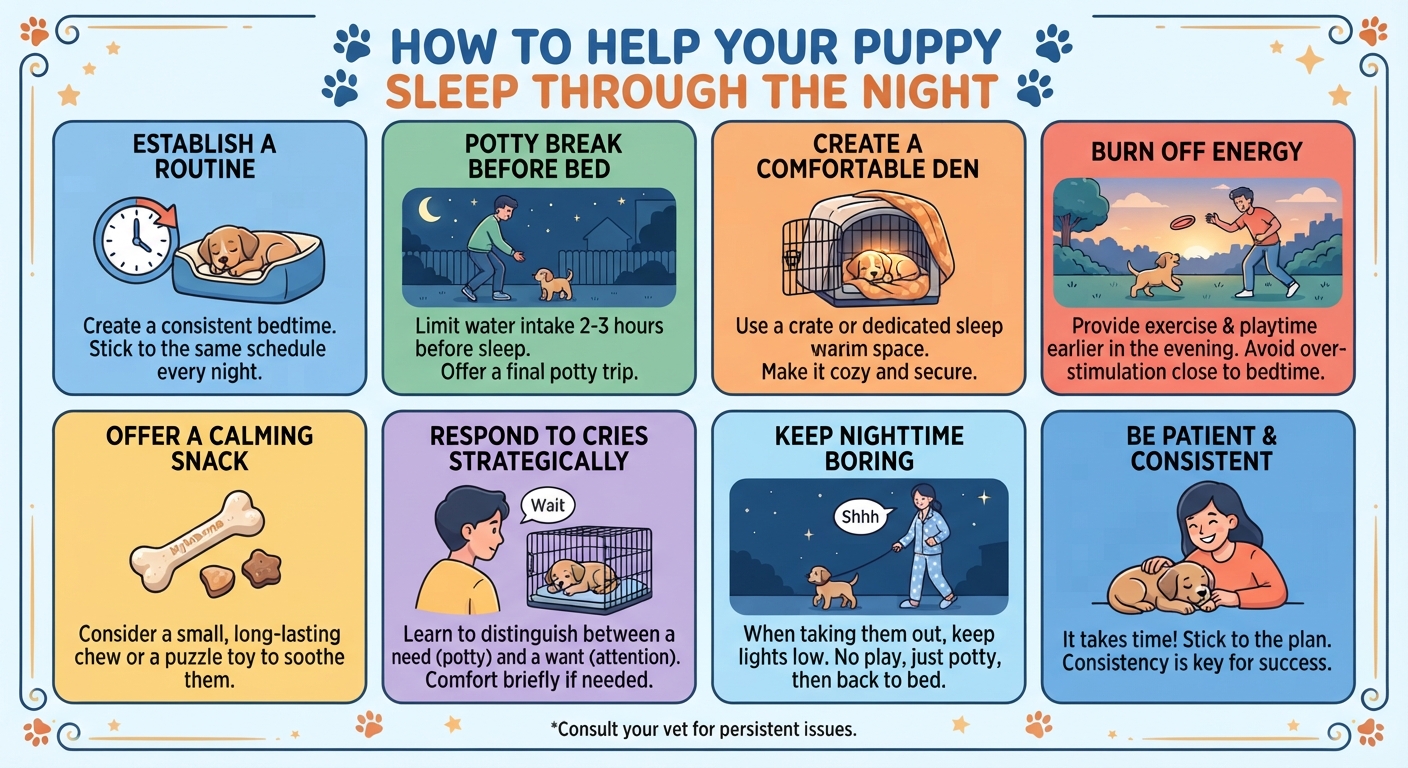
1. Create a Consistent Bedtime Routine
Dogs generally benefit from predictable routines.
Try to follow similar steps each night.
For example:
Calm play → toilet break → quiet time → bed
Over time, these repeated steps can help your puppy understand that bedtime is approaching.
Avoid turning bedtime into an exciting play session.
2. Make the Sleeping Area Comfortable
Your puppy needs a safe and comfortable place to sleep.
Depending on your chosen setup, this may be a crate, puppy pen, or designated bed area.
Make sure the space is appropriately sized and free from hazards.
The sleeping area should be somewhere your puppy can rest without constant household activity disturbing them.
3. Consider Keeping the Puppy Nearby
Some puppies become distressed when left alone at night.
Having the puppy sleep near you initially can make the transition easier.
For example, you might place their crate or bed near your bedroom.
As your puppy becomes more comfortable, you can gradually adjust their sleeping location if needed.
4. Give Your Puppy a Toilet Break Before Bed
A toilet break immediately before bedtime can reduce the chance of your puppy waking because they need to eliminate.
Young puppies may still need nighttime bathroom trips.
Don’t expect a very young puppy to hold their bladder throughout an entire night simply because you want them to.
Their physical ability develops with age.
5. Don’t Make Nighttime Wake-Ups Exciting
If your puppy wakes up during the night, keep the interaction calm.
If they need to go outside, take them out quietly, allow them to toilet, and return them to bed.
Avoid turning the nighttime bathroom trip into a play session.
This helps your puppy learn the difference between nighttime and daytime.
6. Provide Appropriate Daytime Activity
A puppy needs appropriate activity during the day.
Training, gentle play, exploration, and age-appropriate enrichment can help them develop healthy routines.
However, don’t assume that exhausting a puppy right before bedtime is the solution.
Overtired puppies can sometimes become more restless rather than settling easily.
Balance activity with plenty of daytime sleep.
7. Avoid Sudden Changes to the Routine
Consistency is especially helpful during the first few weeks.
Try to keep bedtime, meals, toilet breaks, and daytime routines reasonably predictable.
Of course, real life isn’t perfectly consistent.
The important thing is to create a general pattern your puppy can learn.
8. Teach Your Puppy That Their Bed Is a Safe Place
Make the sleeping area a positive environment.
You can provide appropriate bedding and, where suitable, a safe puppy-approved toy.
Reward your puppy for calmly entering or settling in their sleeping area.
Avoid using the sleeping space as punishment.
Your puppy should gradually learn that this is somewhere they can relax.
9. Respond to Whining Carefully
Puppy whining can be difficult to hear.
Before deciding how to respond, consider why the puppy may be whining.
They may genuinely need a toilet break, feel frightened, or be uncomfortable.
If their needs have been met and they are simply seeking attention, immediately turning nighttime whining into a long interaction can make settling harder.
Keep nighttime responses calm and brief.
If you’re unsure why your puppy is crying frequently, speak with your veterinarian or a qualified behavior professional.
10. Be Patient
Every puppy is different.
Some settle quickly, while others need considerably more time.
Don’t expect perfect sleep immediately after bringing a puppy home.
Progress may happen gradually.
One night may be better than the next, particularly during periods of change.
Focus on establishing a routine rather than expecting overnight perfection.
How Long Do Puppies Sleep?
Puppies generally need significantly more sleep than adult dogs.
They may sleep for many hours throughout a 24-hour period, including several daytime naps.
This means you shouldn’t try to keep a puppy awake all day in an attempt to make them sleep longer at night.
Adequate rest is an important part of puppy development.
Should You Use a Crate?
A properly introduced crate can provide a comfortable sleeping area for some puppies.
However, crate training should be gradual and positive.
Never use the crate as a place to punish your puppy.
The puppy should learn that the crate is a safe resting space.
If your puppy becomes extremely distressed in a crate, don’t simply assume they need to “cry it out.” Consider adjusting the training approach and getting professional guidance.
What If My Puppy Keeps Waking Up?
First, consider whether your puppy needs to toilet.
If bathroom needs are not the issue, examine the environment.
Is the room too hot or cold? Is there excessive noise? Is the puppy hungry, uncomfortable, frightened, or overly stimulated?
If frequent waking continues despite a consistent routine, discuss it with your veterinarian.
Sudden changes in sleep behavior can sometimes be associated with health problems.
Frequently Asked Questions
How long does it take for a puppy to sleep through the night?
It varies considerably. Young puppies often need nighttime toilet breaks, and individual puppies develop nighttime habits at different rates.
Should I ignore my puppy crying at night?
Don’t automatically ignore crying. First consider whether your puppy needs to toilet, is frightened, or is experiencing discomfort. Keep necessary nighttime interactions calm and brief.
Should puppies sleep in a crate?
A crate can be useful when introduced positively and used appropriately. It should provide a safe resting area rather than function as punishment.
Should I wake my puppy up to pee?
Young puppies may need scheduled nighttime toilet breaks depending on their age and individual circumstances. Your veterinarian can help you establish an appropriate routine.
Final Thoughts
Learning how to get a puppy to sleep through the night takes patience.
Young puppies are adjusting to a completely new environment and may not yet have the physical ability to sleep uninterrupted for long periods.
A consistent bedtime routine, comfortable sleeping area, appropriate daytime activity, and regular toilet opportunities can gradually make nights easier.
Most importantly, remember that puppy sleep is a process rather than a switch that suddenly turns on.
With time, consistency, and patience, your puppy can learn that nighttime is a safe and comfortable time to rest.








Leave a comment