


Rainy weather can make a normal dog-walking routine difficult.
When outdoor exercise isn’t practical, dogs can quickly become bored, especially if they’re used to spending plenty of time outside.
Fortunately, you don’t need a huge house or expensive equipment to keep your dog entertained.
There are plenty of simple indoor activities for dogs that provide physical movement, mental stimulation, or both.
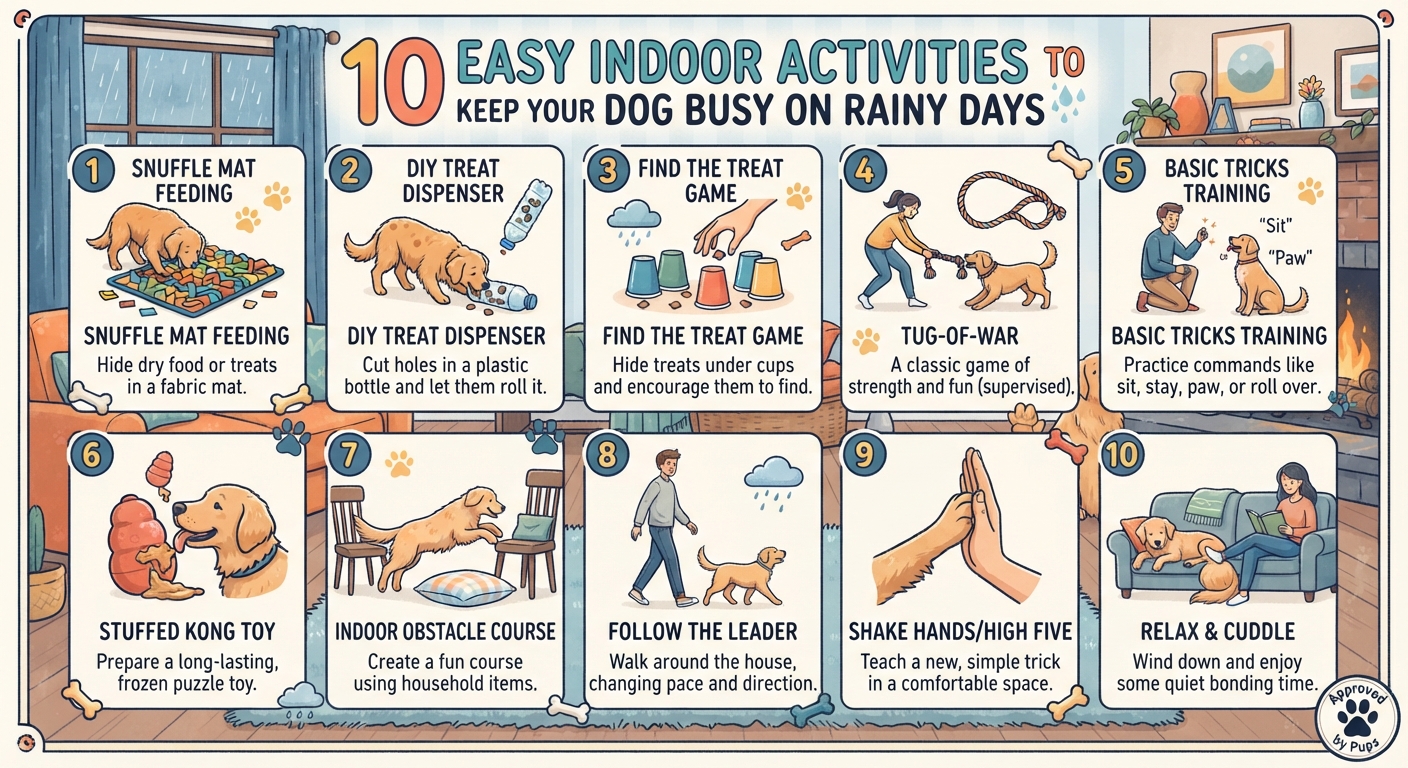
Here are 10 activities you can try the next time bad weather keeps your dog indoors.
1. Play Hide-and-Seek
Hide-and-seek isn’t just a game for children.
Ask your dog to stay in one room while you hide somewhere safe in the house. Then call their name and encourage them to find you.
Start with easy hiding places so your dog understands the game.
Once they become familiar with it, you can make the hiding spots slightly more challenging.
This game combines movement with listening and problem-solving.
2. Create a Simple Treasure Hunt
Use your dog’s favorite treats or kibble to create a small indoor treasure hunt.
Hide a few pieces in safe and accessible locations around one room.
Start by placing treats somewhere obvious and encouraging your dog to find them.
As your dog understands the game, you can gradually make the hiding places more challenging.
Always choose locations where your dog can safely reach the food without knocking over objects or chewing inappropriate items.
3. Practice Basic Training
Rainy days are an excellent opportunity to work on training.
Spend a few minutes practicing commands your dog already knows, such as:
- Sit
- Stay
- Down
- Come
- Leave it
- Wait
You can also teach a new behavior using reward-based training.
Keep sessions short and positive. Several short training sessions can be more effective and enjoyable than one long session.
4. Try a Food Puzzle
Food puzzles encourage dogs to work for their meals.
You can use commercially designed puzzle toys or veterinarian-approved enrichment products suitable for your dog.
Puzzle feeding can slow down eating and provide mental stimulation.
If your dog is new to puzzle toys, start with an easy option. The goal is to help them understand how the toy works rather than making the task frustrating.
Always supervise your dog with a new toy.
5. Play Tug
A game of tug can provide physical activity without requiring a large outdoor space.
Choose a sturdy dog toy designed for tugging and make sure the area is free of furniture or objects your dog could collide with.
Teach your dog a release cue such as “drop it.”
Contrary to some old misconceptions, tug doesn’t automatically make a dog aggressive. When played appropriately, it can be an enjoyable interactive game.
6. Build a Mini Obstacle Course
You can create a simple indoor obstacle course using household objects.
For example, you might use cushions, cardboard boxes, or other stable objects to create safe pathways.
Avoid anything slippery, unstable, sharp, or likely to collapse.
The course doesn’t need to be complicated.
You can ask your dog to walk around objects, move between cushions, or follow you through a simple route.
Always consider your dog’s size, age, fitness, and mobility.
7. Give Your Dog a Sniffing Game
Dogs rely heavily on their sense of smell, so sniffing games can provide valuable mental stimulation.
Place a few treats inside a snuffle mat or another suitable enrichment product.
You can also hide food around a controlled area of the home and encourage your dog to search.
Allow them time to investigate rather than rushing them.
For many dogs, sniffing is naturally engaging and can make a simple activity surprisingly rewarding.
8. Have a Toy Rotation
If your dog has access to every toy every day, some toys may eventually become less interesting.
Instead, keep some toys stored away and rotate them.
Bring out a different selection every few days.
The toys don’t necessarily have to be new. A familiar toy can become more interesting when it hasn’t been available for several days.
Check toys regularly and remove anything damaged or unsafe.
9. Teach Your Dog to Clean Up Toys
You can even turn tidying up into a training game.
Start by rewarding your dog for picking up a toy.
Gradually teach them to move the toy toward a basket or container.
Reward successful attempts.
The goal isn’t perfect cleaning. It’s to create a simple problem-solving activity that also teaches a useful behavior.
Keep the sessions positive and don’t expect your dog to understand everything immediately.
10. Have a Relaxing Grooming Session
Not every indoor activity needs to be energetic.
Rainy days can also be a good time for calm grooming.
Depending on your dog’s coat, you might brush them, check their paws, clean around their ears as appropriate, or simply spend some quiet time together.
Make sure grooming is comfortable and avoid forcing your dog through something they fear.
If your dog becomes distressed during grooming, consider working gradually on positive associations or seeking professional help.
How Much Indoor Activity Does a Dog Need?
The amount of activity a dog needs depends on age, breed, health, fitness, and personality.
A young high-energy dog may need more enrichment than an older low-energy dog.
You don’t need to keep your dog constantly entertained.
The goal is to provide appropriate opportunities for movement, exploration, training, and rest.
A combination of several short activities throughout the day can work well when a long outdoor walk isn’t possible.
Can Indoor Games Replace a Walk?
Sometimes indoor activities can help when a walk isn’t practical, but they don’t necessarily replace all aspects of outdoor walks.
Walking provides opportunities for fresh air, environmental exploration, sniffing, and exposure to different surroundings.
When weather prevents outdoor activity for a short period, indoor games can help keep your dog engaged.
Once conditions are safe again, return to your normal outdoor routine.
Safety Tips for Indoor Dog Games
Before starting an indoor game, make sure the environment is safe.
Keep these points in mind:
- Move fragile objects out of the way.
- Avoid slippery floors during active games.
- Don’t use unstable furniture as obstacles.
- Supervise new toys.
- Avoid small objects that could be swallowed.
- Keep treats within your dog’s normal daily food intake.
- Give your dog breaks between activities.
The safest game is one that matches your dog’s size, age, abilities, and temperament.
Final Thoughts
Rainy weather doesn’t have to mean a boring day for your dog.
From hide-and-seek and scent games to training, puzzle toys, tug, and simple obstacle courses, there are plenty of indoor activities for dogs that require little space or expensive equipment.
Use rainy days as an opportunity to work your dog’s mind as well as their body.
Most importantly, keep activities safe, positive, and appropriate for your individual dog. Even 10–15 minutes of focused play or training can make an otherwise uneventful indoor day much more interesting.








Leave a comment