



Bringing a puppy home can make your household feel completely different overnight.
One moment you’re preparing a bed and buying a few toys. The next, you have a curious little dog exploring every corner of the house, chewing things they shouldn’t, waking up at odd hours, and looking to you for almost everything.
Puppyhood is an exciting stage, but it also comes with plenty of responsibility.
Young dogs are still developing physically and mentally, which means their nutrition, exercise, training, socialization, grooming, and veterinary care all need thoughtful attention.
The good news is that you don’t have to do everything perfectly from day one.
A consistent routine, patient training, appropriate veterinary care, and plenty of positive experiences can give your puppy a strong foundation for adulthood.
Here are five essential areas every new puppy owner should understand.
1. Give Your Puppy Age-Appropriate Nutrition
Nutrition is one of the foundations of healthy puppy development.
Growing puppies have different nutritional requirements from adult dogs. Their food needs to provide appropriate levels of energy, protein, fats, vitamins, and minerals to support developing bones, muscles, organs, and the immune system.
Choose a Complete and Balanced Puppy Food
Look for a puppy diet that is formulated to provide complete and balanced nutrition for your dog’s life stage.
The right food may also depend on your puppy’s expected adult size. Large- and giant-breed puppies, for example, require particularly careful nutritional management because excessive growth can contribute to skeletal problems.
If you’re unsure which food is appropriate, ask your veterinarian for guidance.
Establish a Feeding Routine
Puppies generally need more frequent meals than adult dogs, but the exact schedule changes as they grow.
Rather than following one feeding schedule for every puppy, consider:
- Age
- Expected adult size
- Current weight
- Activity level
- Body condition
- Individual health needs
Your veterinarian can help determine appropriate portions and meal frequency.
Avoid leaving unlimited food available unless your veterinarian specifically recommends it. Free-feeding can make portion control more difficult for some puppies.
Don’t Overdo the Treats
Treats are useful during training, but they still contribute calories.
Keep treats and snacks modest and choose puppy-appropriate options. Small pieces of the puppy’s regular food can sometimes work well as training rewards.
Avoid feeding foods that are toxic or potentially dangerous to dogs, including chocolate, grapes and raisins, onions, garlic, xylitol-containing products, alcohol, and certain other human foods.
Fresh Water Is Essential
Your puppy should have access to clean, fresh drinking water.
Water becomes especially important after play, exercise, during warm weather, and when puppies are eating dry food.
If your puppy suddenly starts drinking dramatically more or less than usual, mention the change to your veterinarian.
2. Provide Safe, Age-Appropriate Exercise and Play
Puppies seem to have unlimited energy.
One minute they’re sleeping peacefully, and the next they’re racing around the house with a toy in their mouth.
Exercise is important, but puppy activity isn’t simply about tiring your dog out.
Movement helps puppies develop coordination, explore their environment, build appropriate physical skills, and engage their minds.
Think Quality, Not Just Quantity
There is no universal exercise schedule that works for every puppy.
A young Chihuahua, a Labrador Retriever, and a Great Dane puppy have very different bodies and developmental needs.
Instead of focusing only on a specific number of minutes, pay attention to your puppy’s age, breed or expected size, health, environment, and behavior.
Good puppy activities can include:
- Short walks when appropriate
- Gentle games
- Sniffing and exploring
- Food puzzles
- Basic training
- Searching for treats
- Supervised play with suitable dogs
- Short sessions of retrieving toys
Avoid Excessive or Forced Exercise
Puppies are still growing, and excessive repetitive impact can place unnecessary stress on developing joints and bones.
Avoid turning a young puppy into a long-distance running partner or forcing them to continue when they are tired.
Watch for signs such as:
- Excessive panting
- Lagging behind
- Reluctance to continue
- Limping
- Difficulty getting up
- Unusual tiredness after activity
If your puppy appears painful or repeatedly struggles with exercise, contact your veterinarian.
Mental Exercise Counts Too
A puppy doesn’t always need more physical activity when they’re restless.
Sometimes they need something interesting to think about.
Teaching a new cue, working on a food puzzle, practicing leash skills, or allowing safe sniffing opportunities can provide valuable mental stimulation.
3. Make Veterinary Care a Priority
One of the first important appointments after bringing home a puppy should be a veterinary check-up.
Your veterinarian can assess your puppy’s general health and create a preventive-care plan based on their age, lifestyle, location, and medical history.
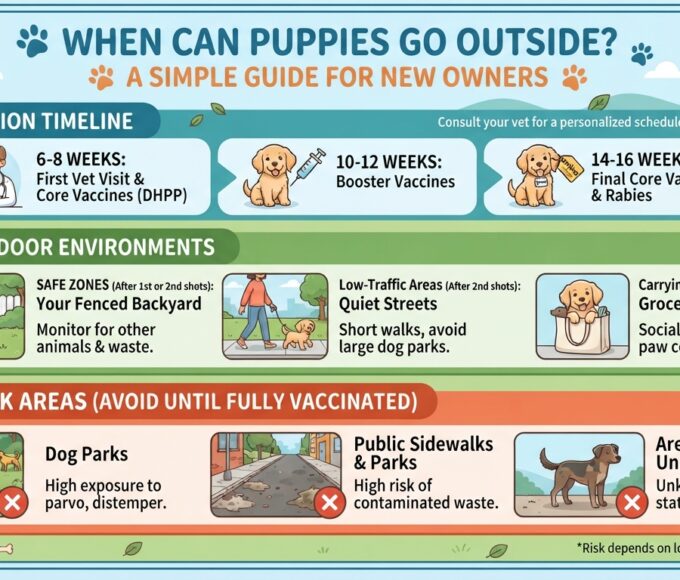
Vaccinations
Puppies require a series of vaccinations during early life because their developing immune systems need protection against serious infectious diseases.
The exact vaccination schedule varies by region and individual circumstances, so follow the plan provided by your veterinarian.
Until your puppy has appropriate protection, ask your vet which public places and dog interactions are safe.
Parasite Prevention
Puppies can be affected by parasites such as intestinal worms, fleas, and ticks.
Your veterinarian can recommend appropriate parasite-prevention products and explain when treatments should be given.
Don’t assume that a product designed for another species or another age group is safe for your puppy.
Dental and General Health
Veterinary visits are also an opportunity to discuss:
- Weight and growth
- Nutrition
- Dental development
- Parasite prevention
- Vaccinations
- Spaying or neutering
- Identification and microchipping
- Behavior
- Exercise
- Grooming
Puppies may need several veterinary visits during their first months, rather than simply one annual appointment.
Know When Something Is Wrong
Don’t wait for the next routine appointment if your puppy develops concerning symptoms.
Urgent veterinary attention may be needed for problems such as severe breathing difficulty, collapse, repeated vomiting, bloody diarrhea, seizures, suspected poisoning, serious injury, or extreme weakness.
When you’re unsure, calling your veterinary clinic for guidance is safer than trying to diagnose the problem yourself.
4. Start Socialization and Positive Training Early
Puppyhood is an important period for learning about the world.
Socialization isn’t simply about making your puppy play with as many dogs as possible.
It means helping your puppy develop positive or neutral associations with a wide range of appropriate experiences.
That can include:
- Different people
- Household sounds
- Car rides
- Different surfaces
- Grooming and handling
- Veterinary visits
- Everyday objects
- Safe outdoor environments
- Friendly, appropriately vaccinated dogs
- Being briefly separated from you
Keep New Experiences Positive
Don’t force a frightened puppy to interact with something that scares them.
If your puppy becomes nervous around a loud noise, unfamiliar person, or new environment, increase the distance and allow them to observe calmly.
Reward relaxed behavior with treats, praise, play, or another reward your puppy enjoys.
The goal is to build confidence—not overwhelm the puppy.
Begin Basic Training Immediately
You don’t need to wait until your puppy is older to begin teaching useful behaviors.
Start with simple skills such as:
- Responding to their name
- Coming when called
- Sitting
- Waiting briefly
- Walking calmly on a leash
- Leaving objects alone
- Going to a designated resting area
- Gentle handling
- Appropriate chewing
Use positive reinforcement and reward the behavior you want to see more often.
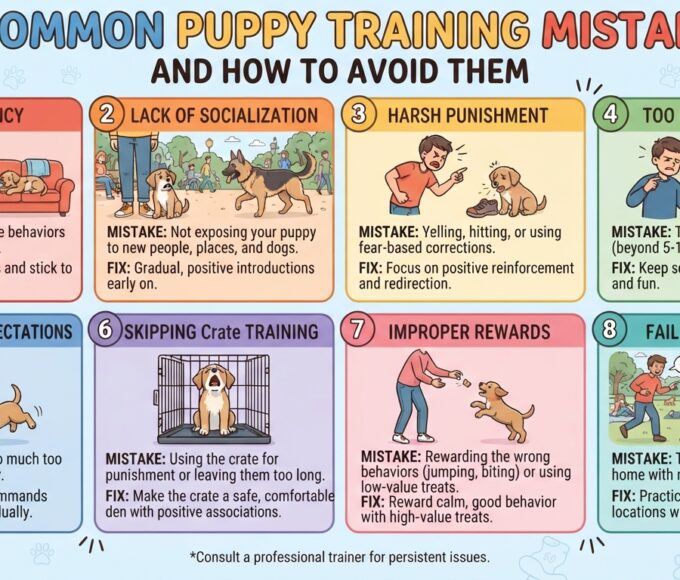
Avoid Harsh Punishment
Punishing a puppy for accidents, chewing, barking, or fear can create confusion and may damage trust.
Instead, manage the environment and teach an alternative behavior.
For example, if your puppy keeps chewing furniture, provide an appropriate chew toy and reward them for using it.
Training works best when the puppy understands what you want them to do.
5. Establish a Grooming and Hygiene Routine
Grooming isn’t just about making your puppy look cute.
Regular grooming helps you maintain their coat, nails, ears, skin, and teeth while also teaching them that handling can be a normal part of life.
Brush the Coat
How often your puppy needs brushing depends on their coat type.
Long, curly, or dense coats may require much more frequent grooming than short coats.
Start with very short sessions.
Give your puppy treats while gently brushing so that grooming becomes a positive experience.
Keep Nails at a Comfortable Length
Overgrown nails can affect how a dog walks and may become uncomfortable.
Introduce nail handling gradually.
If you’re nervous about trimming nails yourself, ask your veterinarian or professional groomer to demonstrate the correct technique.
Pay Attention to the Ears
Some puppies need more ear care than others.
Don’t routinely put cleaning solutions or objects deep inside the ear unless your veterinarian has recommended them.
Instead, watch for signs of a potential ear problem, such as:
- Persistent scratching
- Head shaking
- Redness
- Swelling
- Unusual odor
- Discharge
- Sensitivity when touched
These signs deserve veterinary attention.
Start Dental Care Early
Puppy teeth eventually give way to adult teeth, making early dental habits useful.
A dog-specific toothbrush and toothpaste can be introduced gradually.
Never use human toothpaste unless it has specifically been formulated and approved for dogs.
Bathe When Necessary
Puppies don’t necessarily need frequent baths.
When bathing is appropriate, use a gentle dog shampoo suitable for puppies and rinse thoroughly.
If your puppy develops persistent itching, redness, hair loss, or unusual skin changes, don’t assume that another bath will solve the problem. Ask your veterinarian about the underlying cause.
Bonus: Create a Puppy-Friendly Home
Puppy care doesn’t stop with food, exercise, veterinary appointments, training, and grooming.
Your home also needs to be safe.
Before your puppy arrives, look around from a puppy’s perspective.
Secure or remove:
- Electrical cables
- Toxic plants
- Cleaning products
- Human medications
- Small objects
- Accessible trash
- Certain foods
- Sharp objects
- Unsafe gaps
- Easily swallowed toys
Baby gates can also help you limit access to areas that aren’t ready for a curious puppy.
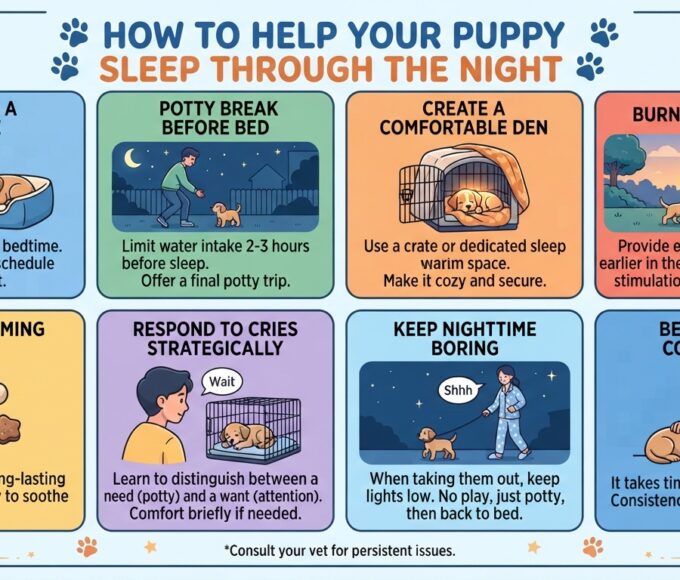
Give your puppy a comfortable sleeping area and a selection of safe, size-appropriate toys.
Build a Predictable Daily Routine
Puppies generally benefit from consistency.
Try to keep important parts of the day reasonably predictable, including:
Morning: Bathroom break, breakfast, gentle activity, and training.
Daytime: Rest, play, socialization, meals as appropriate, and short training sessions.
Evening: Calm play, bathroom break, grooming practice, and bedtime routine.
The schedule doesn’t have to be perfect.
What matters is helping your puppy understand what to expect.
Frequently Asked Questions
How many times should I feed my puppy each day?
Meal frequency depends on age, size, food, and individual needs. Younger puppies generally require more frequent meals than older puppies. Your veterinarian can recommend a schedule and portion size appropriate for your dog.
When should puppy training begin?
Training can begin as soon as your puppy comes home. Start with simple behaviors and use positive reinforcement to make learning rewarding.
How much exercise does a puppy need?
There isn’t one exercise amount that suits every puppy. Age, breed, adult size, health, and development all matter. Short periods of activity mixed with plenty of rest are generally more appropriate than prolonged or forced exercise.
When should my puppy visit the veterinarian?
Arrange an initial veterinary examination soon after bringing your puppy home and follow the vaccination and preventive-care schedule your veterinarian recommends.
How can I socialize my puppy safely?
Introduce your puppy gradually to appropriate people, sounds, surfaces, environments, handling, and healthy dogs. Keep experiences positive and avoid overwhelming a fearful puppy. Your veterinarian can advise you about safe socialization opportunities while vaccinations are still in progress.
How often should I groom my puppy?
It depends on the puppy’s coat. Begin brushing, nail handling, dental care, and gentle body handling early, even if your puppy doesn’t yet require extensive grooming.
A Simple Puppy Care Checklist
| Area | What to Remember |
|---|---|
| Nutrition | Complete, balanced puppy food and appropriate portions |
| Water | Fresh, clean water available regularly |
| Exercise | Age-appropriate activity with plenty of rest |
| Training | Short, positive sessions |
| Socialization | Gradual exposure to new experiences |
| Veterinary care | Vaccinations, parasite prevention, health checks |
| Grooming | Coat, nails, ears, skin, and dental care |
| Safety | Puppy-proof the home and supervise exploration |
| Sleep | Provide a quiet, comfortable resting space |
| Enrichment | Toys, sniffing, puzzles, and appropriate play |
Final Thoughts
Raising a puppy is a learning experience for both you and your new companion.
There will probably be accidents on the floor, chewed-up objects, interrupted sleep, and moments when you wonder whether your puppy will ever stop biting everything they can reach.
That’s normal puppy life.
The goal isn’t to create a perfectly behaved dog overnight.
It’s to build healthy habits one day at a time.
Provide appropriate nutrition, give your puppy safe opportunities to move and explore, stay on top of veterinary care, introduce the world gradually, and make grooming and handling positive experiences.
Most importantly, be patient.
The small routines you establish during puppyhood can help shape your dog’s confidence, behavior, and relationship with your family for years to come.






Leave a comment