





Dogs might not understand our passwords, pay the household bills, or know how to operate a laptop, but that doesn’t mean they’re not incredibly clever.
Anyone who has lived with a dog knows they can learn routines, recognize words, solve problems, remember where treats are hidden, and quickly discover which family member is easiest to persuade.
Sometimes their intelligence is impressive. Other times, it’s used entirely for their own benefit.
From finding creative ways around house rules to figuring out exactly when dinner should happen, here are 11 times dogs have made us wonder whether they’re actually the smartest members of the family.
1. They Know Exactly How to Make You Feel Guilty
Dogs don’t need words to communicate disappointment.
Leave for work without taking them with you, skip their usual walk, or refuse to share a snack, and suddenly you’re receiving the most dramatic look imaginable.
The lowered head, giant eyes, exaggerated sigh, or quiet stare can be remarkably effective.
Of course, dogs aren’t necessarily sitting there plotting an elaborate guilt campaign. They’re excellent at learning which behaviors get a response from their humans. If a particular expression results in attention, cuddles, or even a treat, they may repeat it.
And somehow, we keep falling for it.
2. They Have Mastered the Art of Getting What They Want
A clever dog doesn’t always need to bark or whine to make a request.
Some simply sit beside the door when they want to go outside. Others bring a favorite toy and place it directly at their owner’s feet.
Then there’s the classic dinner strategy: sit nearby, stare lovingly at the person eating, and wait.
Dogs are excellent observers. They can learn which actions produce particular responses from their humans.
Eventually, what looks like a casual request can become a carefully learned routine.
The dog may not be controlling the household—but sometimes it certainly feels that way.
3. They Somehow Know When It’s Dinner Time
Most dogs don’t need an alarm clock to remind them that it’s time to eat.
Even if you don’t check the clock, your dog may suddenly appear in the kitchen around the same time every day.
Dogs can learn daily routines and associate environmental cues with upcoming events. The sound of a particular appliance, the movement of family members, or simply the usual sequence of activities can tell them what comes next.
That’s why your dog may begin staring at you long before you’ve even thought about dinner.
And if you’re late?
Your dog will probably make sure you know about it.
4. They Learn How to Train Their Humans
We like to think that we’re the ones training our dogs.
But sometimes the process works both ways.
Suppose your dog sits quietly and receives a treat. After enough repetitions, the dog learns that sitting in a particular situation can produce food.
Soon, you may notice your dog sitting whenever it wants something.
Dogs are constantly learning from consequences. If a particular behavior gets them attention, food, play, access to the yard, or another reward, they’re likely to remember the connection.
That doesn’t mean they’re deliberately plotting against you.
It simply means they’re excellent learners—and they’re very good at figuring out what works.
5. They Notice When You’re Having a Bad Day
One of the most impressive things about dogs isn’t their ability to open doors or steal snacks.
It’s their ability to pay attention to their humans.
Many dogs respond differently when their owners are upset, stressed, or unusually quiet. They may move closer, rest beside them, offer a toy, or simply remain nearby.
Dogs are highly attentive to body language, facial expressions, voice patterns, and changes in familiar routines.
They may not understand exactly why you’re having a difficult day, but they can notice that something has changed.
Sometimes, that’s all the comfort you need.
6. They Figure Out How Doors and Gates Work
Some dogs eventually discover that a closed door isn’t necessarily a permanent barrier.
A particularly persistent dog might watch someone operate a door handle repeatedly and eventually experiment with pushing, pawing, jumping, or pulling.
The same thing can happen with gates, latches, and other simple barriers.
Once a dog discovers that a particular action opens something, the lesson can stick surprisingly well.
That’s why owners of clever escape artists sometimes have to rethink their entire home-security strategy.
If your dog has learned how the backyard gate works, you may want to check that latch twice.
7. They Can Look Completely Innocent After a Disaster
Who knocked over the trash?
Who destroyed the tissue box?
Who mysteriously removed the contents of a cushion?
And why is there a suspicious piece of evidence stuck to the dog’s fur?
Dogs don’t necessarily understand guilt in the same way humans do, but they can respond to our body language and tone when something has gone wrong.
That can produce the famously “guilty-looking” dog expression.
The lowered head and avoidance behaviors can make it seem as though your dog is fully aware of its crime.
Whether it’s genuine understanding or a response to your behavior, the performance can be remarkably convincing.
8. They Quickly Identify the Family Member Who Gives Extra Treats
Every household has one.
The person who says, “Okay, just one.”
Then gives another.
Then another.
Dogs are remarkably good at learning differences between people.
If one family member regularly provides extra snacks, longer play sessions, or fewer restrictions, the dog may naturally spend more time around that person when it wants something.
You might even notice your dog suddenly becoming extremely affectionate when that particular family member walks into the kitchen.
Coincidence?
Your dog probably has a different explanation.
9. They Understand More Words Than You Think
Many dogs learn specific words and cues through repetition and association.
They may recognize words connected to activities they enjoy, such as “walk,” “outside,” “food,” or the name of a favorite toy.
Some dogs can also learn the names of multiple objects.
And then there’s the classic spelling trick.
You quietly say, “W-A-L-K,” assuming your dog won’t understand.
Your dog looks up immediately.
At that point, it’s probably time to admit that your secret code wasn’t very secret.
Dogs may not understand human language exactly as we do, but they can become very skilled at associating sounds and words with particular outcomes.
10. They Find Creative Loopholes in the House Rules
“Don’t get on the couch.”
Your dog hears:
“Don’t get on the couch while I’m watching.”
Some dogs seem to specialize in technicalities.
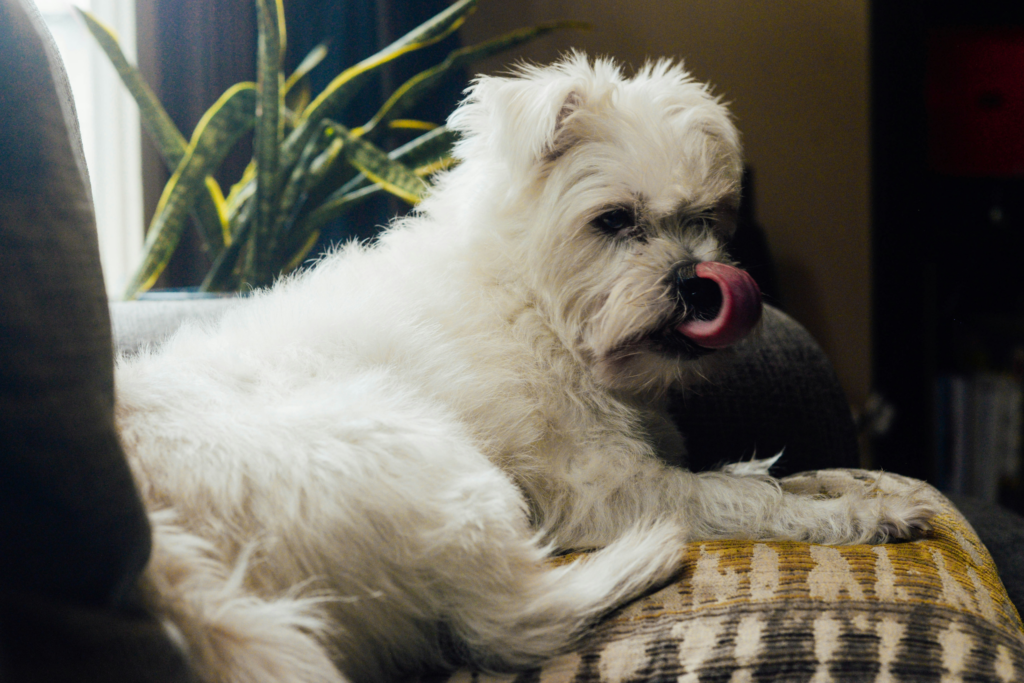
Perhaps the front paws are on the couch while the back legs remain on the floor. Maybe the dog waits until nobody is looking. Or perhaps it settles on a blanket that happens to be sitting on the forbidden furniture.
Dogs learn patterns quickly.
If a rule is enforced inconsistently, they may discover exactly when the rule applies—and when it doesn’t.
This is one reason consistency matters during training.
Otherwise, your dog may become an expert in household loopholes.
11. They Always Seem to Know Where the Best Spot Is
Whether it’s the warmest patch of sunlight, the softest blanket, or the exact location where everyone eventually gathers, dogs have a talent for finding comfortable places.
In multi-pet households, this can become even more entertaining.
A dog may quietly claim the favorite sleeping location while another pet is distracted. Or it may discover that sitting directly beside a human guarantees access to both warmth and attention.
They observe what happens around them and adjust their behavior accordingly.
Call it strategy, experience, or simply excellent timing.
Either way, your dog often seems to know exactly where it wants to be.
Are Dogs Actually Smarter Than Humans?
Probably not in the way we usually define human intelligence—but dogs have impressive abilities of their own.
Dogs can learn associations, remember routines, respond to cues, solve certain problems, recognize familiar people and objects, and adjust their behavior based on previous experiences.
Their intelligence is especially obvious when they have a strong motivation.
Food, play, attention, access to the outdoors, and social interaction can all encourage dogs to learn quickly.
What looks like mischievous genius is often a combination of learning, observation, memory, and motivation.
Why Dogs Are So Good at Training Their Owners
Dogs live alongside humans, so they’ve had plenty of opportunities to learn how we behave.
They notice things such as:
- What time you usually wake up
- When meals are prepared
- Which sounds mean “walk”
- Who gives the most treats
- What behavior gets attention
- Which doors lead outside
- Where toys are stored
- What happens when they bark or nudge you
When a behavior consistently produces a desirable result, dogs can learn to repeat it.
In other words, your dog may not be manipulating you in the human sense—but it certainly knows what works.
How to Encourage Your Dog’s Intelligence
Instead of letting your dog’s problem-solving skills focus entirely on stealing food or escaping the yard, give that brain something productive to do.
Try:
Puzzle Toys
Food puzzles can encourage dogs to work for part of their meal or treats.
Training Games
Teach new cues, tricks, and behaviors using reward-based training.
Scent Games
Hide treats or toys and let your dog use its nose to search for them.
Interactive Play
Games such as fetch and appropriate tug can provide physical and mental stimulation.
Rotating Toys
Instead of leaving every toy available all the time, rotate them to keep familiar objects interesting.
Mental stimulation can be particularly valuable for intelligent and energetic dogs.
Final Thoughts
Dogs may never learn how to file your taxes or remember your Wi-Fi password, but they have their own impressive forms of intelligence.
They learn our schedules, recognize our habits, remember which behaviors earn rewards, and sometimes discover ways around rules we thought were perfectly clear.
The funniest part is that we often don’t even realize how much they’re learning.
So the next time your dog appears at the kitchen door five minutes before dinner, brings you a ball without being asked, or mysteriously ends up in the one chair you wanted, remember:
You may think you’re running the household—but your dog has probably been studying the system the entire time.
This Article Was Generated By AI.







Leave a comment