




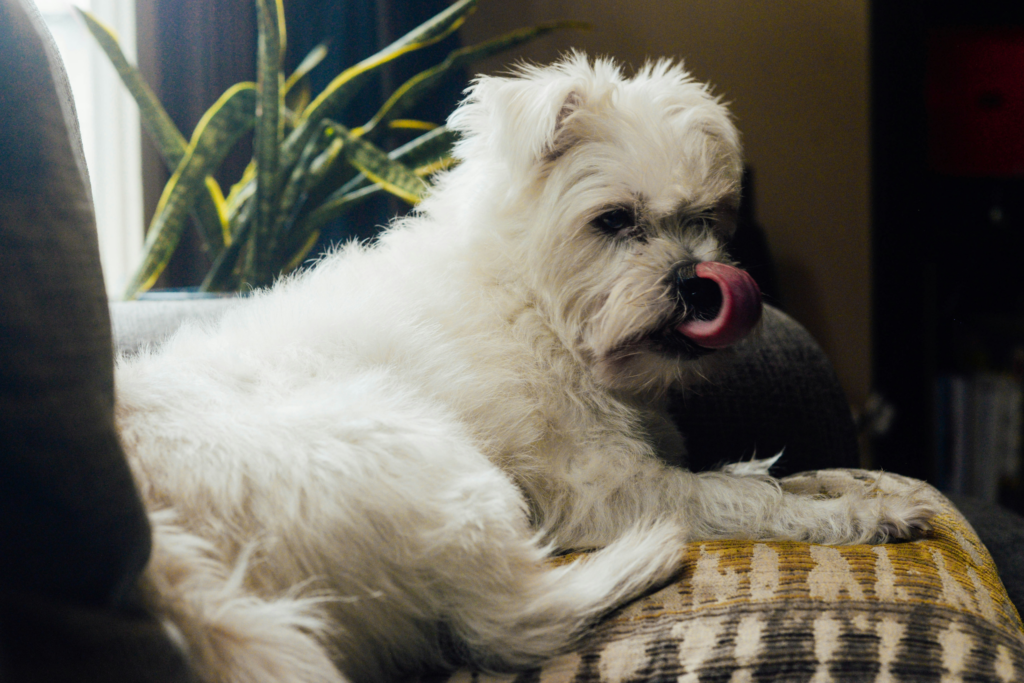
Have you ever caught your dog repeatedly licking the couch cushions? Although it may look like a strange habit, couch licking can happen for several different reasons. Sometimes your dog simply likes the smell or taste of the fabric, while in other cases, the behavior may be connected to boredom, attention-seeking, stress, or anxiety.
Understanding why your dog licks the couch can help you decide whether it is simply an occasional habit or something that deserves more attention.
Why Does My Dog Lick the Couch?
1. Your Couch Has Interesting Smells and Tastes
Dogs experience the world largely through their noses and mouths. Your couch can collect food crumbs, drink spills, skin oils, sweat, and other scents that may be fascinating to your dog.
Even if the couch looks clean, your dog may be able to detect smells that you cannot.
If your dog mainly licks certain areas of the couch, check whether those spots have been exposed to food or drinks. Cleaning the fabric with a pet-safe cleaner may help remove lingering smells and residue.
2. Your Dog Is Bored
Boredom can lead dogs to develop repetitive behaviors. If your dog does not get enough physical exercise, playtime, or mental stimulation, licking the couch may become an easy way to occupy themselves.
This can be particularly noticeable when your dog spends long periods alone or has little to do around the house.
Try providing activities such as:
- Interactive toys
- Puzzle feeders
- Chew toys
- Training games
- Snuffle mats
- Supervised play sessions
- Regular walks
Giving your dog more appropriate things to do can make furniture licking less interesting.
3. Your Dog Wants Your Attention
Dogs quickly learn which behaviors make their humans react.
If your dog starts licking the couch and you immediately tell them to stop, look at them, or approach them, they may learn that licking gets a response.
Instead of giving the behavior lots of attention, calmly redirect your dog toward an appropriate activity. Reward them when they choose the toy, chew, or activity instead.
4. Licking Can Be Self-Soothing
Repetitive licking may sometimes help a dog calm themselves when they feel uncomfortable or stressed.
Some dogs develop repetitive behaviors during situations such as:
- Being left alone
- Changes in their routine
- Loud noises
- Moving to a new home
- Changes in the household
- Separation from their favorite person
If couch licking appears mainly during stressful situations, anxiety or emotional discomfort may be playing a role.
Look for other signs of stress, such as pacing, whining, panting, hiding, restlessness, or destructive behavior.
5. Your Dog Is Exploring the Environment
For dogs, licking can be a way of investigating their surroundings. A new smell, unusual texture, or interesting taste can encourage them to investigate a couch cushion with their tongue.
Occasional licking is therefore not necessarily concerning.
The important distinction is whether your dog can easily stop when redirected or whether they seem unable to move away from the behavior.
6. The Behavior Has Become a Habit
Sometimes a behavior begins for one reason and eventually becomes a routine.
For example, a dog might initially lick the couch because they found a food smell. After repeating the behavior several times, licking itself may become rewarding or comforting.
At that point, simply removing food residue may not completely solve the problem.
Consistent redirection and providing alternative activities can help your dog develop a different habit.
7. Persistent Licking May Need More Attention
Occasional couch licking is usually easier to explain than frequent, intense, or difficult-to-interrupt licking.
If your dog spends a large amount of time licking furniture or other surfaces and seems unable to stop, consider discussing the behavior with your veterinarian. Persistent repetitive behaviors can sometimes be associated with anxiety, compulsive behavior, or an underlying physical problem.
A veterinarian can help determine whether your dog’s behavior warrants further investigation.
How to Stop Your Dog From Licking the Couch
Once you understand the possible cause, you can start working on a solution.
Keep Food and Drinks Away From the Couch
If your dog is attracted to food smells, avoid eating meals or leaving snacks on the couch.
Clean spills promptly and use a cleaner that is appropriate for the couch material and safe around pets.
Give Your Dog Something Better to Do
Redirect your dog before the licking becomes excessive.
You can offer:
- A durable chew toy
- A puzzle toy
- A lick mat
- A stuffed food toy
- A supervised game
- A short training session
Choose activities that are appropriate for your dog’s size, chewing habits, and dietary needs.
Increase Mental and Physical Stimulation
A tired and mentally engaged dog may have less interest in repetitive household behaviors.
Depending on your dog’s age and abilities, consider adding more walks, play sessions, scent games, obedience training, or interactive toys to their routine.
Create a Comfortable Resting Area
If your dog appears to lick the couch when anxious or unsettled, provide a comfortable alternative resting space.
A quiet dog bed in a familiar location can give your pet a place to relax without relying on the couch as a source of comfort.
Avoid Punishing the Behavior
Yelling or physically correcting your dog can increase stress and may make some anxiety-related behaviors worse.
Instead, calmly interrupt the licking and redirect your dog toward an appropriate activity. Reward them when they engage with the alternative.
When Should You Be Concerned?
Pay closer attention if your dog:
- Licks the couch for long periods
- Seems unable to stop
- Suddenly develops excessive licking
- Shows other signs of anxiety or distress
- Licks many different surfaces repeatedly
- Shows changes in appetite or normal behavior
- Develops vomiting, diarrhea, or other unusual symptoms
If the behavior is persistent, sudden, or accompanied by other changes, speak with your veterinarian rather than assuming it is simply a quirky habit.
Final Thoughts
Why does my dog lick the couch? There is no single answer. Your dog may be attracted to interesting smells, looking for something to do, seeking attention, exploring their surroundings, or using licking as a way to relax.
Start by removing food smells and residue, increasing enrichment, and calmly redirecting your dog toward appropriate activities. If the licking becomes excessive or difficult to interrupt, a veterinarian can help determine whether there is an underlying reason for the behavior.
A little couch licking may just be one of your dog’s odd habits—but persistent licking is worth paying attention to.











Leave a comment