


Training a dog has changed considerably over the years. While traditional methods often relied on physical corrections or aversive equipment, modern dog training increasingly emphasizes communication, rewards, management, and teaching dogs what to do rather than simply correcting unwanted behavior.
Remote collars—sometimes called electronic collars or e-collars—remain controversial. Depending on the device and how it is used, electronic collars may deliver stimulation, vibration, or an audible signal. Supporters and critics disagree about their usefulness and welfare implications, and inappropriate use can create fear, stress, or other unwanted associations.
Fortunately, dog owners have many other tools available.
From clickers and long lines to food rewards, harnesses, enrichment toys, and carefully structured training plans, you can teach a wide range of behaviors without relying on physical punishment.
The goal isn’t simply to make a dog obey. Good training should help your dog understand what you want, develop useful habits, and feel safe participating in the learning process.
What Does Modern Dog Training Look Like?
Modern reward-based training generally focuses on reinforcing behaviors you want to see repeated.
For example, if you want your dog to sit when greeting someone, you can:
- Ask for or encourage the sit.
- Mark the correct behavior.
- Give a reward.
- Repeat the exercise.
- Gradually practice around distractions.
Over time, the dog learns that sitting calmly produces something worthwhile.
Rewards don’t always have to be food. Depending on the individual dog, useful rewards can include:
- Small treats
- Toys
- Fetch
- Tug
- Praise
- Petting, when the dog enjoys it
- Access to something the dog wants
- Permission to investigate or sniff
The best reward is the one that motivates your particular dog.
1. Positive Reinforcement
Positive reinforcement is one of the most useful foundations for everyday dog training.
The basic idea is simple: when your dog performs a desirable behavior, you provide something they value.
For example:
Dog sits → reward arrives.
Repeated consistently, the dog becomes more likely to offer the behavior.
Positive reinforcement can be used for much more than basic obedience.
You can teach dogs to:
- Wait at doors
- Walk politely
- Come when called
- Settle on a mat
- Leave objects alone
- Drop items
- Sit for greetings
- Cooperate with grooming
- Enter a crate
- Accept handling
- Focus on their owner
2. Clicker Training
A clicker is a small device that produces a distinct clicking sound.
The sound can act as a marker that tells the dog, “That behavior was the one that earned the reward.”
Before using a clicker for training, the dog needs to learn that the click predicts something valuable.
For example:
Click → treat
After enough repetitions, the click becomes meaningful.
You can then use it to mark precise moments during training.
Why timing matters
Suppose you’re teaching your dog to touch your hand with their nose.
If you click immediately when the dog’s nose touches your hand, you’ve clearly identified the behavior you’re rewarding.
If you wait several seconds, the dog may not understand which action earned the reward.
Good timing makes training easier for both dog and owner.
3. Verbal Markers Can Work Too
You don’t necessarily need a clicker.
Some owners use a short word such as:
- “Yes”
- “Good”
- “Correct”
The important thing is consistency.
Choose a brief marker and pair it with a reward so your dog learns what it means.
A verbal marker can be particularly convenient when you’re outside or don’t have a clicker in your hand.
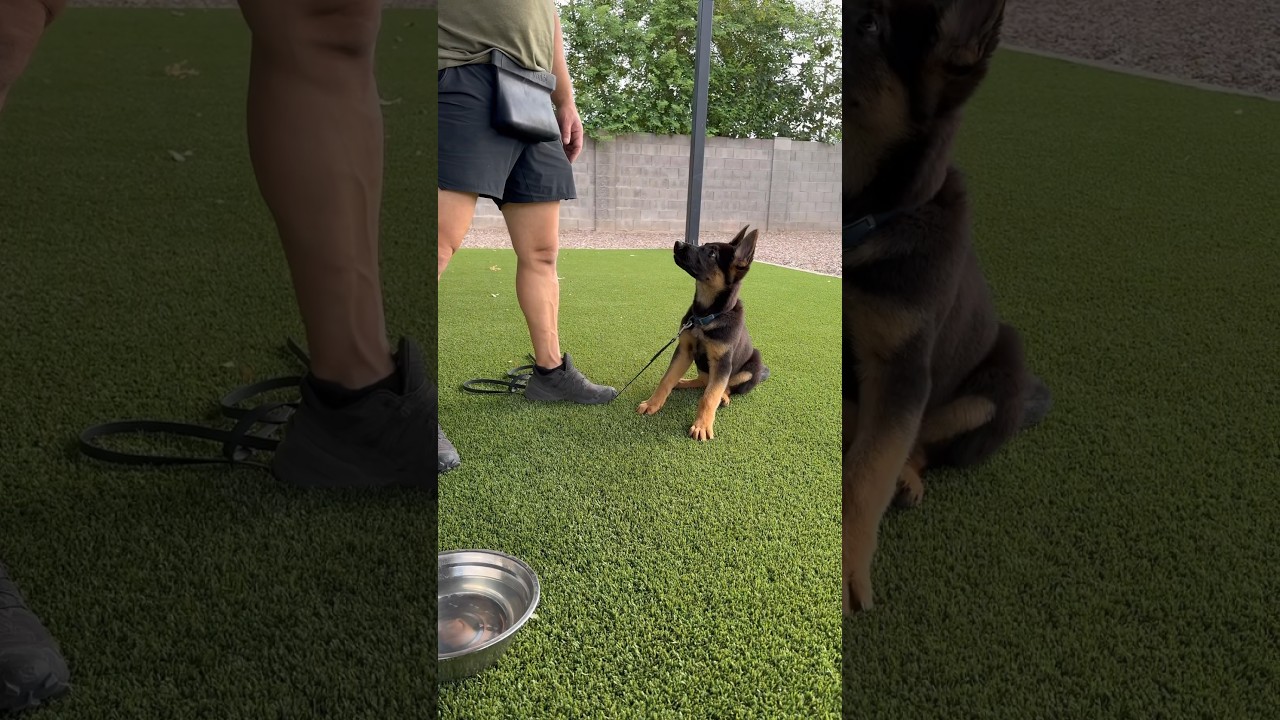
4. Use a Long Line for Distance Training
One of the most useful alternatives to remote corrections is a long training line.
A long line gives your dog more freedom to explore while allowing you to maintain physical control when appropriate.
It can be useful for practicing:
- Recall
- Attention
- Emergency cues
- Walking at a distance
- Outdoor focus
- Coming away from distractions
For example, you can practice recall in a secure open area while the long line provides an additional safety layer.
Important safety point
Don’t attach a long line to unsuitable equipment or allow it to wrap around people, trees, or other obstacles.
Use it in an appropriate open environment and learn how to handle the line safely.
A long line is a training tool—not a replacement for supervision.
5. Try a Properly Fitted Harness
Harnesses can be useful for managing dogs during walks while giving owners another option besides correction-based collars.
Different harness designs work differently, so fit is important.
A good harness should:
- Fit securely
- Allow comfortable movement
- Avoid excessive rubbing
- Not restrict normal shoulder movement
- Be appropriate for the dog’s body shape
A harness alone doesn’t teach loose-leash walking.
The training still comes from reinforcing the behavior you want.
For example, when the leash is loose, reward your dog or continue moving toward something they enjoy.
6. Teach Loose-Leash Walking Step by Step
Pulling on the leash is easier to address when you teach the dog what you want instead of simply trying to stop the pulling.
Start somewhere with few distractions.
Reward your dog for:
- Walking near you
- Looking toward you
- Keeping the leash loose
- Returning to your side
- Checking in voluntarily
Gradually increase the difficulty.
If your dog becomes extremely distracted, the environment may simply be too challenging at that stage.
Move farther away from the distraction and practice there first.
7. Use Hand Signals Alongside Verbal Cues
Dogs don’t communicate through language the way humans do, but they can learn associations between words, gestures, and behaviors.
Teaching both verbal and visual cues can be useful.
For example:
“Sit” + hand signal → sitting → reward
Over time, your dog can learn to respond to either cue.
Hand signals can be particularly useful when you’re in a noisy environment where verbal communication is difficult.
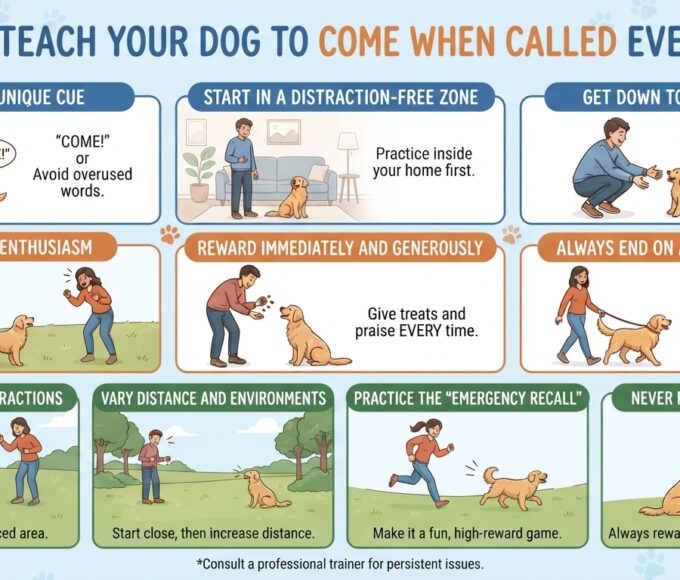
8. Practice Recall With Rewards
A reliable recall is one of the most valuable skills you can teach a dog.
Start in a controlled environment.
Use a cheerful voice, encourage your dog toward you, and provide a rewarding consequence when they arrive.
The reward might be:
- A high-value treat
- A favorite toy
- Praise
- A short game
- Access to something enjoyable
Don’t repeatedly call your dog when you have little chance of success.
Instead, make the environment easier and gradually increase distractions.
For difficult recall problems, working with a qualified reward-based trainer can be extremely helpful.
9. Teach an Emergency Recall
An emergency recall is a special cue intended for situations where you need your dog to return immediately.
Choose a unique word or sound that you don’t use casually.
Practice it initially in easy situations and provide an especially valuable reward.
The goal is to create a very strong positive association.
Don’t use your emergency cue casually for routine situations such as ending play every time. You want the cue to remain highly meaningful.
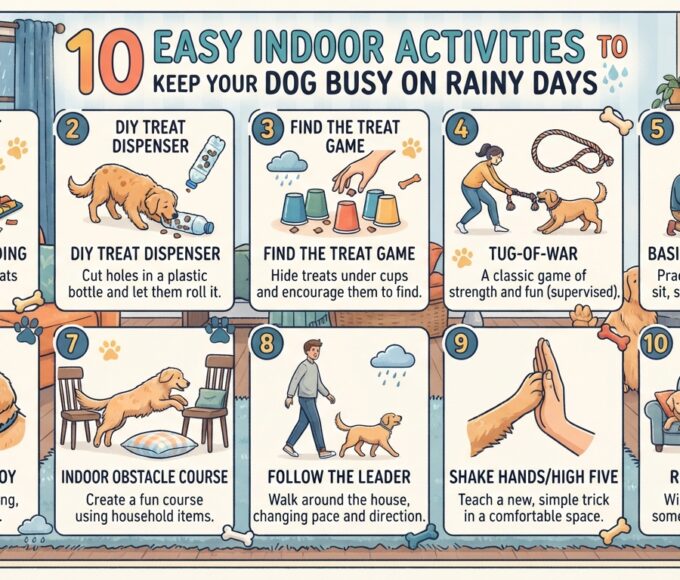
10. Use Food Puzzles and Enrichment
Training isn’t only about obedience.
Dogs also need appropriate opportunities to think, explore, sniff, chew, and solve problems.
Enrichment can reduce boredom and provide an outlet for natural behaviors.
Consider:
- Puzzle feeders
- Snuffle mats
- Food-stuffable toys
- Scent games
- Hide-and-seek
- Scatter feeding where appropriate
- Simple trick training
Mental enrichment can be particularly useful for dogs that become frustrated when they don’t receive enough appropriate stimulation.
11. Use a Mat or Place Cue
Teaching your dog to relax on a specific mat can be incredibly practical.
Start by rewarding the dog for interacting with the mat.
Then gradually reward:
- Standing on it
- Sitting on it
- Lying down
- Staying there calmly
- Remaining there while distractions occur
Eventually, the mat can become a cue for settling.
This can help with situations such as:
- Visitors arriving
- Mealtimes
- Working from home
- Eating at a dog-friendly location
- Grooming preparation
- Household activity
12. Manage the Environment
Training isn’t only about asking a dog to make the right choice.
Sometimes the easiest way to prevent unwanted behavior is to change the environment.
For example, if your dog repeatedly steals food from a counter, keeping food inaccessible prevents the behavior from being rehearsed.
If your puppy chews electrical cables, block access and provide appropriate alternatives.
If your dog becomes overwhelmed by visitors, use a quiet area or barrier while teaching calm behavior gradually.
Management and training work together.
Management prevents problems in the moment while training develops better habits over time.
13. Use Consistent Household Rules
Dogs can become confused when different people enforce completely different rules.
For example:
- One person allows jumping.
- Another person rewards four paws on the floor.
- Someone else pushes the dog away while playing.
The dog receives inconsistent information.
Instead, decide what behaviors everyone should reinforce.
If you don’t want your dog jumping on guests, everyone should respond consistently and reward calm greetings.
Consistency makes learning easier.
14. Keep Training Sessions Short and Successful
Long training sessions can become frustrating for both the dog and owner.
Instead, practice in short sessions throughout the day.
For example, you might spend a few minutes practicing:
- Name recognition
- Sit
- Down
- Recall
- Hand target
- Loose-leash walking
- Settle
End while your dog is still engaged.
Training doesn’t need to happen only in formal sessions. Everyday moments are opportunities to reinforce desirable behavior.
15. Don’t Forget Real-Life Training
A dog that performs perfectly in the living room may behave completely differently at a busy park.
That’s normal.
Dogs need practice in different environments.
Gradually introduce:
- New rooms
- Gardens
- Quiet streets
- Parks
- Pet-friendly stores where appropriate
- Visitors
- Different surfaces
- Mild distractions
Increase difficulty gradually rather than expecting a newly learned behavior to work perfectly everywhere.
Remote Collars: What Owners Should Know
Electronic collars can include different functions and technologies, so the term “remote collar” doesn’t describe just one type of device.
Some devices offer tone or vibration, while others provide electrical stimulation.
It’s important not to describe electrical stimulation as automatically painless or harmless. The sensation and the dog’s response can vary, and inappropriate use can cause distress or create negative associations.
If someone is considering an electronic collar, they should understand the potential welfare concerns, follow applicable laws and professional guidance, and seek advice from a qualified trainer or veterinary behavior professional rather than experimenting with high-intensity settings.
For many everyday training goals, reward-based methods and management provide plenty of alternatives.
What If Your Dog Isn’t Responding to Training?
Lack of progress doesn’t necessarily mean your dog is stubborn.
Consider whether:
- The environment is too distracting
- The reward isn’t valuable enough
- The training step is too difficult
- Sessions are too long
- The cue isn’t clear
- Different family members use different rules
- Your dog doesn’t understand the behavior yet
- Fear or anxiety is interfering
- A physical or medical issue could be contributing
Break the behavior into smaller steps.
If a dog suddenly stops responding to previously learned cues or shows a major behavior change, a veterinary check can be appropriate because pain or illness can sometimes affect behavior.
When Professional Help Makes Sense
Some problems are more complicated than basic obedience.
Consider working with a qualified professional if your dog has:
- Aggression
- Severe fear
- Serious separation-related problems
- Dangerous reactivity
- Persistent escape behavior
- Resource guarding
- Severe anxiety
- A bite history
For serious behavior concerns, a veterinarian or veterinary behavior professional may be able to help identify medical factors and develop an appropriate behavior plan.
Look for trainers who clearly explain their methods and are willing to discuss how they handle fear, aggression, and difficult behaviors rather than relying on punishment as the default solution.
Common Dog Training Mistakes
Expecting Immediate Results
Training is a process. Dogs learn at different rates.
Repeating Commands Over and Over
If you repeatedly say “come, come, come” without reinforcing the behavior, the word can lose clarity.
Training With Too Many Distractions Too Soon
Build the behavior in easier environments first.
Rewarding Too Late
The closer the reward is to the desired behavior, the easier it is for the dog to understand what earned it.
Ignoring Good Behavior
Dogs are constantly doing things we want. Calmly resting, checking in, and walking politely can all be reinforced.
Using Punishment Out of Frustration
Training should not become an emotional battle. If you’re frustrated, pause and make the exercise easier.
A Simple Modern Training Plan
You can structure a daily routine around several short exercises.
Morning
Practice name recognition and calm leash walking.
During the day
Reward calm behavior around the house.
Afternoon
Use a puzzle toy or scent game for mental enrichment.
Evening
Practice recall, basic cues, or a new trick.
Throughout the day
Reward behaviors you want your dog to repeat naturally.
This approach turns training into part of everyday life rather than a separate activity that happens only occasionally.
Frequently Asked Questions
Are remote collars necessary to train a well-behaved dog?
No. Many useful behaviors can be taught using reward-based training, management, long lines, harnesses, food rewards, toys, and other training tools.
Are electronic collars safe?
Safety depends on the device, its use, the individual dog, and the training context. Electrical stimulation can cause discomfort or distress, particularly when used improperly, so it should not be treated as automatically harmless or humane.
What can I use instead of a remote collar?
Depending on your training goal, alternatives include food rewards, toys, clickers, verbal markers, long lines, appropriate harnesses, training mats, barriers, enrichment toys, and structured management.
Is clicker training difficult?
No. The basic concept is straightforward, although good timing takes practice. The click should consistently mark the behavior you want to reinforce.
How long should dog training sessions be?
Short sessions are often easier for dogs to handle than long sessions. The ideal duration varies according to the dog’s age, experience, environment, and ability to stay engaged.
What should I do if my dog keeps ignoring me?
Make the exercise easier and reduce distractions. Check whether your reward is motivating and whether your dog actually understands the cue. If the problem persists, consider working with a qualified trainer.
Can older dogs learn new behaviors?
Yes. Dogs can continue learning throughout their lives. Training may need to be adapted to accommodate an older dog’s physical abilities, experience, and individual needs.
Final Thoughts
Modern dog training gives owners many ways to teach useful behaviors without relying on physical corrections.
A combination of positive reinforcement, clear communication, appropriate equipment, environmental management, enrichment, and consistency can help dogs develop skills that make everyday life easier.
Tools such as clickers, harnesses, long lines, food puzzles, training mats, and rewards each have a practical role. But the most important training tool is still the relationship between the dog and the person teaching them.
Be patient, make learning worthwhile, practice gradually, and remember that the goal isn’t simply obedience.
A well-trained dog should also be able to understand what is expected, navigate everyday situations safely, and feel comfortable learning alongside their human companion.








Leave a comment