





Humans can run, swim, and move surprisingly quickly—but compared with many animals, we’re not exactly built for speed.
Some creatures have evolved specialized bodies that allow them to sprint across open ground, dive through the air, or race through water at astonishing velocities. Others aren’t particularly fast at all, relying instead on camouflage, armor, energy conservation, or other defenses.
Of course, comparing humans with animals isn’t always straightforward. A cheetah sprinting across open ground and a peregrine falcon diving through the sky aren’t really competing under the same conditions.
Still, it’s fun to imagine which animals would leave us behind and which ones might give an ordinary human runner a fighting chance.
1. Cheetah
The cheetah is famous for being the fastest land animal.
Its body is practically designed for acceleration. Long legs, a flexible spine, a lightweight frame, large nasal passages, and specialized feet all contribute to its remarkable sprinting ability.
A cheetah can reach speeds of roughly 60–70 mph (97–113 km/h) for short bursts.
That speed isn’t designed for long-distance running. Cheetahs rely on rapid acceleration and short chases before needing to slow down and recover.
A human attempting to race one across open ground would have virtually no chance of keeping up.
2. Peregrine Falcon
If the race takes place in the sky, humans aren’t even remotely competitive.
Peregrine falcons are famous for their spectacular hunting dives, known as stoops. During these dives, they can reach speeds of well over 100 mph, with some measured or estimated dives reaching around 200 mph or more under particular conditions.
Their streamlined bodies and specialized wings allow them to control these high-speed descents while pursuing airborne prey.
Unlike a land sprint, however, this isn’t the speed a peregrine maintains during ordinary level flight.
Still, if the challenge is “who can get from the sky to the ground fastest,” we’d be out of the competition immediately.
3. Pronghorn
The pronghorn is one of North America’s great speed specialists.
It can reach speeds of roughly 55 mph (89 km/h) and, unlike a cheetah, is capable of maintaining high speeds for considerably longer periods.
Its large lungs, efficient cardiovascular system, and long legs help it travel quickly across open landscapes.
The pronghorn’s unusual speed is especially valuable in an environment where there are few places to hide.
A human runner would have little hope of matching its combination of speed and endurance.
4. Sailfish
The sailfish is often described as one of the fastest fish in the ocean.
Its streamlined body, powerful muscles, and large dorsal fin help it maneuver rapidly while hunting.
Claims about exact top swimming speeds vary considerably, so the commonly repeated figures of around 60–70 mph should be treated cautiously rather than as a precisely established everyday speed.
What isn’t in doubt is the sailfish’s remarkable acceleration and agility in the water.
Of course, humans aren’t exactly built for an underwater race.
Even an excellent swimmer would be at a tremendous disadvantage against a specialized marine predator.
5. Lion
Lions are powerful sprinters capable of reaching approximately 50 mph (80 km/h) over short distances.
Their muscular hindquarters and powerful legs allow them to accelerate rapidly when pursuing prey.
But lions aren’t marathon runners.
Successful hunts depend on positioning, teamwork, stealth, and short bursts of speed rather than chasing prey indefinitely.
A human wouldn’t be able to compete with a lion’s acceleration or top speed—and getting close enough to try would obviously be a terrible idea.
6. Greyhound
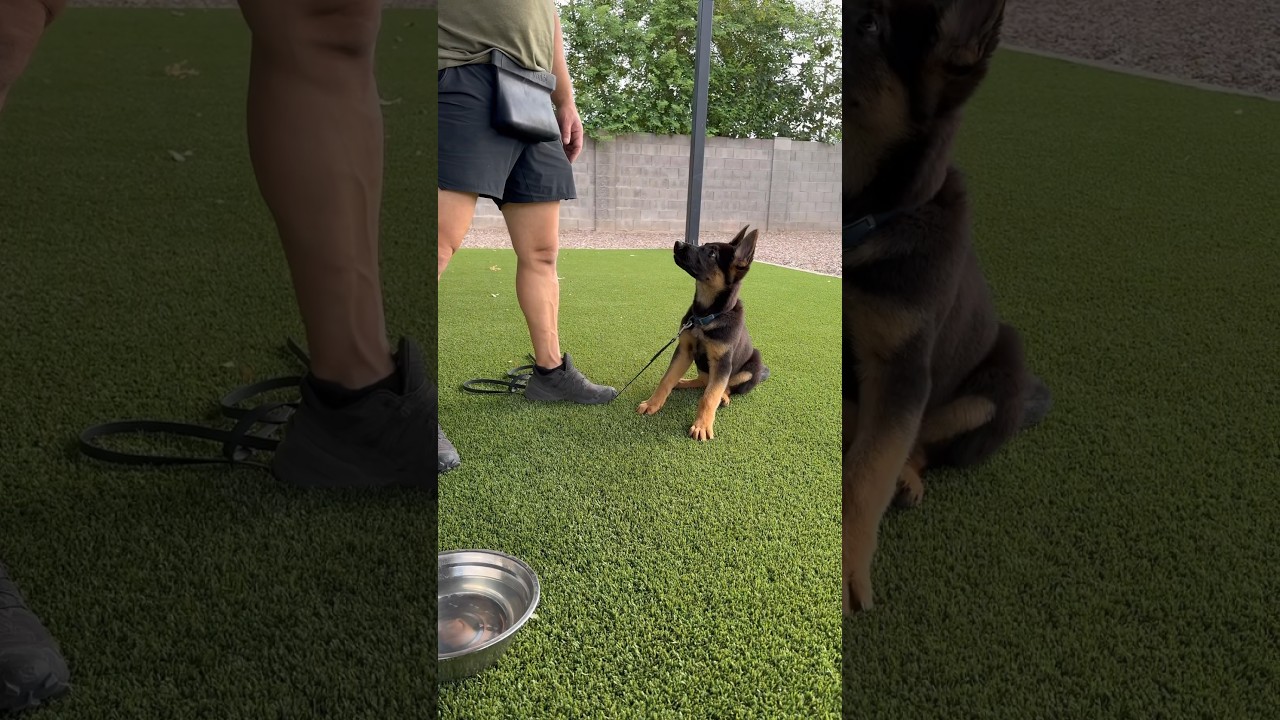
Greyhounds are among the fastest domestic dogs.
Their long legs, flexible spine, deep chest, and lightweight athletic build allow them to reach roughly 40–45 mph (64–72 km/h) during a sprint.
They were developed for running and chasing, and their body shape is particularly well suited to rapid acceleration.
A fit human runner can reach impressive speeds, but a Greyhound would quickly pull away over a short sprint.
Fortunately, Greyhounds are much more interested in ordinary dog activities than proving their superiority in human races.
7. Wildebeest
Wildebeests may look heavy and somewhat ungainly, but their appearance is deceptive.
They can reach speeds of around 50 mph (80 km/h) and are capable of covering considerable ground while migrating across African grasslands.
Speed is particularly important when wildebeests are escaping predators.
Their powerful legs and endurance allow them to travel quickly over open terrain.
A human runner would struggle to match either their top speed or their ability to maintain a fast pace across the landscape.
8. Ostrich
The ostrich is the fastest bird on land.
Although it cannot fly, its powerful legs allow it to reach speeds of approximately 40–45 mph (64–72 km/h).
Its two-toed feet and enormous stride length contribute to its impressive running ability.
An ostrich can also maintain a relatively high speed for much longer than a typical human sprint.
So while the bird may look unusual compared with a sleek predator, it is absolutely not something you’d want to challenge on a running track.
9. Hare
Hares are built for sudden acceleration and evasive movement.
Depending on the species and conditions, some hares can reach speeds of around 40–45 mph (64–72 km/h).
Speed isn’t their only advantage. Hares can rapidly change direction, making it difficult for predators to predict where they’re going.
A human might be able to run faster than expected over certain distances, but matching a hare’s acceleration and agility would be extremely difficult.
10. Elk
Elk are among the fastest large mammals found in North America.
They can reach roughly 40–45 mph (64–72 km/h) over short distances.
Their long legs allow them to cover ground efficiently, while their size gives them considerable physical power.
Elk don’t need to be graceful-looking to be fast.
If one decides to run, it can cover distance much more quickly than most people would expect.
11. Kangaroo
Kangaroos use a completely different running strategy from humans.
Rather than taking conventional running strides, they move using powerful hopping motions driven by their large hind legs.
Some kangaroos can reach approximately 40 mph (64 km/h).
Their tails help with balance and movement, while their elastic tendons help make hopping an efficient way to travel.
A human might win a race under some unusual conditions, but over open ground a large kangaroo would have a substantial advantage.
5 Animals You Might Actually Outrun
Not every animal is interested in setting speed records.
Some species move slowly because their survival strategies don’t depend on sprinting. Others are adapted for climbing, swimming, grazing, conserving energy, or carrying protective armor.
Here are five animals whose normal ground speeds are much more manageable for a human.
12. Tortoise
Tortoises are perhaps the classic example of slow movement.
Their heavy shells, sturdy bodies, and short legs are designed for protection and efficient survival rather than speed.
Many tortoises move at well under 1 mph (1.6 km/h).
An average person could easily walk faster than a tortoise.
But speed isn’t exactly the tortoise’s priority. Its shell provides protection, while its slow metabolism helps it conserve energy.
In a race, the tortoise isn’t trying to beat you. It’s simply going about its day.
13. Sloth
Sloths are famously slow-moving animals.
On the ground, their movement is particularly awkward because their bodies are adapted primarily for life in trees.
Their slow metabolism and energy-conserving lifestyle mean that speed isn’t an important survival advantage.
A person could easily outrun a sloth on the ground.
However, that doesn’t mean sloths are poorly adapted. Their slow lifestyle works remarkably well when combined with camouflage, a tree-dwelling existence, and energy conservation.
14. Koala
Koalas spend much of their lives in trees and aren’t built for long-distance running.
On the ground, they generally move slowly, although they can move faster when necessary.
Their bodies are adapted primarily for climbing and living among eucalyptus trees rather than chasing prey or escaping through open landscapes.
A human could comfortably outpace a koala in a short ground race.
But once climbing becomes part of the competition, the rules change dramatically.
15. Manatee
Manatees are large aquatic mammals that spend much of their time moving slowly through rivers, coastal waters, and other shallow aquatic environments.
They commonly cruise at relatively modest speeds, although they can accelerate considerably when necessary.
Because they live in water, comparing them with a human runner isn’t particularly fair.
A human in the water would also be dealing with an entirely different type of movement.
Still, compared with many fast marine animals, manatees are definitely on the relaxed side.
16. Gila Monster
The Gila monster is a venomous lizard found in parts of the southwestern United States and northwestern Mexico.
It is not built for high-speed pursuits.
Its heavy body and short legs make it a relatively slow-moving reptile, and its survival strategy relies on other adaptations rather than sprinting.
A healthy human could easily move faster than a Gila monster.
That doesn’t mean someone should approach one, though.
Being slow doesn’t make a wild animal harmless, and Gila monsters should always be observed from a safe distance.
Why Are Some Animals So Fast?
Animal speed is closely connected to survival.
Predators may need speed to catch prey, while prey species may depend on acceleration to escape predators.
Other animals have evolved for completely different purposes.
Consider the contrast:
| Animal | Approximate Speed | Main Advantage |
|---|---|---|
| Cheetah | 60–70 mph | Explosive sprinting |
| Peregrine falcon | 100+ mph in dives | High-speed aerial hunting |
| Pronghorn | Up to ~55 mph | Speed and endurance |
| Lion | Up to ~50 mph | Short hunting bursts |
| Greyhound | Up to ~45 mph | Sprinting |
| Ostrich | Up to ~45 mph | Fast, efficient running |
| Hare | Up to ~45 mph | Speed and agility |
| Elk | Up to ~45 mph | Powerful running |
| Kangaroo | Up to ~40 mph | Efficient hopping |
| Tortoise | Under ~1 mph | Protection and energy conservation |
| Sloth | Very slow on land | Energy conservation and camouflage |
| Gila monster | Slow | Defense and energy conservation |
Exact maximum speeds can vary according to species, measurement method, terrain, motivation, and environmental conditions, so these numbers are best viewed as approximate comparisons rather than guaranteed speeds.
Could a Human Outrun Any Wild Animal?
Possibly—but the comparison depends heavily on the animal and the circumstances.
Humans aren’t particularly impressive sprinters compared with specialized running animals. However, humans have another advantage: endurance.
Our ability to regulate body temperature through sweating, combined with efficient upright movement, can make humans surprisingly capable endurance athletes.
That doesn’t mean you should attempt to outrun wildlife.
A wild animal can behave unpredictably, and many animals that aren’t particularly fast can still bite, kick, charge, scratch, or otherwise defend themselves.
The safest “race” with wildlife is always one you don’t actually enter.
Speed Isn’t Everything
Nature doesn’t have a single winning formula.
The cheetah relies on acceleration. The peregrine falcon specializes in aerial diving. The pronghorn combines speed with endurance. The tortoise relies on armor, while the sloth conserves energy and stays difficult for predators to detect.
Every animal’s body reflects the environment in which it has evolved.
Some need to move incredibly quickly.
Others survive perfectly well without rushing anywhere.
Final Thoughts
From cheetahs and peregrine falcons to ostriches, Greyhounds, and pronghorns, the animal kingdom contains some astonishing speed specialists.
Humans might be able to comfortably outrun a tortoise, sloth, or Gila monster, but we’d be left far behind by most of the world’s fastest land animals.
And perhaps that’s the most interesting part.
Speed is only one of countless survival strategies found in nature. Some animals sprint, some soar, some swim, and others simply take their time.
Every pace has a purpose.










Leave a comment