




Long-haired dogs have a special kind of charm. From silky coats that flow as a dog walks to thick, shaggy fur that gives a breed its unmistakable appearance, these dogs can be incredibly eye-catching.
But beautiful long hair comes with responsibility. Regular brushing, bathing, coat trimming, ear care, and occasional professional grooming may all be part of life with a long-haired dog. Some breeds also need plenty of exercise and mental stimulation in addition to their grooming routine.
If you love dogs with luxurious coats, here are 13 popular long-haired dog breeds worth getting to know.
1. Afghan Hound
The Afghan Hound is one of the most recognizable long-haired dog breeds in the world. Its flowing coat, slender build, and elegant movement give it an unmistakably sophisticated appearance.
Despite their glamorous looks, Afghan Hounds were developed as hunting dogs and can have a strong instinct to chase moving animals. They are often independent and may not have the eager-to-please personality associated with some other breeds.
Their coats require considerable maintenance. Regular brushing is important for reducing tangles and keeping the hair healthy, particularly when the coat is kept long.
Afghan Hounds can be affectionate with their families while maintaining an independent personality. They generally do best with owners who understand their unique temperament and are prepared to invest time in both exercise and grooming.
Grooming needs
- Frequent brushing
- Regular bathing when needed
- Careful attention to tangles
- Professional grooming may be helpful
2. Shih Tzu
The Shih Tzu is a small companion dog famous for its long, flowing coat and affectionate personality.
Originally developed as a companion dog, the breed tends to enjoy spending time with people. Shih Tzus can be playful, outgoing, and happy to curl up beside their owners after enjoying some activity.
Their luxurious coat can become tangled easily, so regular brushing is essential when the hair is kept long. Many families choose a shorter trim because it can make everyday coat maintenance easier.
Shih Tzus can adapt well to different living environments, provided they receive companionship, appropriate exercise, and regular grooming.
Grooming needs
- Frequent brushing
- Regular face and eye-area cleaning
- Routine professional trimming
- Regular nail and ear care
3. Yorkshire Terrier
Small but confident, the Yorkshire Terrier has a silky coat that is one of the breed’s most recognizable features.
Yorkies are tiny dogs with plenty of personality. They can be energetic, curious, alert, and surprisingly bold for their size. Their terrier heritage can also give them a strong instinct to investigate and chase small moving animals.
A Yorkie’s coat has a texture that is often compared with human hair. When kept long, it requires consistent brushing to prevent knots and mats. Owners who prefer an easier routine often choose a shorter “puppy cut.”
Despite their small size, Yorkies can enjoy training, interactive games, and daily walks.
Grooming needs
- Regular brushing
- Frequent trimming for shorter hairstyles
- Gentle handling around the face
- Regular dental and nail care
4. Maltese
The Maltese is a small companion breed recognized for its beautiful white coat and lively, affectionate personality.
When allowed to grow long, the Maltese coat can form an elegant curtain of hair around the body. That beautiful appearance requires commitment, however, because long hair can quickly develop tangles and mats without regular care.
Maltese dogs are generally affectionate and people-oriented. They can be playful and energetic despite their small size and often enjoy being involved in household activities.
Owners should also pay attention to the hair around the face and eyes, which may need regular cleaning and careful grooming.
Grooming needs
- Frequent brushing
- Regular bathing
- Routine trimming
- Face and eye-area maintenance
5. Lhasa Apso
The Lhasa Apso has a distinctive appearance thanks to its long, dense coat and confident expression.
This ancient breed originated in Tibet, where it was associated with monasteries and used as an alert watchdog. That history helps explain why Lhasa Apsos can be observant and somewhat reserved around unfamiliar people.
With their families, they can be devoted and affectionate. They are also intelligent dogs that may have an independent streak, so patient and consistent training is important.
A long Lhasa Apso coat requires substantial maintenance. Regular brushing helps prevent mats, particularly around areas where friction occurs.
Grooming needs
- Frequent brushing
- Regular bathing
- Coat trimming or professional grooming
- Extra attention to areas prone to tangling
6. Havanese
The Havanese is a cheerful companion breed known for its soft, flowing coat and friendly personality.
These dogs tend to enjoy human company and can form strong bonds with their families. They are playful and often enthusiastic participants in family activities.
Their coat can be long and silky or maintained in a shorter style. Regardless of the hairstyle, regular grooming is important to prevent tangles.
Because Havanese dogs are generally social, they may not be happiest when routinely left alone for very long periods.
Grooming needs
- Regular brushing
- Bathing as necessary
- Routine trimming
- Careful inspection for mats
7. Old English Sheepdog
The Old English Sheepdog is a large, shaggy breed instantly recognizable by its thick coat and distinctive appearance.
These dogs were historically associated with livestock work and developed as active working companions. Today, they are often known for their affectionate, playful, and family-oriented personalities.
Their dense double coat is beautiful but can be demanding to maintain. Regular brushing is important because loose hair and mats can accumulate beneath the outer layer.
Their size and coat also mean that grooming can take considerably more time than it does with a small long-haired breed.
Grooming needs
- Thorough brushing several times a week
- Regular bathing
- Professional grooming may be useful
- Frequent coat checks for mats and debris
8. Bearded Collie
Often called the “Beardie,” the Bearded Collie is an energetic herding breed with a long, flowing coat.
These dogs were developed for working with livestock and still tend to have plenty of energy. They generally need regular physical activity as well as opportunities to use their minds.
Bearded Collies are often playful, enthusiastic, and social. Their long coats can collect dirt and debris, especially after outdoor adventures, so owners need to keep up with brushing.
This breed can be a wonderful match for active households that enjoy spending time outdoors.
Grooming needs
- Regular brushing
- Extra coat checks after outdoor activities
- Routine bathing
- Nail and ear care
9. Rough Collie
The Rough Collie is famous for its beautiful full coat and its association with the iconic fictional dog Lassie.
Rough Collies are generally intelligent, responsive, and strongly connected to their families. Their combination of athleticism and trainability can make them enjoyable companions for people who want an active but affectionate dog.
Their thick coat needs consistent brushing to remove loose hair and prevent tangles. Seasonal shedding can also mean that owners notice considerably more loose fur at certain times of the year.
With appropriate socialization and training, Rough Collies can make loving family companions.
Grooming needs
- Regular brushing
- More frequent brushing during heavy shedding
- Routine bathing
- Coat checks around the ears, legs, and tail
10. Tibetan Terrier
Despite its name, the Tibetan Terrier isn’t a true terrier. It is a companion and working breed with a long history in Tibet.
Its long, shaggy coat gives the breed a distinctive appearance. Tibetan Terriers can be affectionate, alert, intelligent, and playful, although they may also show an independent side.
Their coats require consistent grooming. Brushing is especially important because the hair can become tangled if it is neglected.
They can be active and enjoy walks, games, and activities that challenge them mentally.
Grooming needs
- Frequent brushing
- Regular bathing
- Coat trimming when appropriate
- Careful attention to mats
11. Bernese Mountain Dog
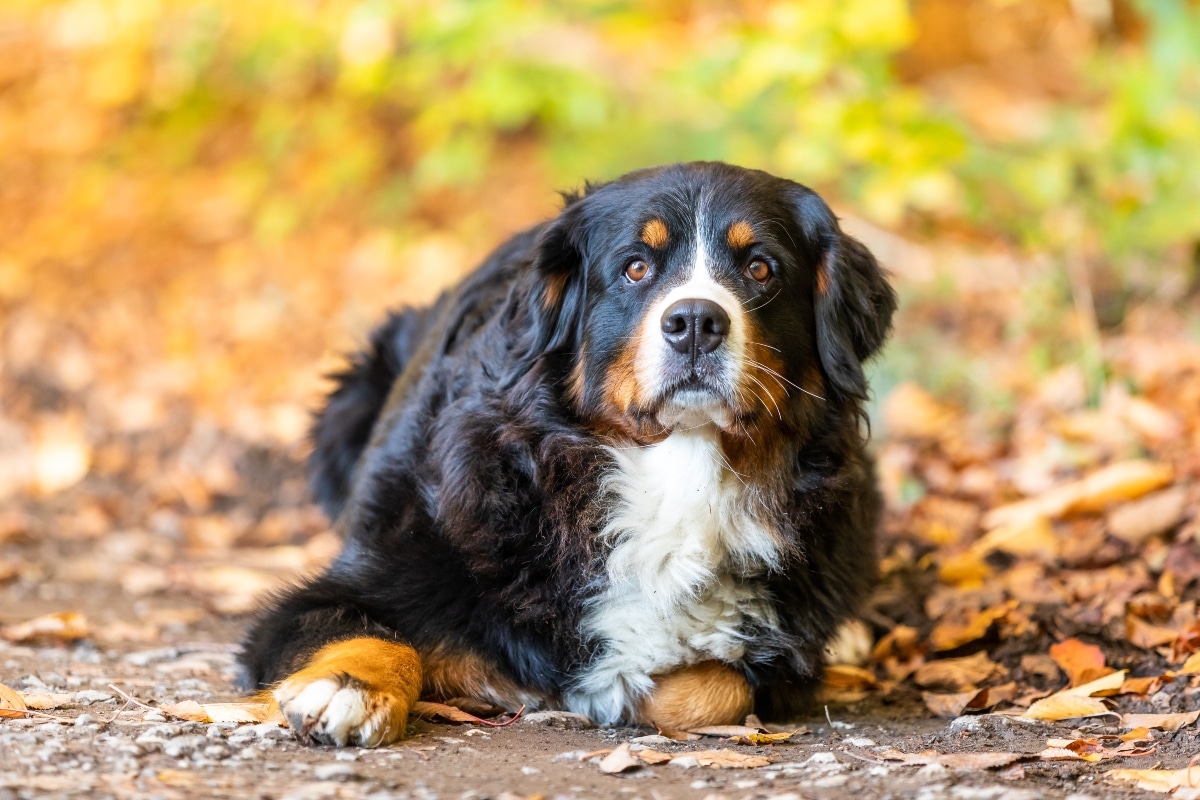
The Bernese Mountain Dog is a large, striking breed known for its tricolored coat and gentle appearance.
Originally developed as a working farm dog in Switzerland, the Bernese Mountain Dog combines a substantial build with a generally affectionate and family-oriented temperament.
Its thick coat helps protect it in cold conditions but also produces plenty of loose hair. Regular brushing is important for removing shed fur and keeping the coat in good condition.
Because these are large dogs, prospective owners should also consider their exercise requirements, living space, food costs, and general care needs before bringing one home.
Grooming needs
- Regular brushing
- More frequent brushing during shedding periods
- Occasional bathing
- Regular nail and ear care
12. Cocker Spaniel
Cocker Spaniels are known for their beautiful feathered coats, expressive eyes, and affectionate personalities.
The breed is generally active and people-oriented, making it a popular companion for families and individuals who enjoy spending time with their dogs.
Their ears and feathering require particular attention during grooming. Dirt, moisture, and tangles can accumulate around the ears and legs if these areas aren’t checked regularly.
Daily exercise, training, and interactive play can help a Cocker Spaniel stay physically and mentally engaged.
Grooming needs
- Regular brushing
- Ear cleaning and inspection
- Routine trimming
- Frequent checks for tangles and debris
13. Irish Setter
The Irish Setter stands out with its beautiful red coat and athletic build.
These dogs were developed as sporting dogs and tend to have plenty of energy. They can be playful, outgoing, and affectionate, making them appealing to active families.
Their feathered coat is relatively elegant but still needs regular brushing to prevent tangles and remove loose hair.
Irish Setters generally benefit from plenty of exercise. Long walks, games, training sessions, and other appropriate activities can help satisfy their energetic nature.
Grooming needs
- Regular brushing
- Routine bathing
- Coat checks after outdoor activities
- Regular nail and ear care
What to Consider Before Getting a Long-Haired Dog
A beautiful coat shouldn’t be the only factor you consider when choosing a dog. Every breed has its own personality, exercise requirements, training needs, and potential health concerns.
Before choosing a long-haired breed, think about the following.
1. Grooming commitment
Long coats usually require more maintenance than short coats. Ask yourself whether you have enough time for regular brushing and whether professional grooming fits your budget.
2. Exercise requirements
Some long-haired dogs are relaxed companion breeds, while others were developed for hunting, herding, or sporting work.
A dog’s coat length doesn’t tell you how much exercise it needs.
3. Shedding
Long hair doesn’t automatically mean a dog sheds more than a short-haired dog. Some breeds shed heavily, while others may leave less loose hair around the house but still require extensive grooming because their hair continues growing.
4. Living environment
Consider your home, climate, outdoor access, and daily schedule. A large, energetic breed may have very different needs from a small companion dog.
5. Grooming costs
Professional grooming can become a recurring expense. Before choosing a breed, research the typical grooming schedule and local costs.
6. Temperament
A dog’s personality is just as important as its appearance. Research breed tendencies, but remember that individual dogs can vary considerably.
How to Keep a Long-Haired Dog’s Coat Healthy
A consistent grooming routine can make life easier for both you and your dog.
Brush regularly
Choose a brush appropriate for your dog’s coat type and work gently through the hair. Don’t pull aggressively through mats because this can hurt the dog.
Check problem areas
Pay particular attention to the ears, legs, belly, tail, and areas where harnesses or collars may rub.
Don’t ignore small mats
Small tangles can become larger mats surprisingly quickly. Address them early or ask a professional groomer for help.
Keep grooming positive
Reward your dog with praise, treats, or short breaks when appropriate. This can help make grooming a more comfortable experience.
Maintain the entire grooming routine
Brushing is only one part of coat care. Nail trimming, ear care, bathing, dental care, and regular health checks are also important.
Are Long-Haired Dogs Hard to Take Care Of?
Not necessarily, but they often require more grooming than short-haired dogs.
The amount of work varies significantly between breeds. A dog with a continuously growing coat may need frequent brushing and professional trimming, while a double-coated breed may require extensive brushing during shedding seasons.
Before choosing a breed, look at its complete care requirements rather than focusing only on how beautiful the coat looks.
Do Long-Haired Dogs Shed a Lot?
Some do, but coat length alone doesn’t determine shedding.
For example, certain long-haired breeds shed heavily, while others may shed less noticeably because loose hair becomes trapped in the coat. Dogs with lower visible shedding can still require significant grooming to prevent mats.
If shedding is a major concern, research the specific breed’s coat type and grooming requirements rather than assuming that short hair always means less maintenance.
Frequently Asked Questions
What is the most famous long-haired dog breed?
Several long-haired breeds are widely recognized, including the Afghan Hound, Shih Tzu, Yorkshire Terrier, Rough Collie, and Old English Sheepdog. Recognition and popularity can vary by country and time period.
Are long-haired dogs difficult to groom?
Some are. Grooming requirements depend on the type, density, and growth pattern of the coat. Breeds with very long or dense coats generally require more regular maintenance.
Are long-haired dogs good family pets?
Many long-haired breeds can make wonderful family companions, but suitability depends on the individual dog’s temperament and the family’s lifestyle. Exercise, training, grooming, size, and supervision around children should all be considered.
Do long-haired dogs need professional grooming?
Not every long-haired dog needs frequent professional grooming, but many benefit from it. Some coats are easier for an experienced groomer to maintain, particularly when owners prefer a shorter trim.
Can long-haired dogs live in warm climates?
Some can, but owners need to take extra care during hot weather. Access to shade, fresh water, good ventilation, and appropriate exercise timing is important. A dog’s coat should not be shaved automatically as a way to keep it cool; the appropriate grooming approach depends on the breed and coat type.
Final Thoughts
Long-haired dogs come in an amazing variety of shapes, sizes, personalities, and coat types. From the elegant Afghan Hound and affectionate Shih Tzu to the energetic Irish Setter and gentle Bernese Mountain Dog, there’s a remarkable amount of diversity among these beautifully coated breeds.
Their luxurious appearance does come with responsibility. Regular grooming, appropriate exercise, good nutrition, training, and routine veterinary care are all part of responsible dog ownership.
If you’re considering one of these breeds, look beyond the coat and learn about the dog’s temperament, activity level, grooming requirements, size, and overall care needs. The right match is one where both the dog and the owner can thrive together.






Leave a comment