



Bringing home a puppy is an exciting experience, but it also comes with a lot of responsibility. Those adorable first weeks are filled with new experiences, training challenges, chewed shoes, interrupted sleep, and plenty of opportunities to build a lifelong bond.
Puppies are still developing physically and emotionally, so the care they receive during their early months can help establish healthy habits for the future. From feeding and veterinary visits to socialization, house training, grooming, and exercise, there is a lot for a new puppy parent to learn.
The good news is that you don’t have to get everything perfect from day one.
A consistent routine, appropriate nutrition, positive training, safe socialization, and regular veterinary care can give your puppy a strong foundation.
Here are the most important dos and don’ts of puppy care every new pet parent should know.
The Dos of Puppy Care
1. Do Establish a Consistent Daily Routine
Puppies are learning how the world works, and a predictable routine can make that process easier.
Try to establish relatively consistent times for:
- Meals
- Potty breaks
- Play
- Training
- Rest
- Bedtime
- Socialization and enrichment
A routine can also make house training easier because you’ll start recognizing when your puppy is most likely to need a bathroom break.
Your schedule doesn’t have to be identical every day. The goal is to give your puppy a predictable rhythm while allowing reasonable flexibility.
2. Do Feed an Appropriate Puppy Diet
Growing puppies have different nutritional requirements from adult dogs.
Choose a complete and balanced puppy food appropriate for your puppy’s life stage, size, and expected adult size. Puppies of different sizes can have different nutritional needs, so don’t assume that one feeding plan works for every dog.
Follow the food manufacturer’s feeding guidance and your veterinarian’s recommendations, then adjust as your puppy grows and their body condition changes.
Always provide access to clean, fresh water.
Avoid making large dietary changes suddenly. If you need to switch foods, gradually transitioning to the new diet can help reduce digestive upset.
Remember: more food isn’t always better
Puppies need adequate nutrition for growth, but excessive feeding can contribute to unhealthy weight gain and may be particularly problematic for rapidly growing large-breed puppies.
Regularly monitoring your puppy’s body condition is more useful than simply judging their size by appearance.
3. Do Start Safe Socialization Early
Socialization is one of the most important parts of raising a confident dog.
A puppy’s early experiences can influence how they respond to people, animals, sounds, surfaces, vehicles, grooming, handling, and unfamiliar environments later in life.
Safe socialization can include gradually introducing your puppy to:
- Different people
- Friendly, appropriately vaccinated dogs
- Household noises
- Car rides
- Different floor surfaces
- Grooming and handling
- Collars and harnesses
- New rooms and environments
- Everyday sights and sounds
The key word is positive.
Don’t force a frightened puppy to interact with something they find overwhelming. Give them space, use rewards, and allow them to approach new experiences at a comfortable pace.
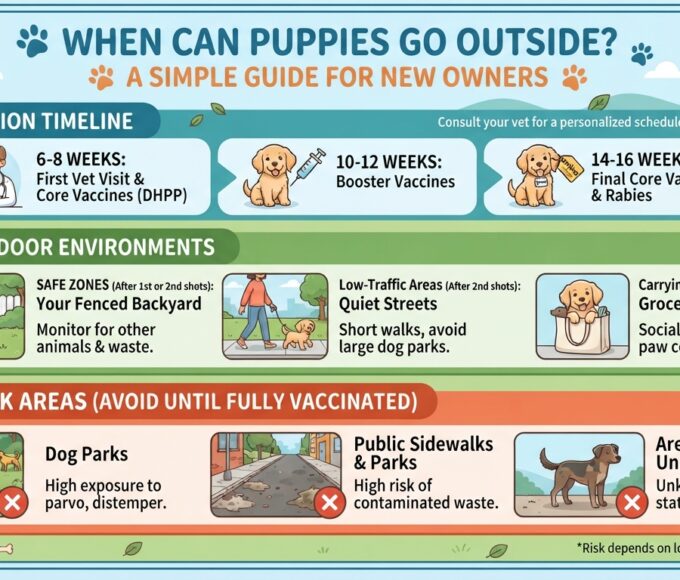
Because young puppies may not yet be fully vaccinated, ask your veterinarian how to socialize your puppy safely while reducing exposure to infectious diseases in your area.
4. Do Provide Age-Appropriate Exercise
Puppies can have enormous amounts of energy, but that doesn’t mean they need long or strenuous workouts.
Their bodies are still developing, and exercise should be appropriate for their age, size, breed, and individual condition.
Good puppy activities can include:
- Short walks when appropriate
- Gentle games
- Exploring safe areas
- Supervised play with suitable dogs
- Short training sessions
- Food puzzles
- Scent games
Mental stimulation is particularly valuable because puppies aren’t only developing physically—they’re learning constantly.
Avoid pushing a young puppy through excessive running, repetitive jumping, or other high-impact activities without guidance from your veterinarian.
5. Do Use Positive Reinforcement Training
Training isn’t simply about teaching commands. It’s also a way of helping your puppy understand how to live successfully in your household.
Reward behaviors you want to see repeated.
Rewards can include:
- Small treats
- Praise
- Toys
- Play
- Attention
- Access to something the puppy enjoys
Start with simple skills such as:
- Responding to their name
- Coming when called
- Sitting
- Settling
- Walking calmly on a leash
- Trading objects
- Going to a designated place
- Basic handling
Keep sessions short and end while your puppy is still engaged.
Avoid harsh physical punishment or intimidation. Reward-based training can teach desired behaviors while helping build trust between you and your puppy.
The Don’ts of Puppy Care
6. Don’t Skip Veterinary Appointments
A new puppy should have appropriate veterinary care soon after coming home.
Your veterinarian can help establish a preventive-care plan that may include:
- Vaccinations
- Parasite prevention
- Deworming when appropriate
- Nutrition advice
- Dental care
- Weight monitoring
- Identification and microchipping
- Spay or neuter discussions when appropriate
- Breed- or lifestyle-specific health recommendations
Puppies change rapidly, so regular checkups are especially valuable during their first year.
Your veterinarian can also help you understand which warning signs require urgent attention.
7. Don’t Give Your Puppy Unsupervised Access to Everything
Puppies explore the world with their mouths.
Unfortunately, that curiosity can lead them toward electrical cords, cleaning products, medications, toxic foods, small objects, sharp items, and other hazards.
Puppy-proof the areas where your dog spends time.
Keep potentially dangerous items out of reach, secure trash cans, protect electrical cables, and use baby gates or a properly introduced crate or pen when necessary.
Supervision is especially important while your puppy is learning household boundaries.
Don’t forget common household hazards
Keep puppies away from potentially dangerous items such as:
- Chocolate
- Certain human medications
- Cleaning chemicals
- Batteries
- Toxic plants
- Small objects that can be swallowed
- Certain foods that are unsafe for dogs
- Electrical cables
If you believe your puppy has swallowed something potentially dangerous, contact a veterinarian or appropriate animal poison service immediately.
8. Don’t Overfeed or Underfeed
Feeding a puppy is more complicated than simply filling the bowl whenever they seem hungry.
Puppies need enough nutrition for healthy development, but excessive calories can result in unhealthy growth and weight gain.
Measure meals rather than estimating portions by eye.
Keep treats relatively small and account for them as part of your puppy’s overall daily intake.
Monitor your puppy’s weight and body condition regularly, and ask your veterinarian whether their growth is appropriate.
This is particularly important for large and giant breeds, which have specialized growth requirements.
9. Don’t Ignore Grooming and Dental Care
Puppyhood is an excellent time to teach your dog that grooming and handling are normal parts of life.
Start gradually.
Practice gently touching:
- Paws
- Ears
- Mouth
- Tail
- Legs
- Face
Reward calm behavior.
Depending on your puppy’s coat, regular brushing may be necessary to prevent tangles and keep the coat comfortable.
Nails should also be monitored and trimmed when needed.
Dental care deserves attention from an early age as well. Introducing a puppy to tooth brushing gradually can make ongoing dental hygiene easier.
Use products specifically designed for dogs and ask your veterinarian about an appropriate dental-care routine.
10. Don’t Ignore Changes in Behavior
Puppies naturally do things that can be frustrating. Chewing, jumping, mouthing, barking, accidents, and difficulty settling are all common challenges during development.
But persistent or sudden behavioral changes shouldn’t simply be dismissed as your puppy being “bad.”
A sudden change can sometimes be related to fear, stress, pain, illness, or another underlying issue.
If your puppy suddenly becomes withdrawn, unusually aggressive, extremely fearful, stops eating, or behaves very differently from normal, speak with your veterinarian.
For ongoing training difficulties, a qualified reward-based trainer or veterinary behavior professional can also help.
How to Make Puppy Training Easier
Keep Training Sessions Short
Young puppies have limited attention spans.
Several short sessions throughout the day can be more productive than one long session.
Even a few minutes of practice can teach valuable skills.
Reward the Behavior You Want
Instead of focusing only on correcting unwanted behavior, look for opportunities to reward good decisions.
If your puppy sits calmly instead of jumping, reward them.
If they choose a toy instead of chewing furniture, praise them.
If they settle quietly on their bed, reinforce that behavior.
Over time, your puppy learns which behaviors produce positive outcomes.
Teach Your Puppy What to Chew
Chewing is normal puppy behavior, especially during teething.
Rather than expecting a puppy never to chew, provide safe and appropriate chew toys.
If your puppy grabs something they shouldn’t have, calmly redirect them toward an appropriate item.
Avoid turning the situation into a chase game, which can accidentally make stealing household objects more exciting.
Make Potty Training Predictable
Take your puppy outside or to their designated toilet area frequently, particularly:
- After waking
- After eating
- After drinking
- After playing
- Before bedtime
- When they show signs they need to go
Reward successful bathroom trips immediately.
Accidents are part of the learning process for many puppies. Clean them thoroughly and avoid punishment.
Creating a Puppy-Friendly Home
A safe home can prevent many problems before they happen.
Before bringing your puppy home, prepare:
- A comfortable sleeping area
- Food and water bowls
- Appropriate puppy food
- A collar or harness
- Identification
- A leash
- Safe toys
- Chew toys
- Grooming supplies
- Cleaning supplies for accidents
- A crate or puppy pen if you plan to use one
- Appropriate bedding
Think about the house from a puppy’s perspective.
Anything within reach may become a potential chew toy.
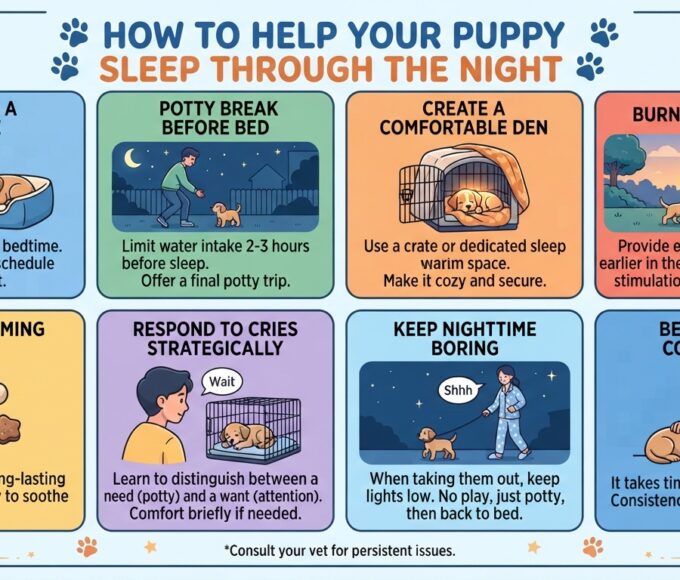
Give Your Puppy Plenty of Sleep
One of the most overlooked parts of puppy care is rest.
Puppies spend a great deal of time sleeping because their bodies and brains are developing rapidly.
A puppy who becomes overtired may actually appear more energetic, mouthy, or difficult to manage.
Provide a quiet, comfortable place where your puppy can sleep without constant interruptions.
Learning to settle and rest is an important life skill.
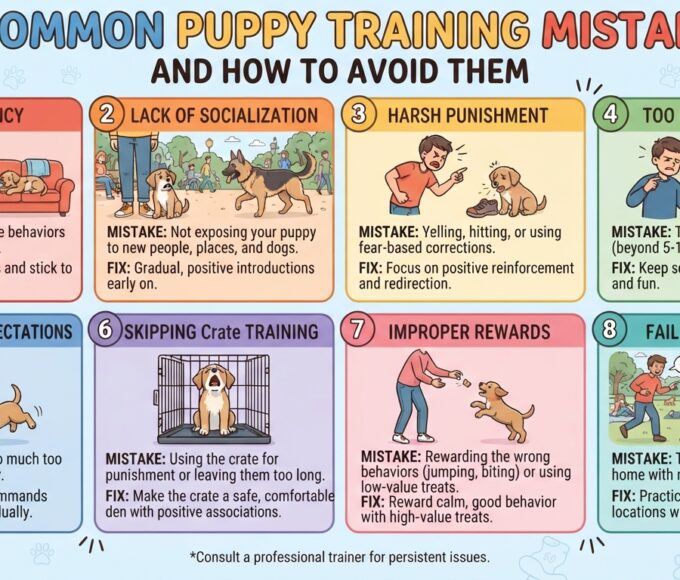
Common Puppy-Care Mistakes to Avoid
Even well-intentioned owners can make mistakes.
Some common ones include:
- Expecting too much too soon
- Giving inconsistent rules
- Using punishment instead of teaching an alternative
- Providing too little mental stimulation
- Over-exercising a young puppy
- Ignoring dental care
- Failing to puppy-proof the home
- Changing food abruptly
- Allowing unwanted behaviors because they seem cute at first
- Skipping preventive veterinary care
- Socializing too aggressively instead of gradually
- Leaving a puppy alone for longer than they can comfortably handle
Remember that your puppy isn’t born knowing your household rules.
They need repetition, guidance, patience, and plenty of reinforcement.
Frequently Asked Questions About Puppy Care
When should I start training my puppy?
You can begin simple, reward-based training as soon as your puppy comes home. Start with basic skills and gradually increase the difficulty as your puppy develops.
How often should I bathe my puppy?
There isn’t one perfect bathing schedule for every puppy. Coat type, lifestyle, skin condition, and how dirty the puppy gets all matter. Frequent unnecessary bathing can irritate some dogs’ skin, so use a dog-safe shampoo and ask your veterinarian or groomer for advice if your puppy has sensitive skin.
How often should a puppy eat?
Feeding frequency depends on the puppy’s age, size, diet, and individual needs. Young puppies often need multiple meals throughout the day. Follow your veterinarian’s recommendations and the feeding guidance for the specific food you’re using.
How do I know if my puppy is sick?
Potential warning signs include unusual lethargy, repeated vomiting, diarrhea, difficulty breathing, loss of appetite, significant behavior changes, weakness, or other symptoms that are unusual for your puppy.
Very young puppies can become seriously ill quickly, so contact your veterinarian if you’re concerned.
Should I let my puppy meet other dogs?
Safe socialization with healthy, appropriately vaccinated dogs can be valuable. However, puppies may not yet have completed their vaccination series, so ask your veterinarian which environments and dog interactions are appropriate for your puppy.
How do I stop my puppy from biting?
Puppy mouthing is common, particularly during play and teething. Redirect your puppy toward an appropriate toy, reward calm interactions, and avoid encouraging rough play with hands. If biting becomes intense, persistent, or difficult to manage, seek help from a qualified trainer or behavior professional.
Final Thoughts
Raising a puppy can be challenging, but the early months also provide countless opportunities to build a strong relationship with your new companion.
Focus on the fundamentals: good nutrition, preventive veterinary care, safe socialization, appropriate exercise, positive training, grooming, mental enrichment, adequate sleep, and a safe home environment.
Don’t expect perfection.
Your puppy is learning, and so are you.
Some days will involve successful training sessions, while others may involve an accident on the floor or a mysteriously destroyed sock. What matters is staying consistent and responding to your puppy with patience and appropriate guidance.
With the right foundation and support from your veterinarian and qualified training professionals when needed, you can help your puppy grow into a confident, healthy, and well-adjusted companion.







Leave a comment