




Some dogs communicate with a quiet look, while others seem to have an opinion about absolutely everything. A passing car, a delivery driver, another dog, a favorite toy, or even a song playing on the television can be enough to start a canine conversation.
Vocal dogs can bark, howl, whine, yodel, bay, or make unusual sounds that almost seem like talking. For some breeds, these behaviors are closely connected to their original jobs. Hunting dogs often needed loud voices so people could follow them in the field, while herding breeds used barking as part of their work. Other dogs simply discovered that making noise gets their human’s attention.
If you enjoy an interactive dog and don’t mind a little extra noise, a vocal breed can be incredibly entertaining. However, prospective owners should understand that barking and howling can be difficult to manage in apartments, shared housing, or neighborhoods with strict noise rules.
Here are 14 dog breeds known for being particularly expressive.
1. Siberian Husky
The Siberian Husky is one of the first breeds that comes to mind when people talk about vocal dogs.
Huskies are famous for their howls, yowls, whines, and dramatic-sounding vocalizations. They may respond to sirens, music, other dogs, or simply something happening around the house.
Their communication can sometimes sound surprisingly conversational. A Husky may make a series of noises when its owner speaks to it, creating the impression that the dog is answering back.
Their vocal behavior is only one part of their personality. Huskies are intelligent, energetic, social dogs that need plenty of physical activity and mental stimulation. Boredom can make unwanted vocalization more likely.
What they sound like: Howls, yowls, whines, and “talking” noises.
2. Beagle
Beagles may be compact, but their voices are anything but tiny.
As scent hounds, Beagles were developed to follow trails and communicate with hunters. Their characteristic bay is deeper and more drawn-out than an ordinary bark and can carry surprisingly far.
A Beagle may vocalize when it discovers an interesting scent, sees another animal, becomes excited, or wants attention. Their strong sense of smell can also lead them into situations where they become completely focused on following an interesting trail.
Early training can help teach a Beagle when barking is appropriate and when it is time to settle down.
What they sound like: Barking, baying, and occasional howling.
3. Dachshund
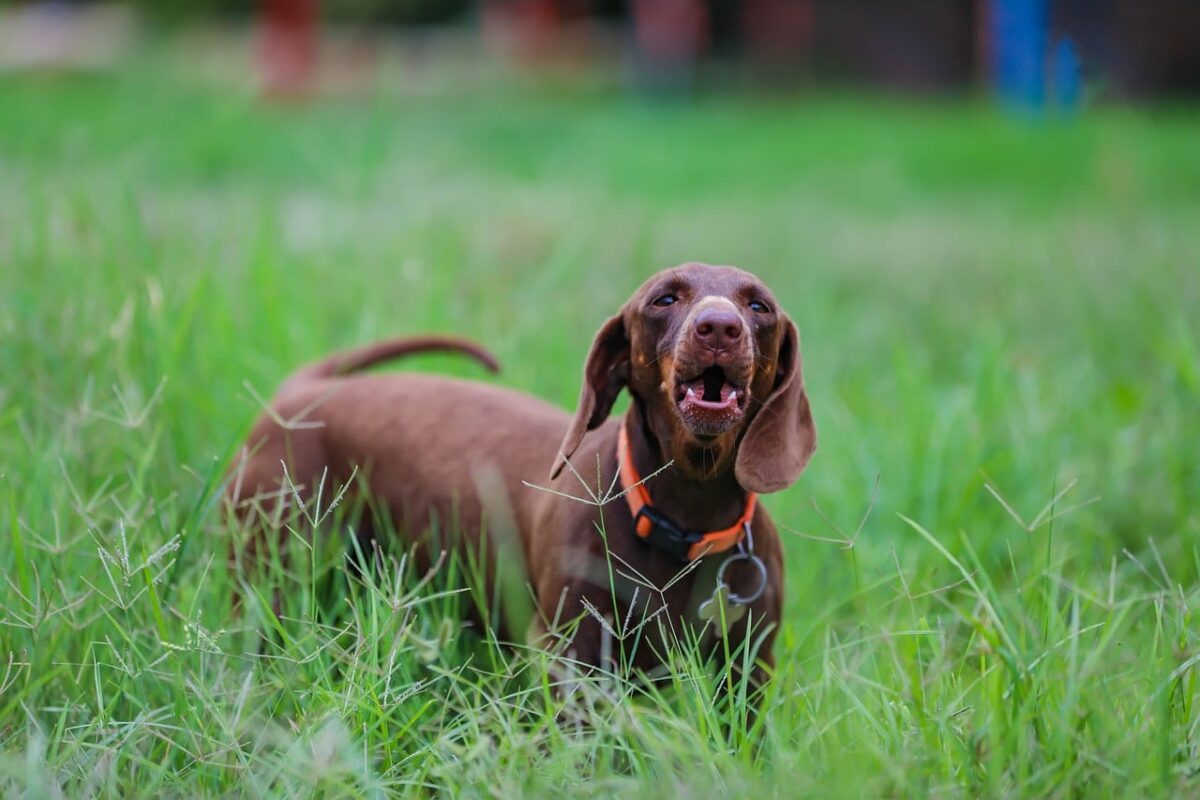
Dachshunds are another small breed with a surprisingly powerful voice.
Originally developed to hunt animals that lived underground, Dachshunds were expected to be courageous and persistent. Their willingness to speak up has remained part of their personality.
A Dachshund may bark when someone approaches the home, when it spots an animal outside, or when something unfamiliar catches its attention. Some individuals can become particularly enthusiastic watchdogs.
Because of their long backs and short legs, Dachshunds also benefit from exercise that is appropriate for their body structure rather than activities involving repeated jumping or excessive strain.
What they sound like: Sharp, persistent barking and occasional howling.
4. Alaskan Malamute
The Alaskan Malamute is a powerful working breed that can be remarkably expressive.
Like Huskies, Malamutes are often associated with howling and unusual vocal sounds rather than nonstop conventional barking. They may whine, howl, grumble, or make noises that seem almost conversational.
Their vocalizations can occur when they are excited, frustrated, seeking attention, or responding to sounds around them.
Malamutes are large, strong, active dogs, so their owners need to be prepared for much more than their vocal personality. They require appropriate exercise, training, companionship, and enrichment.
What they sound like: Howls, whines, grumbles, and expressive vocalizations.
5. Basset Hound
The Basset Hound has one of the most recognizable voices in the canine world.
With their long ears, short legs, and droopy expressions, Basset Hounds often look laid-back. Their voices tell a different story.
Basset Hounds were bred to track scents, and their deep baying voice helped hunters locate them while they followed a trail. That powerful voice can still make itself heard today.
Some Basset Hounds are relatively quiet, while others enjoy announcing interesting smells, visitors, or changes around the home.
What they sound like: Deep barking and long, resonant baying.
6. Bloodhound
Bloodhounds are legendary scent trackers, and their voices are almost as distinctive as their noses.
These large hounds can produce a deep bay that carries over considerable distances. Historically, vocal communication was useful when dogs were working away from their handlers.
A Bloodhound may vocalize when excited, following an interesting scent, frustrated, or trying to communicate with its people.
Their strong scent drive is important to remember when training and exercising them. A fascinating smell can quickly become more interesting than whatever their owner had planned.
What they sound like: Deep barks, bays, and howls.
7. Chihuahua
The Chihuahua is proof that a dog’s size doesn’t determine the size of its personality—or its voice.
Chihuahuas can be highly alert and may bark at unfamiliar people, animals, sounds, or movement outside the home. Some also develop a habit of barking whenever they become excited.
Their small size can make owners overlook how much exercise, training, and socialization they still need. Teaching a Chihuahua a reliable “quiet” cue and rewarding calm behavior can be much more effective than repeatedly shouting at the dog to stop.
What they sound like: High-pitched, frequent barking.
8. Shetland Sheepdog
Shetland Sheepdogs, commonly called Shelties, are intelligent herding dogs with a natural tendency to use their voices.
Herding dogs were often expected to respond quickly to movement and changes in their surroundings. Barking could be part of managing livestock, so vocal behavior can come naturally to the breed.
Shelties may bark when they notice people, animals, noises, or activity around the house. Their intelligence can make them highly trainable, which is useful when teaching them alternative behaviors.
Mental stimulation is especially important for this breed. A Sheltie that is bored may find its own entertainment—including barking.
What they sound like: Frequent, high-pitched barking.
9. Samoyed
The Samoyed is famous for its beautiful white coat and cheerful expression, but these dogs can also be enthusiastic communicators.
Samoyeds may bark, howl, whine, or make unusual sounds when interacting with their families. Their social nature means they often want to participate in whatever their humans are doing.
A Samoyed may become vocal when it wants attention, is excited about an activity, or feels frustrated. Consistent training and plenty of companionship can help channel that energy into more appropriate behaviors.
They’re also active dogs that generally do best when they receive regular exercise and opportunities to use their minds.
What they sound like: Barks, howls, whines, and “talking” sounds.
10. Miniature Schnauzer
Miniature Schnauzers are alert, energetic, and often quick to announce anything they consider noteworthy.
Their history as farm dogs and ratters contributed to an alert personality. Today, many Miniature Schnauzers remain observant and eager to tell their families when something has changed.
A person walking past the window, a knock at the door, or an unfamiliar sound may trigger barking.
Their intelligence is an advantage during training. Rather than simply punishing barking, owners can teach the dog to check in with them, settle on a mat, or remain quiet after giving an initial alert.
What they sound like: Sharp, energetic barking and occasional vocal “talking.”
11. Finnish Spitz
The Finnish Spitz is sometimes nicknamed the “Barking Bird Dog,” a name that reflects its hunting history.
These dogs were developed to hunt and alert people to game through vocalization. Their rapid, distinctive barking was an important part of their working behavior.
Because barking is so closely connected to their historical role, Finnish Spitz owners should not expect the breed to behave like a naturally quiet dog.
Training can help with excessive barking, but prospective owners should also consider whether they are comfortable living with a dog that naturally enjoys using its voice.
What they sound like: Fast, sharp barking and vocal alerts.
12. Shiba Inu
Shiba Inus aren’t necessarily among the most consistently noisy breeds, but their vocalizations can be unforgettable.
The breed is famous online for the dramatic “Shiba scream.” This high-pitched vocalization can occur when a Shiba is frightened, frustrated, extremely excited, or strongly resisting something it dislikes.
Not every Shiba will regularly make this sound. Many are relatively quiet compared with breeds that were specifically developed for vocal hunting or herding work.
Their independent personality also means training often works best when it is consistent, patient, and reward-based.
What they sound like: Barking, yelping, whining, and the famous high-pitched scream.
13. Bearded Collie
Bearded Collies, affectionately known as Beardies, are energetic herding dogs with plenty of personality.
Their herding background can contribute to vocal behavior, particularly when they become excited by movement or activity. A happy Beardie may also vocalize during play or when interacting with its family.
These dogs are highly energetic and tend to thrive when they have opportunities to exercise, learn, explore, and participate in family activities.
A bored Bearded Collie may find ways to entertain itself, and barking can become part of that self-created entertainment.
What they sound like: Excited barking and energetic vocalizations.
14. Coonhound
Coonhounds are famous for their distinctive baying voice.
Coonhound varieties were developed for tracking game, and their powerful voices helped hunters locate them while they followed a scent.
That working heritage is still evident today. A Coonhound may become particularly vocal when it catches an interesting scent or becomes excited outdoors.
Their voices can carry a long way, so this is an important consideration for people living in close quarters with neighbors.
What they sound like: Deep, prolonged baying and barking.
Why Are Some Dog Breeds So Vocal?
A dog’s tendency to bark or howl is influenced by several factors, including genetics, breed history, environment, training, individual personality, and emotional state.
For example, a hunting dog may naturally vocalize when following a scent, while a herding breed may bark in response to movement. A companion dog might bark primarily because it has learned that barking gets attention.
That doesn’t mean every dog within a breed will be equally vocal.
Two dogs of the same breed can have very different personalities. Age, socialization, previous experiences, training, and living environment can all affect how often a dog makes noise.
Barking Isn’t Always a Behavior Problem
Barking is normal canine communication. The goal isn’t necessarily to eliminate it completely.
A dog might bark because it:
- Wants to alert you to something.
- Is excited.
- Is frightened or uncomfortable.
- Wants attention.
- Is frustrated.
- Is responding to another dog.
- Has excess energy.
- Is bored.
- Is protecting its perceived territory.
- Has learned that barking produces a reward.
Understanding the reason behind the barking is usually the first step toward managing it.
How to Manage Excessive Barking
If your vocal dog is becoming difficult to live with, several strategies can help.
Identify the Trigger
Keep track of when the barking happens. Is it mostly at the window? When someone knocks? During walks? When the dog is left alone?
Finding the pattern makes training much easier.
Reward Quiet Behavior
Instead of only reacting when your dog barks, reward calm behavior when you notice it.
For example, if your dog sees someone outside but remains quiet, calmly reward that choice.
Teach a “Quiet” Cue
A reliable quiet cue can be useful, but it should be taught gradually. Reward the dog for stopping vocalization rather than repeatedly shouting “quiet” over the barking.
Provide Mental Stimulation
Puzzle toys, scent games, obedience training, food-dispensing toys, and supervised exploration can help prevent boredom.
Give Appropriate Exercise
Many energetic breeds need regular physical activity. However, simply exercising a dog harder isn’t always the answer. Rest, training, enrichment, and predictable routines are important too.
Manage the Environment
If your dog barks at people passing the window, closing the blinds or moving the dog’s resting area away from the window can reduce the number of triggers.
When Sudden Barking May Need Attention
A sudden change in vocal behavior deserves attention, particularly if a normally quiet dog suddenly becomes very noisy or a vocal dog becomes unusually quiet.
Pain, illness, anxiety, changes in the environment, aging, or other problems can sometimes affect behavior. If the change is persistent or accompanied by other concerning symptoms, consult your veterinarian.
Are Vocal Dogs Good for Apartment Living?
It depends on the individual dog and the living environment.
A small dog isn’t automatically quieter than a large dog. A Chihuahua can be much more vocal than a large breed, while some individual Huskies may be relatively quiet for long periods.
Apartment dwellers should consider:
- How easily the dog reacts to hallway noises.
- Whether neighbors are close by.
- How much daily exercise the breed needs.
- Whether the building has noise restrictions.
- Whether the owner has time for training and enrichment.
- The dog’s individual temperament.
If quiet surroundings are a major priority, a naturally vocal breed may require more management.
Frequently Asked Questions
Which dog breed is the most vocal?
There isn’t one breed that is objectively the most vocal. Siberian Huskies, Beagles, Coonhounds, Alaskan Malamutes, Finnish Spitz, and several other breeds are well known for barking, baying, or howling.
Why do Huskies howl so much?
Howling is a natural form of canine communication, and Huskies are particularly expressive. They may howl in response to sounds, excitement, social interaction, frustration, or other triggers.
Are small dogs more vocal than large dogs?
Not necessarily. Vocal behavior varies by breed and individual dog. Some small breeds are frequent barkers, while some large breeds are known for loud howling or baying.
Can you train a vocal dog to stop barking?
You can often reduce excessive barking and teach alternative behaviors, but completely eliminating normal canine vocalization isn’t realistic. Successful training starts by identifying why the dog is barking.
Is howling a sign that a dog is unhappy?
Not always. Dogs howl for many reasons, including social communication, excitement, response to sounds, frustration, and attention-seeking. Context matters.
Are vocal dog breeds difficult to own?
They can require more management if you live somewhere where noise is a concern. However, with appropriate training, enrichment, exercise, and realistic expectations, many vocal breeds make wonderful companions.
Final Thoughts
Vocal dogs can make life a little noisier, but their expressive personalities are part of what makes them so entertaining. From the Husky’s dramatic howl and the Beagle’s unmistakable bay to the Shiba Inu’s famous scream and the Coonhound’s deep hunting voice, different breeds communicate in remarkably different ways.
If you’re considering one of these dogs, don’t choose based on appearance alone. Think about your living situation, tolerance for noise, available time for training, exercise requirements, and the breed’s original purpose.
For the right household, a dog that loves to “talk” can turn ordinary moments into entertaining conversations—and sometimes, wonderfully noisy ones.








Leave a comment