





Traveling with your dog can turn an ordinary trip into a memorable adventure. Whether you’re heading out for a weekend road trip, visiting family, spending the day at a new park, or preparing for a longer journey, your dog’s needs don’t stop simply because you’re away from home.
The secret to smoother pet travel is preparation.
A well-packed dog travel bag gives you quick access to food, water, identification, medications, cleanup supplies, and comfort items when you need them. It can also prevent small inconveniences from becoming major problems while you’re away.
Your exact packing list will depend on your dog’s age, health, size, destination, and method of transportation, but the following essentials provide a practical starting point.
1. Collapsible Food and Water Bowls
Regular bowls can take up unnecessary space in a travel bag. Collapsible silicone or lightweight travel bowls are easier to pack and can be opened whenever your dog needs food or water.
Consider keeping separate bowls for food and water.
A portable water bowl is particularly useful during walks, hikes, rest stops, and outdoor activities. Offering water regularly is important, especially during warm weather or physical activity.
Packing tip
Choose bowls that are easy to wash and dry quickly. If you’re traveling for several days, cleaning them regularly helps prevent leftover food or water from becoming contaminated.
2. Your Dog’s Regular Food
Travel isn’t the ideal time to experiment with a new diet.
Suddenly changing your dog’s food can cause digestive upset, which is especially inconvenient when you’re already away from home.
Pack enough of your dog’s usual food for the entire trip, plus a little extra in case your return is delayed.
Pre-measuring meals into separate containers or bags can make feeding easier and help you maintain your dog’s normal schedule.
Don’t forget treats
A few familiar treats can be useful for rewarding calm behavior, reinforcing training, or making unfamiliar situations more positive.
Just remember to account for treats when considering your dog’s overall food intake.
3. Plenty of Fresh Water
Depending on your destination, access to clean drinking water may not always be convenient.
Bring a supply of water for the journey whenever practical, particularly during road trips or outdoor excursions.
A leak-proof water bottle or dedicated pet water container can make hydration much easier.
During warm-weather travel
Offer water regularly and pay attention to signs of overheating such as excessive panting, weakness, confusion, vomiting, or collapse.
Never leave your dog alone inside a parked vehicle, even if the windows are partially open.
4. Collar, Harness, and Leash
A secure leash and properly fitted collar or harness are essential travel equipment.
Unfamiliar surroundings can make even a normally reliable dog nervous or curious enough to wander. Busy roads, airports, rest areas, unfamiliar properties, and new walking routes all create potential escape risks.
Consider packing:
- Everyday leash
- Backup leash
- Properly fitted collar
- Harness
- Identification tag
- Long line for appropriate controlled areas
Make sure identification information is current before leaving home.
5. Identification and Microchip Information
A lost dog can be frightening, particularly when you’re far from home.
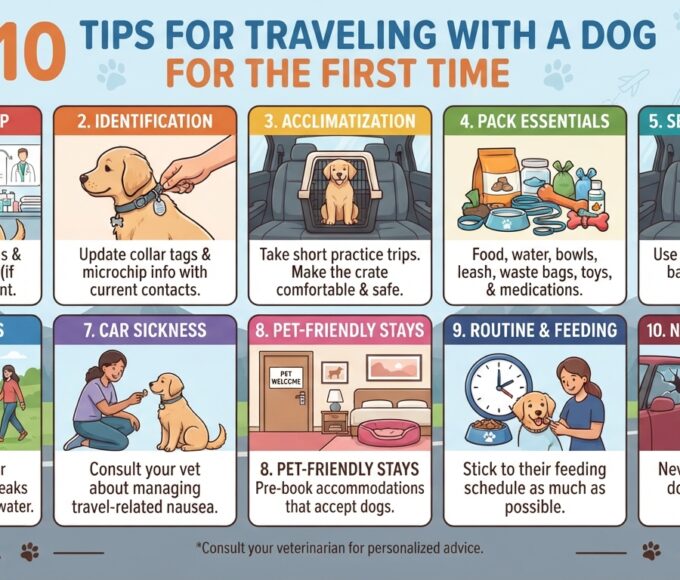
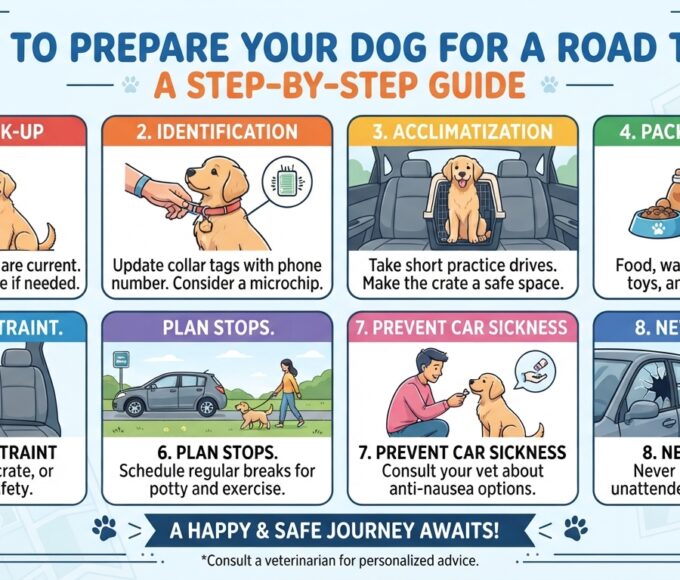
Your dog’s collar should have an identification tag containing current contact information. If your phone number or address has changed, update the tag before traveling.
Microchipping provides an additional form of identification, but it is important to make sure the registration information connected to the microchip is accurate and up to date.
Consider carrying a photo of your dog on your phone as well. A recent photograph can be extremely useful if your dog becomes separated from you.
6. Travel Crate or Carrier
A suitable crate or carrier can provide both safety and familiarity.
For car travel, dogs should be appropriately restrained rather than allowed to roam freely around the vehicle. Depending on the dog and vehicle, this may involve a properly designed travel crate, carrier, or crash-tested restraint system.
For air travel, requirements vary by airline, route, animal size, and destination. Always check the current requirements before traveling.
Prepare your dog before the trip
Don’t introduce a crate for the first time on travel day.
Allow your dog to explore it at home, place familiar bedding inside, and gradually build positive associations with spending time there.
7. Familiar Bedding and Comfort Items
Travel exposes dogs to unfamiliar sights, smells, sounds, and routines.
A familiar blanket or bed can provide a reassuring scent and give your dog a recognizable place to settle.
You can also bring:
- Favorite toy
- Small blanket
- Familiar chew
- Portable bed
- Crate mat
Avoid packing too many bulky items. Choose a few things your dog genuinely uses and finds comforting.
8. Waste Bags and Cleaning Supplies
Accidents happen, especially when dogs are traveling somewhere unfamiliar.
Your travel bag should contain more waste bags than you think you’ll need.
It’s also useful to pack:
- Paper towels
- Pet-safe cleaning wipes
- Disposable gloves
- Small garbage bags
- Absorbent towels
- Pet-safe cleaning solution
These supplies can be helpful after bathroom accidents, muddy walks, spilled food, or unexpected messes.
Keeping your dog’s environment clean is particularly important when staying in hotels, vacation rentals, or other shared spaces.
9. A Pet First-Aid Kit
A basic pet first-aid kit can help you handle minor problems until professional veterinary care is available.
Depending on your dog’s needs and your veterinarian’s advice, useful supplies may include:
- Gauze
- Bandages
- Non-stick wound dressings
- Tweezers
- Disposable gloves
- Clean towels
- Saline for appropriate wound flushing
- Pet-safe antiseptic products
- Digital thermometer
- Emergency contact information
A first-aid kit isn’t a replacement for veterinary treatment. Serious injuries, breathing problems, poisoning, severe bleeding, or other emergencies require professional care.
10. Medications and Supplements
If your dog takes prescription medication, calculate how much you’ll need before leaving.
Bring enough for the entire trip and consider packing extra in case your return is delayed.
Keep medications in their original labeled containers whenever possible.
If your veterinarian has prescribed medication for travel-related anxiety, motion sickness, seizures, allergies, or another condition, follow the prescribed instructions carefully.
Never improvise with human medication
Some medications that are safe for people can be dangerous for dogs. Don’t give your dog a human medicine simply because it seems like an appropriate treatment.
Ask your veterinarian before giving any medication.
11. Vaccination and Veterinary Records
You may never need your dog’s medical records while traveling, but having them available can be extremely helpful if your dog becomes sick or injured.
Consider carrying digital or printed copies of relevant records, including:
- Vaccination history
- Medication list
- Current medical conditions
- Veterinarian contact information
- Microchip details
- Insurance information, if applicable
Some destinations, airlines, boarding facilities, or accommodation providers may have specific documentation requirements, so research these before departure.
12. Food Storage Containers
A resealable food container can prevent your dog’s food from spilling throughout your luggage.
For longer trips, airtight containers can also help protect food from moisture and pests.
If you’re using pre-portioned meals, label them by day or meal to make feeding easier.
This is particularly useful when multiple people will be responsible for feeding your dog during the journey.
13. Towels
Never underestimate the usefulness of a few old towels.
They can be used for:
- Drying your dog after rain
- Cleaning muddy paws
- Protecting car seats
- Cleaning spills
- Providing temporary bedding
- Drying a wet coat after swimming
For outdoor trips, bring at least one towel specifically for your dog.
14. Grooming Supplies
You don’t need to bring your entire grooming kit, but a few basic items can be helpful.
Depending on your dog’s coat, pack:
- Brush or comb
- Pet-safe wipes
- Small towel
- Nail care tool if necessary
- Waste bags
- Paw-cleaning supplies
Regular brushing may also help keep your dog’s coat comfortable during longer trips.
15. Toys and Enrichment
Travel can be mentally tiring for dogs, particularly when they’re spending hours in a car or adjusting to a new environment.
Bring one or two familiar toys rather than an entire toy collection.
Good choices can include:
- Durable chew toys
- Food-stuffable toys
- Puzzle toys
- Favorite fetch toy
- Snuffle-style enrichment items
Avoid toys that can easily break apart or become choking hazards when your dog is unsupervised.
16. Portable Food or Puzzle Toy
A food puzzle can be especially useful during downtime.
Instead of simply giving your dog a meal, an appropriate puzzle or food-stuffable toy can provide mental stimulation.
However, introduce new enrichment products at home first. Travel day isn’t the right time to discover that a new toy causes digestive problems or frustrates your dog.
17. Cooling and Weather Gear
Your travel bag should reflect the weather at your destination.
For hot conditions, consider:
- Portable water supplies
- Cooling mat
- Shade equipment
- Lightweight towel
- Portable water bowl
For cold weather, some dogs may benefit from appropriate coats or protective gear.
Dogs with short muzzles, thick coats, very young dogs, senior dogs, and dogs with certain medical conditions can have greater difficulty regulating body temperature.
Never assume that a cooling product makes it safe to leave a dog inside a parked vehicle.
18. Travel-Safe Treats
Treats can be useful for training, rewarding calm behavior, and helping your dog associate unfamiliar experiences with something positive.
Choose treats your dog already knows and tolerates well.
Avoid introducing unfamiliar foods immediately before or during a long journey because digestive upset can make travel much more difficult.
19. A Dog-Friendly Blanket or Seat Cover
If you’re traveling by car, a washable seat cover can protect the vehicle from fur, dirt, mud, and accidental spills.
A familiar blanket can also help make the travel area feel more comfortable.
However, don’t allow blankets or loose objects to interfere with your dog’s restraint system or create a safety hazard.
20. Emergency Contact List
Your phone contains almost everything these days, but having important information written down or saved offline can be useful.
Create a simple emergency list containing:
- Your veterinarian’s phone number
- An emergency veterinary hospital near your destination
- Your accommodation details
- A trusted emergency contact
- Your dog’s medication information
- Microchip information
- Local animal-control contact information where appropriate
Before traveling, identify at least one veterinary clinic near your destination.
Finding one during an emergency is much harder than finding one in advance.
What to Pack for a Dog Road Trip
For a typical road trip, your basic bag might contain:
Food and hydration
- Regular food
- Fresh water
- Bowls
- Treats
- Food-storage container
Safety
- Collar
- Identification tags
- Harness
- Leash
- Backup leash
- Travel restraint or crate
- Microchip information
Comfort
- Bed or blanket
- Favorite toy
- Chew
- Towel
Health
- Medications
- First-aid supplies
- Veterinary records
Cleanup
- Waste bags
- Cleaning wipes
- Paper towels
- Small garbage bags
Preparing Your Dog Before Travel
Packing the bag is only half the preparation.
Your dog also needs time to become comfortable with the travel experience.
Practice Short Trips
If your dog isn’t accustomed to car rides, begin with short journeys and gradually increase the duration.
Reward calm behavior and avoid immediately making every car ride lead to an overwhelming destination.
Practice With the Carrier
For dogs traveling in carriers, introduce the carrier well before the journey.
Allow your dog to enter voluntarily, use treats or meals to create positive associations, and gradually increase the amount of time spent inside.
Maintain Familiar Routines
Try to keep meals, bathroom breaks, walks, and sleep schedules reasonably consistent.
Dogs often adjust more easily when at least some parts of their daily routine remain familiar.
What Not to Put in Your Dog Travel Bag
It’s just as important to avoid unnecessary or potentially dangerous items.
Don’t pack:
- Human medications without veterinary instructions
- Unfamiliar foods for a long journey
- Toys that break apart easily
- Unsafe treats
- Loose items that could interfere with car restraints
- Expired medications
- Damaged leashes or harnesses
- Products your dog has never used if they’re likely to cause stress or discomfort
Dog Travel Bag Checklist
| Category | Essentials |
|---|---|
| Food | Regular food, treats, food container |
| Water | Drinking water, travel bowl |
| Safety | Collar, ID tag, harness, leash |
| Identification | Microchip details, recent photo |
| Travel | Crate, carrier, or appropriate restraint |
| Comfort | Bed, blanket, favorite toy |
| Health | Medication, first-aid kit, records |
| Cleanup | Waste bags, towels, wipes |
| Grooming | Brush, paw-cleaning supplies |
| Weather | Cooling or cold-weather equipment |
| Emergency | Vet contacts and emergency information |
Frequently Asked Questions
What should I pack for my dog on a short day trip?
At minimum, bring water, a portable bowl, leash and collar, identification, waste bags, treats, and any medication your dog needs. A towel and familiar toy can also be useful.
How much dog food should I bring for a trip?
Bring enough for the entire journey and some extra in case of delays. Keeping your dog’s normal food and feeding routine can help reduce digestive problems.
Should I bring my dog’s bed when traveling?
If space allows, a familiar bed or blanket can help your dog settle in an unfamiliar environment. For smaller trips, a familiar blanket may provide the same comfort while taking up less room.
Does my dog need a first-aid kit?
A basic first-aid kit can be useful for minor problems, especially during outdoor adventures or longer journeys. It should supplement—not replace—professional veterinary care.
What should I do if my dog gets motion sick?
Speak with your veterinarian before the trip. They can help determine whether your dog needs medication or another management strategy. Gradual car acclimation may also help some dogs.
Avoid giving your dog medication without veterinary guidance.
Should I bring vaccination records when traveling?
It’s a good idea to have relevant veterinary records available, particularly for longer trips, air travel, boarding, or international travel. Requirements can vary by destination and transportation provider.
Can I give my dog a new treat during a road trip?
It’s generally better to stick with foods your dog already tolerates. Introducing unfamiliar treats during a journey can increase the chance of digestive upset.
Final Thoughts
A successful trip with your dog starts before you leave the driveway.
The right travel bag should contain more than food and a leash. Water, identification, a secure restraint, familiar comfort items, medications, veterinary information, cleanup supplies, and basic first-aid equipment can all make traveling easier and safer.
You don’t need to bring your entire house with you. Focus on the items your dog genuinely needs for safety, hydration, nutrition, health, comfort, and cleanup.
Before every trip, check your supplies, confirm your dog’s identification information, research veterinary care at your destination, and consider the weather and activities you’ll encounter.
With thoughtful preparation, you can spend less time worrying about what you forgot and more time enjoying the adventure with your four-legged companion.
This Article Was Generated By AI.







Leave a comment