





Some dog owners are perfectly happy with a companion who enjoys a few walks, a cuddle on the sofa, and a simple game of fetch. Others want something more.
If you enjoy learning, solving problems, teaching new skills, and keeping your dog mentally engaged, an intelligent and trainable breed can provide a particularly rewarding relationship. These dogs often enjoy having a job to do and may become bored when their days lack variety.
But there’s an important catch: a smart dog isn’t necessarily an easy dog.
Highly intelligent breeds can learn unwanted behaviors just as quickly as desirable ones. They may become frustrated when bored, invent their own entertainment, or require significantly more exercise and mental stimulation than their appearance suggests.
The following 11 breeds are known for traits such as trainability, problem-solving ability, attentiveness, or a strong desire to work with people. They can be wonderful companions for owners who enjoy an active, mentally engaging relationship with their dogs.
1. Border Collie
The Border Collie is widely celebrated for its remarkable working ability and responsiveness to human direction.
Originally developed for herding livestock, Border Collies needed to pay close attention to handlers, respond to cues, control movement, and make decisions in rapidly changing situations.
That combination of focus and trainability makes them particularly impressive during obedience, agility, herding, scent work, and other canine activities.
However, their intelligence comes with substantial responsibilities.
A Border Collie that doesn’t receive enough physical activity and mental stimulation may find its own projects—such as chasing, herding family members, barking, or dismantling household objects.
What makes them mentally engaging?
- Rapid learning
- Strong responsiveness to handlers
- Excellent problem-solving ability
- Enjoyment of training
- Strong work ethic
- Ability to learn complex behaviors
Best for: Owners who genuinely enjoy training, exercise, and giving their dog meaningful activities.
2. Poodle
Don’t let the Poodle’s glamorous appearance fool you. Underneath that distinctive coat is an athletic and highly capable working dog.
Poodles are known for being intelligent, adaptable, and responsive to training. They can excel in obedience, agility, retrieving, scent activities, tricks, and many other forms of canine enrichment.
They also come in Toy, Miniature, and Standard sizes, allowing different households to consider a Poodle that fits their circumstances.
However, size doesn’t determine their mental needs. Even a Toy Poodle can benefit enormously from training and interactive play.
Why they appeal to thoughtful owners
Poodles often enjoy learning new behaviors and figuring out what earns a reward. They can be wonderfully versatile companions for someone who wants a dog that participates actively in training.
Their coat, however, requires regular grooming and maintenance.
3. Australian Shepherd
Australian Shepherds are energetic working dogs with a reputation for being highly trainable and intensely engaged with their surroundings.
Despite their name, the breed was developed largely in the United States, where it became associated with ranch and livestock work.
Their working background helps explain their enthusiasm for learning tasks and responding to environmental changes.
An Australian Shepherd may enjoy obedience exercises one day, a long hike the next, and a puzzle game afterward. Variety can be particularly valuable because simply walking the same route every day may not provide enough stimulation for some individuals.
Mental strengths include:
- Quick learning
- Strong attention
- Problem-solving
- Working drive
- Responsiveness
- Enthusiasm for structured activities
Important: This is not generally a breed for owners looking for a low-activity companion.
4. Shetland Sheepdog
The Shetland Sheepdog, or Sheltie, combines a relatively compact size with an impressive capacity for learning.
Developed as a herding and farm dog, the Sheltie is often highly attentive to its owner and can quickly learn new cues.
They frequently excel in obedience and agility and can enjoy trick training, scent games, and other mentally challenging activities.
Their sensitivity can also be part of the training equation. Harsh or intimidating methods may undermine trust, whereas clear communication and positive reinforcement can help them thrive.
A Sheltie may be a good fit if you enjoy:
- Teaching tricks
- Obedience training
- Agility
- Interactive games
- Structured daily routines
Potential owners should also be prepared for barking, as many Shelties are naturally alert and vocal.
5. Belgian Malinois
The Belgian Malinois is an exceptionally capable working breed that has become well known through police, military, detection, sport, and protection work.
These dogs can learn complex behaviors and often have tremendous enthusiasm for working with their handlers.
But this is where the word “intelligent” can become misleading.
A Belgian Malinois isn’t simply a smarter version of an easygoing family dog. Many individuals have extremely high exercise, engagement, training, and environmental-management needs.
Without appropriate outlets, their energy and drive can become difficult to manage.
What makes them remarkable?
They can combine:
- Fast learning
- High motivation
- Athletic ability
- Strong handler focus
- Excellent working drive
- Adaptability to demanding tasks
Best for: Experienced owners who understand working-dog behavior and are prepared to provide substantial training and activity.
6. Papillon
The Papillon proves that impressive intelligence doesn’t require a large body.
This tiny companion breed can be enthusiastic about learning tricks, obedience exercises, and agility. Their small size makes them convenient for many households, but they shouldn’t be mistaken for passive lap dogs.
Papillons often enjoy having something to do.
Interactive games, short training sessions, puzzle toys, scent games, and trick learning can all provide valuable enrichment.
Why they’re interesting for training enthusiasts
Papillons can learn quickly and often enjoy the interaction that comes with teaching new behaviors. Their compact size also means training activities can often be adapted for smaller living spaces.
They’re a particularly interesting choice for someone who wants a small dog without giving up the opportunity for advanced training.
7. Doberman Pinscher
The Doberman Pinscher was developed as a working and personal protection dog, and its intelligence and responsiveness remain important characteristics.
Dobermans often form strong relationships with their families and can be highly attentive to their handlers.
They may enjoy obedience, tracking, scent work, and other structured activities. Consistent training is especially important because a large, athletic dog with poor manners can be difficult to manage.
Their intelligence also means they benefit from clear expectations rather than inconsistent rules.
A Doberman may suit you if you want:
- A close working relationship
- Regular training
- An athletic companion
- A dog that enjoys learning
- A breed capable of advanced obedience
Responsible socialization and training are essential, particularly given the breed’s size and strength.
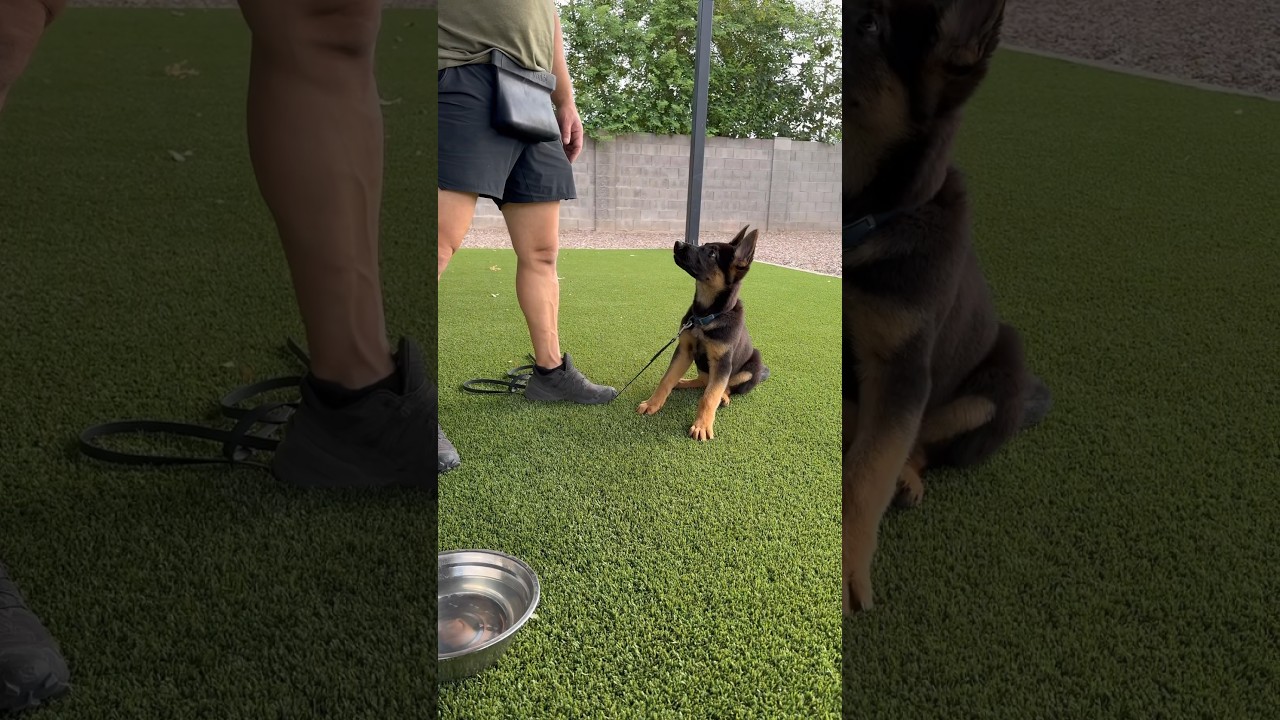
8. German Shepherd
German Shepherds have demonstrated their versatility in an extraordinary range of working roles.
They have been used for police and detection work, search and rescue, assistance tasks, herding, tracking, and many dog sports.
Their ability to learn and apply behaviors in different circumstances is part of what makes the breed so versatile.
A German Shepherd generally benefits from having a purpose. That purpose doesn’t have to be professional work—it could be obedience training, scent games, hiking, tracking exercises, or structured household tasks.
Mental activities to consider
- Advanced obedience
- Scent work
- Tracking
- Puzzle solving
- Agility
- Trick training
- Controlled retrieving games
A bored German Shepherd can become frustrated, so mental stimulation should be treated as part of responsible ownership rather than an optional extra.
9. Golden Retriever
Golden Retrievers combine intelligence with a generally cooperative and people-oriented temperament.
Their willingness to work with people has contributed to their success as assistance, therapy, detection, search-and-rescue, and working dogs.
Goldens often enjoy learning because training gives them both mental stimulation and interaction with their owners.
They can start with basic obedience and eventually progress to more complicated tricks, retrieving tasks, scent games, or dog sports.
Why they can be rewarding training partners
Golden Retrievers often enjoy praise, food rewards, games, and social interaction, giving owners several ways to make learning enjoyable.
They are also active dogs, so their intellectual needs shouldn’t be separated from their physical needs.
10. Rottweiler
Rottweilers are powerful working dogs with considerable intelligence and an ability to learn a wide range of behaviors.
Historically associated with herding and guarding tasks, modern Rottweilers can participate in obedience, tracking, working activities, and various dog sports.
Their size and strength make early training particularly important.
A Rottweiler doesn’t need an owner who tries to dominate it. It needs an owner who can communicate clearly, establish consistent rules, manage the environment, and reward appropriate behavior.
Training can include:
- Basic and advanced obedience
- Impulse control
- Scent work
- Tracking
- Trick training
- Structured retrieving
- Calm behavior around distractions
Early socialization is also important for helping them develop appropriate responses to people, animals, and unfamiliar situations.
11. Border Terrier
Border Terriers may be small, but they retain the determination and curiosity associated with their terrier heritage.
They were developed for hunting and working around farms, and that background can produce a dog that is energetic, persistent, and eager to investigate.
Border Terriers can enjoy trick training, agility, scent games, and other activities that give them an opportunity to think and move.
Their independent streak can occasionally make training feel like a negotiation, particularly when something interesting catches their attention.
Why they’re mentally stimulating
- Curious nature
- Problem-solving ability
- High enthusiasm for activities
- Terrier persistence
- Enjoyment of interactive games
Their small size makes them easier to accommodate physically than many larger working breeds, but their activity needs shouldn’t be underestimated.
What Makes an Intelligent Dog Different?
Dog intelligence isn’t one single trait.
Researchers and trainers often discuss different aspects of canine cognition and behavior, including a dog’s ability to learn, solve problems, communicate, remember information, and work with humans.
A dog that learns a trick in five repetitions isn’t automatically “smarter” than a dog that takes ten.
Breed history, motivation, environment, genetics, training methods, and the individual dog’s personality all affect performance.
For example, a scent hound may appear uninterested in an obedience exercise but demonstrate extraordinary ability when following a scent trail. That’s not necessarily a lack of intelligence—it’s a difference in what the dog was bred and motivated to do.
The Challenge of Owning a Very Smart Dog
An intelligent dog can be incredibly rewarding, but there are trade-offs.
They Can Get Bored
Repetitive days with little stimulation may lead to unwanted behaviors.
They Learn Bad Habits Too
If jumping, barking, opening cabinets, stealing objects, or escaping results in something rewarding, a clever dog may repeat the behavior.
They Need More Than Physical Exercise
A long walk isn’t always enough for a working breed. Training, scent activities, puzzles, and problem-solving can provide additional mental enrichment.
They May Need Consistency
If one family member allows a behavior while another prohibits it, an intelligent dog may quickly learn that different rules apply to different people.
How to Keep an Intelligent Dog Mentally Engaged
You don’t need to invent complicated challenges every day.
Simple activities can provide excellent enrichment.
Teach New Tricks
Spend a few minutes teaching a new behavior rather than repeating commands your dog already knows.
Use Food Puzzles
Appropriately designed food puzzles can encourage dogs to work for part of their meal.
Try Scent Games
Hide treats or toys around a safe area and encourage your dog to search for them.
Practice Obedience in New Places
Once your dog understands a behavior at home, practice it in gradually more distracting environments.
Rotate Toys
Instead of leaving every toy available all the time, rotate them to keep familiar items interesting.
Explore Dog Sports
Depending on the breed and individual dog, activities such as agility, rally, scent work, tracking, obedience, or retrieving can provide structured challenges.
Intelligence Isn’t the Only Thing to Consider
Choosing a dog because it is intelligent can be a mistake if you’re not prepared for its other characteristics.
Before bringing home a highly trainable breed, consider:
| Factor | Question to Ask |
|---|---|
| Exercise | Can I meet this dog’s daily activity needs? |
| Training | Do I genuinely enjoy regular training? |
| Time | Can I provide interaction every day? |
| Grooming | Am I comfortable with the breed’s coat-care needs? |
| Size | Can I safely manage the dog’s adult size? |
| Energy | Does its energy level fit my lifestyle? |
| Socialization | Can I provide appropriate early experiences? |
| Independence | Can I manage a dog that may think for itself? |
| Health | Have I researched breed-specific health concerns? |
| Enrichment | Do I have ways to provide mental stimulation? |
A highly intelligent dog that doesn’t fit your lifestyle can be considerably more challenging than a moderately trainable dog whose needs match your daily routine.
Smart Dogs Need Smart Training
The most rewarding relationship with an intelligent dog isn’t necessarily about teaching hundreds of tricks.
It’s about learning how your dog thinks.
Find out what motivates them. Understand their natural instincts. Break complicated behaviors into manageable steps. Reward good choices. Adjust the difficulty as they improve.
Most importantly, give your dog opportunities to use its abilities in appropriate ways.
A Border Collie may love a complex training session. A Poodle may enjoy learning tricks. A Beagle might prefer following a scent trail. A terrier may thrive on a problem-solving game.
The goal isn’t to constantly make life difficult for your dog. It’s to give their brain appropriate work.
Frequently Asked Questions
What is the smartest dog breed?
There isn’t a single objective answer because canine intelligence can be measured in different ways. Border Collies are frequently recognized for exceptional trainability and working responsiveness, while many other breeds excel in different forms of learning and problem-solving.
Are intelligent dogs easier to train?
Not always. Intelligent dogs can learn quickly, but they may also become bored with repetition or discover unwanted behaviors on their own. Trainability depends on motivation, temperament, breed tendencies, and the individual dog.
Do smart dogs need more exercise?
Many highly capable working breeds do need substantial physical activity, but mental stimulation is equally important. The exact requirements depend on the breed and individual dog.
Is a Belgian Malinois suitable for a first-time dog owner?
The breed’s intense working drive, athleticism, and training requirements can make it a demanding choice. Prospective owners should thoroughly research the breed and honestly assess whether they can meet those needs.
Can small dogs be highly intelligent?
Absolutely. Papillons, for example, can excel in obedience and agility despite their small size. Intelligence isn’t determined by body size.
Can an intelligent dog become bored?
Yes. A dog that receives plenty of food and shelter but little meaningful activity can still become frustrated or develop unwanted behaviors. Training, exploration, play, scent work, and problem-solving can help provide appropriate enrichment.
Final Thoughts
Living with an intelligent dog can feel like having a four-legged training partner who is always watching, learning, and occasionally finding ways to surprise you.
The Border Collie, Poodle, Australian Shepherd, Shetland Sheepdog, Belgian Malinois, Papillon, Doberman Pinscher, German Shepherd, Golden Retriever, Rottweiler, and Border Terrier all offer different forms of intelligence and trainability.
But the most important question isn’t simply “How smart is this breed?”
It’s “Can I provide the lifestyle this dog needs?”
A brilliant working dog may require hours of activity, training, and enrichment. A smaller intelligent breed may need less physical exercise but still demand plenty of interaction and mental challenges.
When the dog’s natural abilities match the owner’s interests and lifestyle, training becomes more than a chore. It becomes a shared activity—and that can create one of the most rewarding relationships a dog owner can experience.









Leave a comment