



Bringing a new dog home can be exciting, but introducing them to a pet who already lives in your household requires patience.
Even friendly dogs may need time to adjust to a new animal. Your existing pet may feel uncertain about sharing their home, food, toys, sleeping areas, and attention.
A gradual introduction can make the transition easier and give both animals time to become comfortable.
Before Bringing the New Dog Home
Preparation starts before the dogs meet.
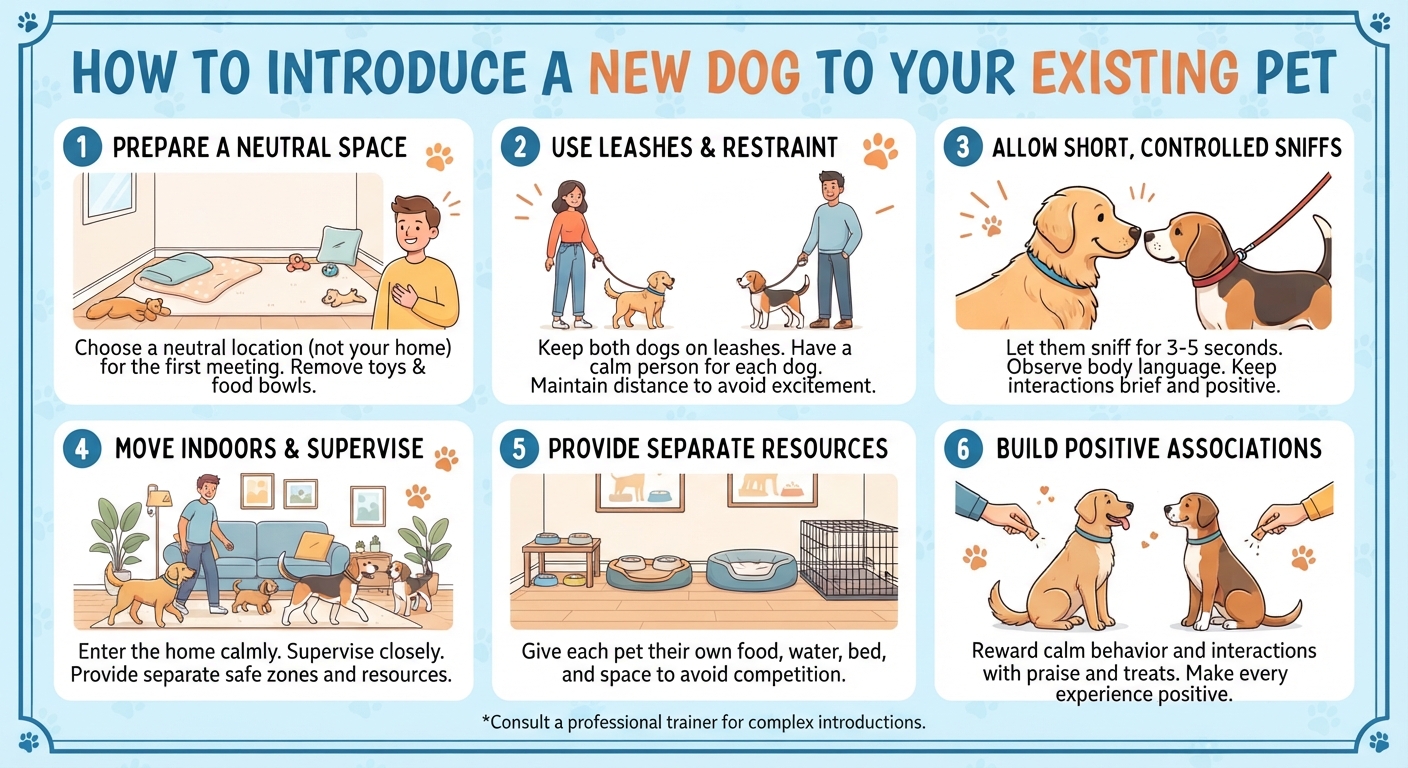
Set up separate areas where each dog can rest without being disturbed. Ideally, each dog should have access to their own:
- Food and water bowls
- Bed
- Toys
- Safe resting area
- Basic supplies
This helps prevent unnecessary competition during the first few days.
If possible, remove high-value toys or food items from shared areas during the initial introduction.
Start With a Neutral Location
For many dogs, meeting somewhere neutral can be easier than introducing a new dog directly inside the existing dog’s home.
A quiet outdoor area may work well.
Keep both dogs under appropriate control and allow them to notice each other without forcing immediate interaction.
The goal is not to make them become best friends instantly. The goal is simply to allow a calm first meeting.
Let Them Approach Gradually
Avoid dragging the dogs toward one another.
Instead, allow them to move at a comfortable pace while you monitor their behavior.
They may sniff, look away, walk around, or briefly investigate each other.
These normal interactions can help dogs gather information about one another.
Keep the first interaction relatively short if either dog seems overwhelmed.
Pay Attention to Body Language
Dogs communicate heavily through body language.
Watch for signs that either dog is uncomfortable, such as:
- Trying to move away
- Stiff body posture
- Excessive staring
- Repeated lip licking
- Hiding
- Growling
- Raised tension
A relaxed dog may have a loose body, natural movement, and a willingness to disengage and explore.
Remember that a growl is communication. Do not punish a dog simply for growling. Instead, create distance and assess what is causing the discomfort.
Take a Walk Together
A parallel walk can be a useful way for dogs to spend time near one another without being forced into direct interaction.
Keep enough distance between them so both dogs remain relatively comfortable.
As they become calmer, the distance can gradually decrease.
Walking together also gives the dogs something else to focus on besides each other.
Bring Them Home Carefully
Once the initial meeting has gone well, you can introduce the dogs to the home.
Allow them to explore gradually rather than immediately giving them unlimited access to every room.
Continue monitoring their interactions.
Your existing dog may need time to adjust to another animal entering their familiar territory.
Keep Food Separate at First
Food can become a source of competition between dogs.
During the first stage of the introduction, feed them separately.
You can use different rooms, crates, or appropriately separated areas depending on your home and the dogs’ needs.
Do the same with high-value treats if either dog shows tension around food.
Give Both Dogs Individual Attention
One common mistake is focusing so much on the new dog that the existing pet receives less attention.
Try to maintain familiar routines.
Continue spending individual time with your original dog while also giving the new dog opportunities to settle and bond with you.
This can make the transition feel less disruptive.
Don’t Force Sharing
Dogs don’t automatically need to share everything.
Separate beds, bowls, toys, and resting areas can reduce competition.
If a particular toy causes tension, remove it and reintroduce shared play opportunities later when both dogs are comfortable.
Supervise Early Interactions
Don’t assume that two dogs are ready to spend unlimited time together after one successful meeting.
For the first several days or longer, supervise their interactions whenever practical.
When you cannot supervise them, provide separate spaces.
This gives both dogs an opportunity to rest without having to manage constant interaction.
Give the New Dog Time to Settle
A new dog may behave differently during the first few days.
They may:
- Sleep more
- Eat differently
- Follow you around
- Explore constantly
- Appear nervous
- Need extra reassurance
Allow the dog time to understand their new environment.
Keeping meals, walks, rest, and training reasonably predictable can help establish a sense of routine.
Use Positive Reinforcement
Reward calm behavior rather than constantly correcting the dogs.
For example, if your dogs are calmly sitting near one another, you can reward that behavior appropriately.
You can also praise and reward calm responses when one dog walks past the other.
The aim is to help both dogs associate being around each other with positive experiences.
What If the Dogs Don’t Get Along Immediately?
Don’t panic if they aren’t instantly affectionate.
Some dogs need days or weeks to become comfortable together.
A successful relationship doesn’t necessarily mean constant playing or sleeping together. Peaceful coexistence is also a positive outcome.
If there is repeated aggression, fighting, serious resource guarding, or you feel unable to safely manage the dogs, seek help from a qualified veterinarian or behavior professional.
How Long Does It Take for Dogs to Adjust?
There is no universal timeline.
Some dogs become comfortable quickly, while others need considerably more time.
Factors that can influence the adjustment include:
- Age
- Previous experiences
- Temperament
- Energy level
- Social history
- Household environment
- Individual preferences
Avoid comparing your dogs to someone else’s pets.
Final Thoughts
Learning how to introduce a new dog is mostly about patience, preparation, and supervision.
Give the dogs opportunities to meet gradually, keep valuable resources separated initially, maintain familiar routines, and reward calm behavior.
Most importantly, don’t expect an instant friendship.
Allowing both dogs to develop trust at their own pace can create a much smoother transition and a more comfortable household for everyone.
FAQs
Should dogs meet outside before coming inside?
A neutral outdoor meeting can be useful because it gives both dogs space to investigate one another before entering the home.
How long should the first meeting last?
Keep the first interaction short enough that both dogs remain reasonably comfortable. You can gradually increase interaction time.
Should I let dogs fight to establish dominance?
No. Do not intentionally allow dogs to fight. If interactions become unsafe, separate them and seek professional guidance.
Should the new dog have their own food bowl?
Yes. Separate feeding areas can reduce competition and make mealtimes easier to manage.






Leave a comment