






Wild animals are usually associated with keeping their distance from people.
Yet in many parts of the world, certain species have become surprisingly comfortable around humans. Some investigate hikers, boats, homes, or vehicles. Others learn that people can provide easy access to food, shelter, or other resources.
Their behavior can look almost as though they’re fascinated by us.
But there’s an important distinction: a wild animal approaching a person doesn’t necessarily mean it wants friendship or affection. Curiosity, habituation, food rewards, and adaptation to human environments can all bring wildlife closer to people.
Here are nine fascinating animals that are sometimes surprisingly comfortable around humans.
1. Raccoons
Raccoons are masters of urban survival.
These adaptable mammals have learned to live remarkably close to people, especially in towns and cities where food and shelter can be plentiful.
A raccoon may investigate garbage cans, gardens, sheds, attics, pet food, or anything else that smells interesting. Their dexterous front paws also allow them to manipulate objects in ways that can make them seem almost humanlike.
If a raccoon repeatedly encounters people without experiencing negative consequences, it may become less wary of human activity.
That doesn’t mean the animal has become a pet.
It’s still a wild animal with its own needs and defenses, so giving raccoons plenty of space is important.
2. Dolphins
Dolphins have fascinated humans for centuries, partly because of their intelligence, complex social behavior, and frequent encounters with boats and swimmers.
Some wild dolphins approach boats or ride the waves created by moving vessels. Individual dolphins have also become accustomed to human activity in certain coastal locations.
Their curiosity can make these encounters appear remarkably interactive.
However, wild dolphins shouldn’t automatically be interpreted as wanting physical contact. Approaching or touching marine wildlife can put both animals and people at risk.
A dolphin swimming near a boat is best appreciated from a respectful distance.
3. Elephants
Elephants are highly social and intelligent animals capable of sophisticated communication and long-lasting relationships within their groups.
In places where elephants regularly encounter humans, they may become accustomed to people’s presence.
Elephants living around sanctuaries, reserves, or communities can sometimes approach vehicles or people, investigate unfamiliar objects, or interact with familiar caretakers.
An elephant gently touching something with its trunk may look like a hug to human observers, but interpreting animal behavior requires caution.
Even a seemingly calm elephant remains an enormous and powerful wild animal.
Respecting boundaries is essential.
4. Mountain Goats
Mountain goats are built for rugged landscapes.
They can climb steep slopes and navigate rocky terrain that would be extremely difficult for humans.
Yet in some popular hiking areas, these animals can become unusually comfortable around people.
One reason is food.
If wildlife repeatedly encounters hikers who carry salty snacks or other attractive foods, animals may begin approaching people because they have learned that humans can provide a reward.
This creates a serious problem.
Feeding wildlife can alter natural behavior and encourage animals to approach roads, campsites, and crowded trails.
So if a mountain goat walks toward you, the safest response is usually to give it space rather than offer a snack.
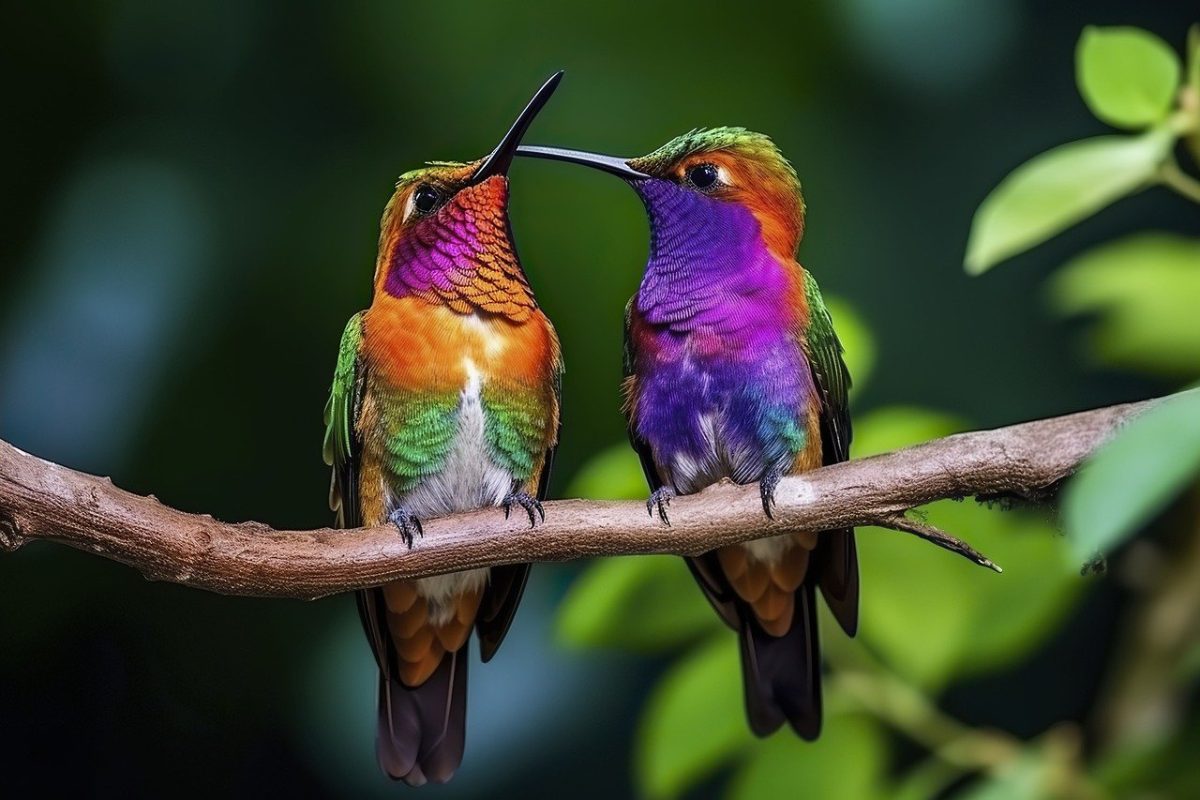
5. Hummingbirds
Hummingbirds are tiny, fast-moving birds that can become surprisingly accustomed to people.
In gardens with hummingbird feeders, they may repeatedly visit the same locations and become comfortable flying close to humans.
A person standing near a feeder might suddenly find a hummingbird hovering nearby.
It can feel like the bird is checking them out.
More accurately, the bird may simply associate the area with a reliable food source.
Hummingbirds have excellent memories for feeding locations, and a garden that consistently provides suitable resources can become part of their regular territory.
Their fearless-looking behavior is fascinating, but it doesn’t necessarily represent a desire for human companionship.
6. Capuchin Monkeys
Capuchin monkeys are highly intelligent, curious primates.
In areas where they encounter humans frequently, their curiosity can sometimes lead them to investigate backpacks, food, cameras, or other objects.
Tourist areas can be particularly problematic because monkeys may learn that visitors carry edible items.
A capuchin grabbing someone’s belongings might look playful from a distance, but the interaction can quickly become unpredictable.
Wild primates should never be treated like entertainers or pets.
Their intelligence makes them fascinating to observe, but it also means they can quickly learn behaviors that bring them rewards from people.
7. Otters
Otters have a reputation for being playful, which makes human encounters especially entertaining.
Some otters living near busy waterways may become accustomed to boats, docks, or other human activity. They may investigate floating objects or continue swimming while people are nearby.
Their playful behavior can make them appear unusually friendly.
But wild otters aren’t domesticated animals.
They have strong teeth, powerful bodies, and natural defensive behaviors. Getting too close can cause stress for the animal and potentially result in injury to a person.
The best otter encounter is one where the animal remains wild and the observer remains safely out of its way.
8. Foxes
Foxes are among the most adaptable wild mammals in many urban and suburban environments.
They can live surprisingly close to houses and businesses, using gardens, parks, vacant spaces, and other areas as habitat.
A fox that regularly sees people without being chased away may become less fearful of human activity.
Food can also play a major role.
Accessible garbage, outdoor pet food, compost, and intentional feeding can teach foxes that human neighborhoods contain easy meals.
This can make them appear unusually confident around people.
If a fox approaches your property, it’s better not to feed it. Keeping garbage secured and removing accessible food sources helps encourage healthy boundaries between people and wildlife.
9. Meerkats
Meerkats are highly social mammals that live in family groups in southern Africa.
Their lives revolve around cooperation, communication, and vigilance.
In places where meerkats regularly encounter people, they may investigate unfamiliar visitors or objects. Their habit of standing upright and staring at approaching humans can make them look as though they’re carefully studying everyone around them.
Their curiosity is entertaining to watch, but these animals are still wild.
A meerkat investigating a person isn’t necessarily asking to be petted. It may simply be assessing an unfamiliar presence.
Why Do Wild Animals Approach Humans?
There are several reasons an animal may appear unusually interested in people.
Food
This is one of the biggest factors.
Animals quickly learn when humans provide easy access to food, whether intentionally through feeding or unintentionally through unsecured garbage and discarded leftovers.
Curiosity
Many intelligent or exploratory species investigate unfamiliar objects and creatures.
Humans are simply another unusual feature of their environment.
Habituation
An animal that repeatedly encounters people without experiencing a threat may gradually become less fearful.
This is known as habituation.
A habituated animal isn’t necessarily tame. It has simply learned that people may not pose an immediate threat.
Urban Adaptation
Cities provide unexpected opportunities for wildlife.
Buildings can provide shelter, gardens provide vegetation, and human waste can provide food.
Species that adapt well to these conditions may end up living remarkably close to us.
Learned Behavior
Wild animals can learn from experience.
If approaching a particular location consistently results in food, the animal may return.
That’s one reason feeding wildlife can create long-term behavioral changes.
Does a Wild Animal Approaching You Mean It Likes You?
Not necessarily.
Humans naturally interpret animal behavior through a human perspective, but wildlife doesn’t always have the same motivations we do.
A fox approaching someone may be looking for food.
A raccoon entering a yard may be investigating a smell.
A monkey grabbing an object may be curious or looking for something edible.
A bird hovering near someone may simply be interested in a feeder.
Even when an animal appears calm, that doesn’t mean it wants physical contact.
Understanding this distinction helps people appreciate wildlife without accidentally encouraging unsafe interactions.
Why Feeding Wild Animals Can Cause Problems
Feeding wildlife may seem harmless, especially when an animal looks hungry or friendly.
However, regular feeding can cause animals to associate people with food.
That can result in:
- Increased approaches toward humans
- Animals entering homes or campsites
- Aggressive food-seeking behavior
- Greater risk of traffic accidents
- Conflict with pets
- Loss of natural foraging behavior
- Increased disease exposure
- Problems for both animals and communities
Wild animals generally do better when they can maintain their natural behaviors.
How to Enjoy Close Wildlife Encounters Safely
If a wild animal approaches you, resist the temptation to treat the encounter like a meeting with a pet.
Instead:
- Keep a safe distance.
- Don’t feed the animal.
- Don’t attempt to touch it.
- Avoid cornering or blocking its escape route.
- Keep children and pets away.
- Don’t chase it for photographs.
- Secure food and garbage.
- Leave the area calmly if the animal becomes defensive.
- Follow local wildlife regulations.
A good wildlife encounter doesn’t require physical interaction.
Sometimes watching quietly is the best way to appreciate an animal.
Wild Animals Are Adapting to a Changing World
The growing presence of wildlife around people is one of the most fascinating aspects of modern ecosystems.
As cities expand and natural habitats change, some animals have learned to use human-dominated landscapes to their advantage.
Raccoons explore our neighborhoods. Foxes cross suburban parks. Birds visit backyard feeders. Dolphins encounter boats. Elephants may live alongside communities.
These encounters remind us that wildlife isn’t always confined to remote forests, mountains, or wilderness areas.
Sometimes, nature is right outside the front door.
Final Thoughts
Calling these animals “obsessed” with humans makes for a fun headline, but their behavior is usually more complicated.
Food, curiosity, habituation, intelligence, and environmental changes can all encourage wild animals to come closer to people.
That’s what makes these encounters so fascinating.
A raccoon investigating a backyard, a hummingbird hovering near a feeder, or a fox quietly crossing a neighborhood can provide an unforgettable glimpse into the adaptability of wildlife.
The key is to admire that behavior without turning wild animals into pets.
After all, part of the magic of seeing wildlife is knowing that it remains wild.












Leave a comment