



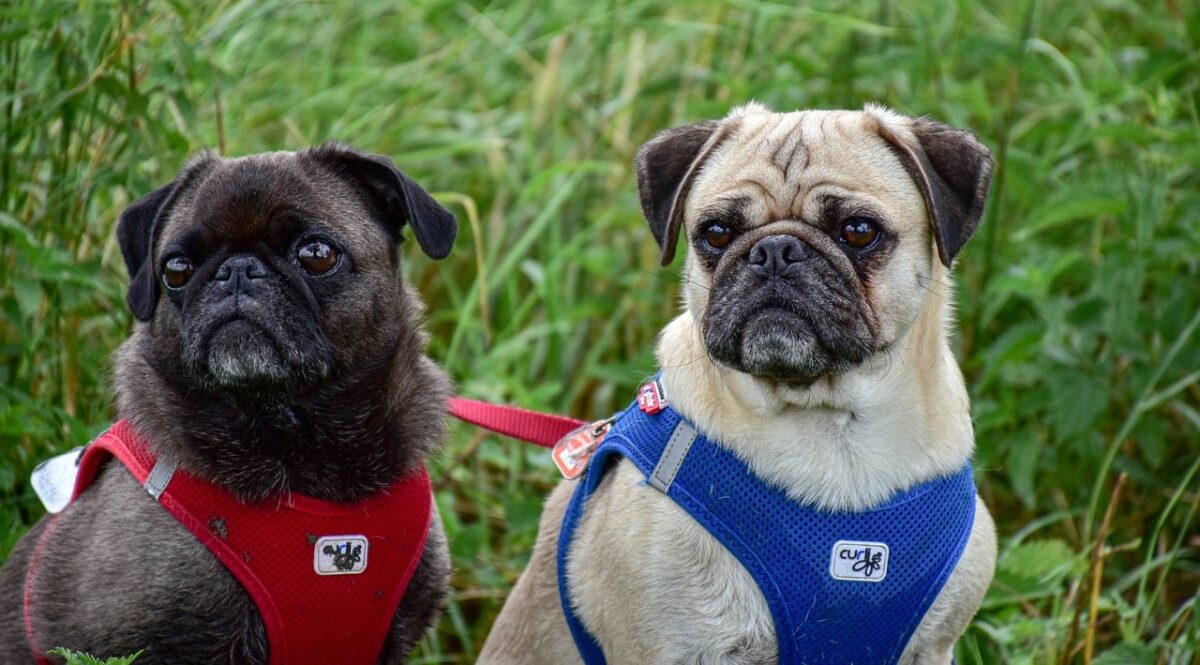
Pugs are impossible to mistake for almost any other dog. Their wrinkled faces, curled tails, round eyes, compact bodies, and expressive personalities have made them popular companions for centuries.
But there is much more to the Pug than its adorable appearance.
This little breed has a fascinating history connected to Chinese imperial courts, European royalty, and centuries of companionship. Pugs are also known for some wonderfully unusual behaviors and physical characteristics.
Here are nine fun facts that reveal another side of these charming little dogs.
1. Pugs Have an Ancient History
Pugs are an old companion breed with roots in China that go back many centuries.
They were bred primarily as companions rather than as hunting or herding dogs. Their small size and affectionate nature made them well suited to life alongside wealthy families and members of the imperial court.
The breed eventually traveled beyond China and became popular in Europe.
That long history helps explain why Pugs are so strongly associated with companionship. Being close to people has been part of their role for generations.
2. Pugs Became Favorites of European Royalty
Pugs eventually became fashionable among European aristocrats and royal families.
They were particularly associated with the House of Orange in the Netherlands. One famous historical story claims that a Pug alerted Prince William of Orange to danger, although details of the story have been repeated and embellished over time.
Pugs also became popular among other European royals.
Queen Victoria was known to have owned Pugs, helping increase the breed’s popularity during the Victorian era.
For a dog that weighs only a fraction of a large working breed, Pugs certainly accumulated an impressive royal résumé.
3. Their Wrinkles Are Part of Their Signature Look
Those deep facial wrinkles are one of the first things people notice about a Pug.
The breed’s distinctive facial structure has been prized for generations, and historical accounts sometimes connect particular wrinkle patterns with Chinese characters or symbolism.
Today, the wrinkles are simply one of the breed’s most recognizable physical characteristics.
However, they also require practical care.
Moisture, dirt, and debris can accumulate in skin folds, so owners should regularly check the wrinkles and follow appropriate cleaning and veterinary guidance. Keeping the folds dry and healthy is more important than simply making them look neat.
4. Pugs Have Been Known by Different Names
Pugs have had several names and nicknames throughout their history.
In parts of Europe, they were historically known as Mops or Mops-related names, including the Dutch term Mopshond.
The exact origins and meanings of these historical names are debated, but the variety of names reflects how widely the breed traveled and how different cultures developed their own ways of describing these unusual little dogs.
Their expressive faces and distinctive noises probably didn’t hurt their reputation for being memorable!
5. Pugs Are Natural Entertainers
A Pug can turn an ordinary moment into a comedy routine.
Many Pugs are playful, curious, and highly expressive. They may chase toys, bounce around the room, investigate household activities, or stare at their owners with an expression that seems almost theatrical.
Their personalities can be wonderfully goofy.
Of course, individual Pugs differ. Some are energetic and playful, while others are much happier spending most of the day relaxing beside their favorite person.
Either way, their expressive faces often make them seem like they know exactly how funny they are.
6. They Can Be More Active Than They Look
Pugs aren’t built like endurance athletes, but that doesn’t mean they should be completely sedentary.
Many healthy Pugs enjoy short walks, gentle games, training exercises, and indoor play.
Because Pugs have short, flat faces, however, they can be more vulnerable to breathing difficulties and overheating than many longer-nosed breeds.
Exercise should therefore be appropriate for the individual dog and environmental conditions. Hot or humid weather can be particularly challenging.
A Pug may enthusiastically chase a toy for a few minutes and then decide that the sofa is the perfect place for the rest of the afternoon.
7. Pugs Often Follow Their People Everywhere
Pugs are frequently described as “Velcro dogs” because many enjoy staying close to their favorite humans.
A Pug may follow someone from the living room to the kitchen, wait outside the bathroom, or settle beside their owner while they work.
This people-oriented behavior fits their history as companion dogs.
However, constant attachment shouldn’t automatically be confused with separation anxiety. A dog can simply enjoy companionship without becoming distressed when left alone.
If a Pug shows signs of panic, destructive behavior, excessive vocalization, or other distress when separated from its owner, veterinary or qualified behavioral guidance may be appropriate.
8. Those Big Eyes Need Extra Protection
A Pug’s large, prominent eyes are one of its most recognizable features.
Unfortunately, that distinctive anatomy can also leave the eyes more exposed to injury and certain eye problems.
Owners should pay attention to signs such as:
- Squinting
- Excessive tearing
- Redness
- Cloudiness
- Pawing at the eye
- Swelling
- Discharge
- Sudden changes in vision or behavior
Because eye injuries can become serious quickly, unusual eye symptoms deserve prompt veterinary attention.
Pug owners should also be cautious around rough play, sharp objects, and situations where the dog’s face could be injured.
9. Pugs Can Be Very Noisy for Such Small Dogs
Pugs have a reputation for making plenty of unusual sounds.
Snorting, grunting, snoring, wheezing, and other noisy breathing sounds can occur because of their short-nosed anatomy.
Some of these sounds may be familiar characteristics of the breed, especially while sleeping or excited.
However, owners shouldn’t automatically assume that every breathing noise is harmless.
Difficulty breathing, excessive effort to breathe, blue or gray gums, collapse, severe exercise intolerance, or distress should be treated as veterinary concerns.
Understanding the difference between a familiar noise and a change in breathing can be especially important for brachycephalic dogs.
What Makes Pugs So Special?
Pugs have an unusual combination of history, appearance, and personality.
They were developed as companion dogs rather than as traditional working breeds, and their affectionate nature remains one of their defining characteristics.
At the same time, their distinctive anatomy means prospective owners need to understand their care requirements.
Before bringing a Pug home, consider:
- Their sensitivity to heat
- Their breathing and exercise limitations
- Regular skin-fold care
- Eye-health considerations
- Weight management
- Dental care
- Their need for companionship
- Their individual temperament
Their small size doesn’t mean they require little care.
Are Pugs Good Family Dogs?
Pugs can be affectionate and entertaining family companions when their needs are properly understood.
Their size can make them suitable for many homes, including some apartments, but they still need regular interaction, enrichment, appropriate exercise, veterinary care, and a comfortable environment.
Families with children should teach them how to handle a small dog gently and should supervise interactions.
As with any breed, the individual dog’s personality matters.
Final Thoughts
Pugs may be small, but their history is enormous.
From ancient China and European royal courts to modern family homes, these distinctive dogs have spent centuries entertaining and accompanying people.
Their wrinkles, expressive eyes, funny noises, affectionate personalities, and sometimes stubborn streaks all contribute to their unique charm.
But behind the cute face is a dog with specific needs, particularly because of its short-nosed anatomy.
If you’re willing to understand those needs and provide appropriate care, a Pug can bring plenty of companionship, personality, and laughter into everyday life.
Tiny body, enormous personality—that may be the Pug’s greatest talent.
This Article Was Generated By AI.






Leave a comment