






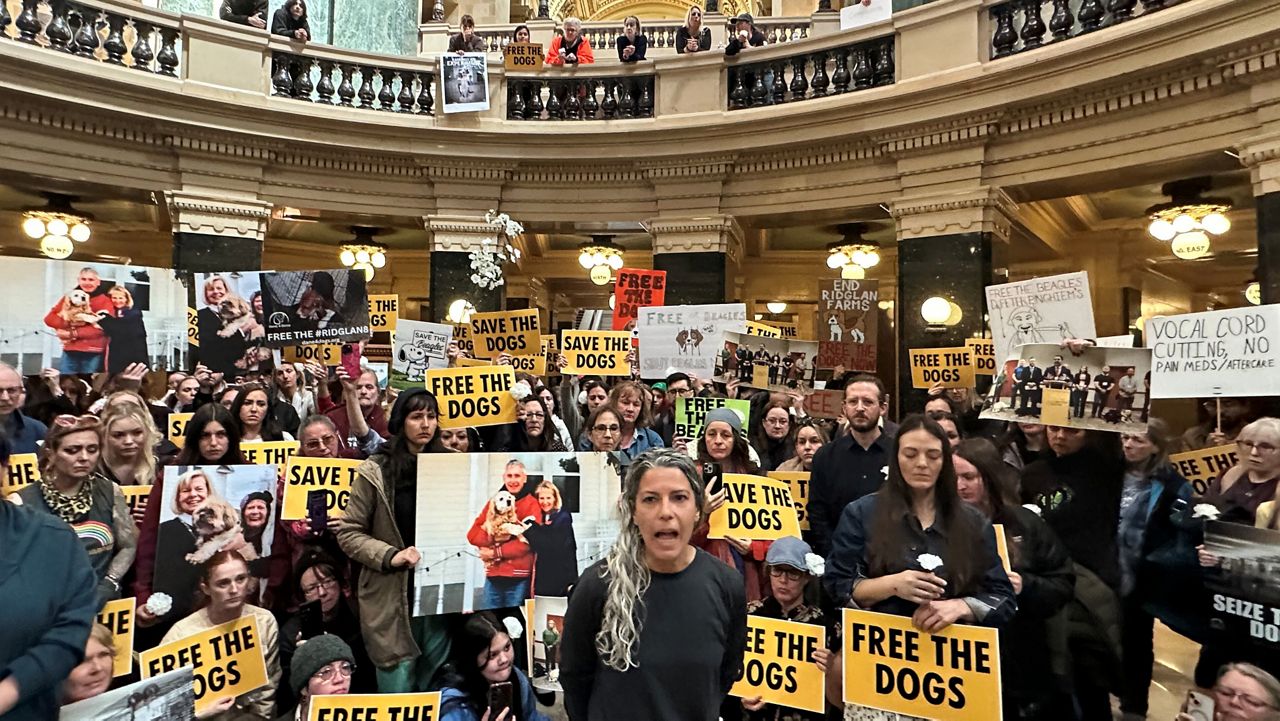
A major animal-welfare protest in Wisconsin in April 2026 brought national attention to Ridglan Farms, a beagle breeding and research facility in Blue Mounds.
The demonstrations centered on the fate of roughly 2,000 beagles at the facility and followed several confrontations between animal-welfare activists and law enforcement. On April 20, hundreds of activists gathered at the Wisconsin State Capitol in Madison, calling on state officials to intervene and seeking the release of the dogs.
The controversy involved competing claims about animal welfare, research, law enforcement, and the future of the beagles.
What Sparked the Wisconsin Beagle Protests?
The April Capitol demonstration followed an attempted entry into Ridglan Farms on April 18.
According to reporting from the Associated Press, an estimated 1,000 activists had traveled to the facility in Blue Mounds, roughly 25 miles southwest of Madison, as part of an effort to free approximately 2,000 beagles. Law enforcement used tear gas, pepper spray, and rubber bullets as officers responded to attempts to enter the property.
The Dane County Sheriff’s Office said officers were responding to criminal activity and safety concerns, while activists described their actions as an effort to rescue dogs they believed were being subjected to unacceptable conditions.
The confrontation resulted in arrests and injuries reported by some protesters. The Sheriff’s Office later said 29 people were arrested during the April 18 incident.
Protesters Take Their Demands to the Wisconsin Capitol
Two days later, activists moved their demonstration to Madison.
On April 20, protesters gathered outside Wisconsin Governor Tony Evers’ office at the State Capitol, chanting “Free the dogs” and calling on the governor and attorney general to take action concerning Ridglan Farms.
Some protesters displayed injuries they said they had suffered during the confrontation at Ridglan Farms.
The demonstration became part of a broader national debate over the use of dogs in biomedical research and how animals housed at research facilities should be handled when breeding operations end.
What Is Ridglan Farms?
Ridglan Farms is a long-running beagle breeding and research facility in rural Blue Mounds, Wisconsin.
The facility has described its work as supporting biomedical research involving both human and veterinary medicine. Ridglan has also disputed allegations of animal mistreatment and said activists had circulated what it characterized as false or misleading claims about its operations.
The facility’s regulatory situation was also an important part of the controversy.
In 2025, Ridglan reached a settlement following an investigation into allegations involving animal welfare. Under that agreement, the facility agreed to surrender its Wisconsin state breeding license effective July 1, 2026. However, the agreement did not require the complete closure of the research facility. The Dane County Sheriff’s Office said Ridglan could continue operating as a federally licensed research facility after the state breeding license ended.
Why Were Beagles at the Center of the Debate?
Beagles have historically been used in some areas of laboratory research, in part because their size and temperament can make them suitable for controlled research environments.
Animal-welfare organizations have criticized the use of dogs in research and have argued that the Ridglan beagles should instead be placed with rescue organizations or adoptive families.
The dispute at Ridglan was not simply about whether the dogs should eventually leave the facility. It also involved questions about how many dogs could be safely relocated, who would provide veterinary care, and whether rescue organizations had the capacity to take large numbers of animals at once.
What Did Officials Say About the Protests?
The Dane County Sheriff’s Office said its role was to enforce state law and protect public safety during incidents at the facility.
In an official March 2026 statement, the Sheriff’s Office said Ridglan was licensed by both Wisconsin’s Department of Agriculture, Trade and Consumer Protection and the U.S. Department of Agriculture. It also said the facility was legally permitted to sell its remaining dogs until the state breeding license expired on July 1.
Following the April confrontation, the Sheriff’s Office maintained that officers had been responding to attempts to enter private property and that some protesters had engaged in conduct including trespassing and property damage.
Political Pressure Around the Beagles
The controversy also drew attention from elected officials.
U.S. Representative Mark Pocan of Wisconsin called for state officials to work with Ridglan on a plan for releasing the dogs that would not overwhelm rescue organizations or create a situation in which animals could be euthanized because of limited placement capacity.
Pocan also questioned U.S. Health and Human Services Secretary Robert F. Kennedy Jr. during a House Appropriations Committee hearing about federal grants involving organizations that use beagles from Ridglan. Kennedy responded that he would look into the matter.
These statements added a federal dimension to an issue that had initially centered on the facility, Wisconsin regulators, local law enforcement, and animal-welfare organizations.
What Happened to the Beagles?
The situation later changed significantly.
According to the Dane County Sheriff’s Office, Ridglan Farms ultimately reached an agreement with animal rescue organizations and permanently ended its beagle breeding and research operations. The facility surrendered its state breeding license, and the final group of remaining beagles left the facility in August 2026.
This means the April protests were part of a larger sequence of events that eventually resulted in the dogs leaving the facility.
The Sheriff’s Office’s later update states that the final group of beagles departed in August, marking the end of Ridglan’s operations.
A Controversy That Went Beyond One Facility
The Ridglan Farms dispute highlighted a much broader question: how should dogs used in biomedical research be cared for and rehomed when breeding or research operations change?
For animal-welfare advocates, the focus was on finding homes and veterinary support for the beagles.
For law enforcement and facility officials, the protests also raised questions about trespassing, property security, public safety, and the legal limits of direct-action campaigns.
The April demonstrations brought these competing concerns into public view, while the later agreement between Ridglan and rescue organizations provided a different path for the dogs to leave the facility.
Frequently Asked Questions
How many beagles were at Ridglan Farms?
Reports in April 2026 described approximately 2,000 beagles at the facility, although the number changed as dogs were removed or otherwise accounted for during the events.
Where is Ridglan Farms?
Ridglan Farms was located near Blue Mounds in Dane County, Wisconsin, approximately 25 miles southwest of Madison.
Why were people protesting Ridglan Farms?
Animal-welfare activists were protesting the breeding and use of beagles for research and were calling for the dogs to be released and placed with rescue organizations and families.
Did Ridglan Farms close?
Yes. According to the Dane County Sheriff’s Office, Ridglan permanently ended its beagle breeding and research operations, with the final remaining beagles leaving the facility in August 2026.
Were people arrested during the protests?
Yes. Law enforcement reported arrests during the April confrontation at Ridglan Farms. The Associated Press reported that 29 people were arrested during the April 18 incident.
Final Thoughts
The 2026 Wisconsin beagle protests brought significant attention to Ridglan Farms and the broader debate surrounding dogs used in biomedical research.
The April demonstrations at the facility and Wisconsin Capitol involved activists, law enforcement, elected officials, researchers, and animal-welfare organizations with differing views about how the situation should be handled.
The later agreement between Ridglan Farms and animal rescue organizations changed the outcome for the dogs. By August 2026, the final group of beagles had left the facility, and Ridglan’s breeding and research operations had ended.
The story remains a notable example of how animal-welfare concerns can intersect with research, regulation, law enforcement, and the challenges of finding safe placements for large numbers of animals.
This Article Was Generated By AI.












Leave a comment