




Bringing home a puppy is exciting, but the first few months also come with plenty of learning—for both you and your new companion. Puppies are naturally curious, energetic, and eager to explore, which makes early training an important part of raising a confident and well-mannered dog.
The goal isn’t to create a perfectly obedient puppy overnight. Instead, focus on building good habits through patience, consistency, positive reinforcement, and plenty of appropriate experiences.
From potty training and basic commands to chewing and socialization, here are the essential skills every puppy should begin learning.
1. Start With House Training
Potty training is one of the first challenges most new puppy owners face. Puppies have small bladders and limited control, so accidents are normal during the learning process.
Create a predictable bathroom routine by taking your puppy outside:
- After waking up
- After eating or drinking
- After naps
- After play sessions
- Before bedtime
- Whenever you notice signs that they need to go
When your puppy eliminates in the correct place, immediately offer praise or a small reward. This helps them understand which behavior you want repeated.
Use a Crate as a Training Tool
A properly introduced crate can provide your puppy with a comfortable place to rest while also supporting house training. The crate should never be used as punishment.
Make it inviting by offering treats, meals, or safe enrichment inside. Start with the door open and allow your puppy to explore at their own pace. Gradually increase the amount of time they spend inside as they become comfortable.
Never expect a young puppy to remain confined for excessively long periods. Puppies need regular opportunities to eliminate, eat, play, exercise, and interact with their families.
2. Teach Your Puppy What They Can Chew
Chewing is a normal puppy behavior. Young dogs explore their surroundings with their mouths, and teething can also encourage them to chew.
Instead of constantly correcting your puppy for chewing the wrong object, give them appropriate alternatives.
Keep several puppy-safe chew toys available and redirect your puppy whenever they become interested in furniture, shoes, electrical cords, or other household items.
For example, if your puppy grabs a shoe, calmly exchange it for an appropriate toy and praise them when they engage with the toy.
You can also make your home easier to manage by keeping tempting objects out of your puppy’s reach.
3. Teach Essential Commands
Your puppy doesn’t need to master dozens of commands immediately. Begin with a few useful behaviors that will make everyday communication easier.
Good starter commands include:
- Sit
- Stay
- Come
- Down
- Leave it
- Drop it
- Wait
These skills can eventually help with safety, household manners, leash walking, and everyday situations.
Keep training sessions short and enjoyable. Puppies have limited attention spans, so several brief sessions throughout the day are often more practical than one long lesson.
Reward the Behavior You Want
Reward-based training helps puppies understand which behaviors earn good things. Depending on the puppy, rewards can include small treats, toys, praise, play, or access to something they enjoy.
Use the same verbal cue consistently. If everyone in the household uses different words for the same behavior, your puppy may have difficulty understanding what is expected.
Most importantly, avoid harsh physical punishment. Training should help your puppy learn rather than make them afraid of you.
4. Teach Your Puppy Their Name
One simple skill that is surprisingly useful is responding to their name.
Start in a quiet room. Say your puppy’s name in a cheerful voice. When they look toward you, immediately reward them.
Repeat this several times throughout the day.
Eventually, your puppy should learn that hearing their name means they should pay attention to you. This can become an important foundation for future training and recall work.
5. Begin Leash and Walking Skills
Puppies also need to learn that wearing a collar or harness and walking on a leash is normal.
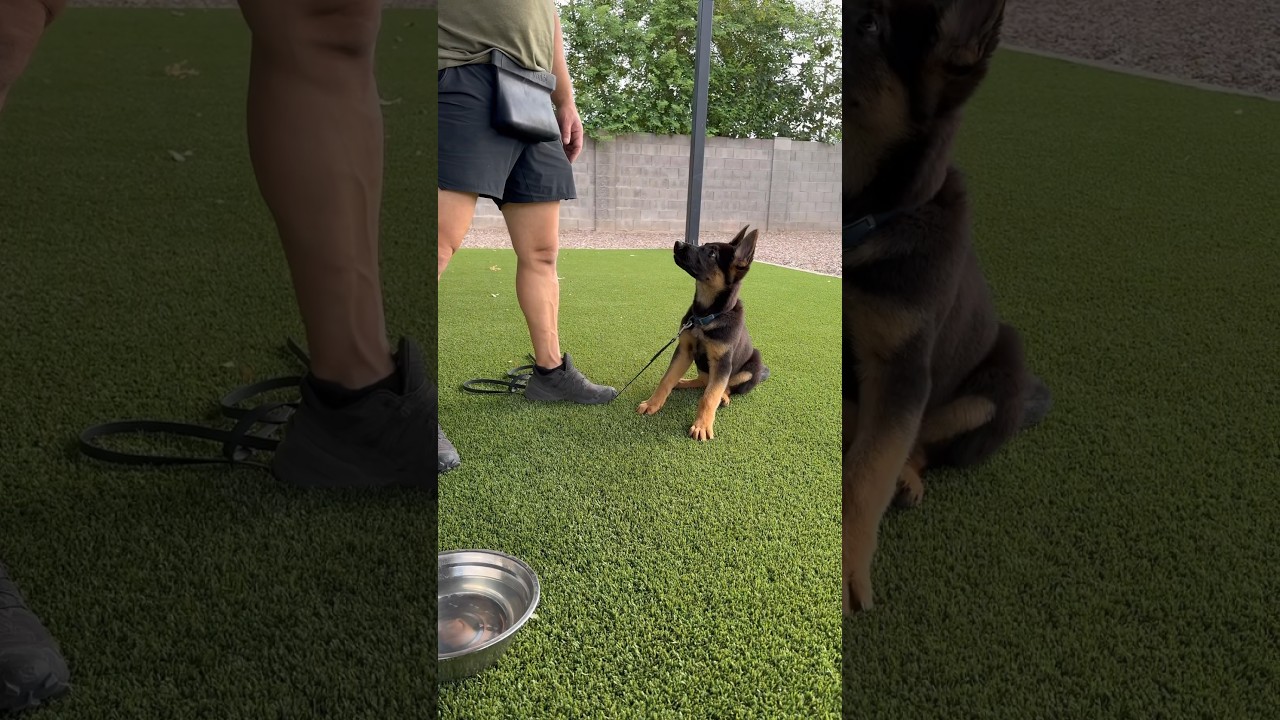
Start indoors or in another low-distraction environment. Let your puppy become comfortable wearing their equipment before expecting them to walk perfectly.
Reward them for:
- Looking at you
- Walking beside you
- Following the leash without pulling
- Checking in with you
- Remaining calm around distractions
Don’t expect a young puppy to immediately walk like an adult dog. Loose-leash walking takes practice and maturity.
6. Socialize Your Puppy Carefully
Socialization is much more than simply allowing your puppy to meet as many dogs as possible.
A well-socialized puppy gradually learns that different people, places, sounds, surfaces, objects, and everyday situations are nothing to fear.
Depending on your puppy’s health and your veterinarian’s advice, introduce them to experiences such as:
- People wearing different types of clothing
- Household appliances and common sounds
- Different floor surfaces
- Car rides
- New rooms and environments
- Friendly, appropriate dogs
- Gentle handling of paws, ears, and body
- Everyday sights and sounds
Keep new experiences positive and manageable.
If your puppy becomes frightened, don’t force them closer to whatever scares them. Increase the distance, give them time to relax, and reward calm behavior.
The goal is not to overwhelm your puppy. It’s to help them gradually build confidence.
7. Help Your Puppy Learn to Be Alone
It’s tempting to spend every minute with a new puppy, but puppies also need to learn that being alone for appropriate periods is normal.
Begin with very short periods in a safe puppy-proofed area or appropriately trained crate. Give your puppy something safe and interesting to do while you briefly step away.
Gradually increase the duration as your puppy becomes comfortable.
This can also help your puppy develop independence and become comfortable with everyday situations where you cannot provide constant attention.
If your puppy becomes extremely distressed when separated, don’t simply keep increasing the duration. Consider speaking with a qualified veterinarian or behavior professional.
8. Teach Good Manners From the Beginning
Puppies don’t automatically know which behaviors humans consider polite.
Start teaching household manners early, including:
- Keeping four paws on the floor when greeting people
- Waiting before going through doors
- Not jumping onto guests
- Not grabbing food from people’s hands
- Settling down when the household is quiet
- Leaving inappropriate objects alone
Reward calm behavior whenever you see it.
You don’t need to correct every little mistake. Instead, look for opportunities to show your puppy what they should do instead.
9. Make Handling Part of Everyday Life
Your puppy will eventually need grooming, nail trimming, veterinary examinations, ear checks, and other forms of handling.
Make these experiences gradual and positive.
For example, briefly touch your puppy’s paw and give them a reward. Later, gently handle their ears or look at their teeth. Keep the sessions short and stop before your puppy becomes overwhelmed.
This can make routine care much easier as your dog grows.
10. Give Your Puppy Time to Learn
One of the biggest mistakes new puppy owners can make is expecting too much too soon.
Your puppy is still developing. Accidents, chewing, distractions, and inconsistent responses are all part of the learning process.
Focus on:
Consistency + patience + positive reinforcement = better learning
Practice the same skills regularly, reward progress, and gradually increase the difficulty.
If a behavior problem continues despite consistent training, getting help early from a qualified positive-reinforcement trainer or veterinary behavior professional can be beneficial.
Puppy Training Checklist
By working on these basics, you can give your puppy a strong foundation:
- Responds to their name
- Beginning to understand potty routines
- Comfortable with their crate or safe resting area
- Uses appropriate chew toys
- Understands basic commands
- Begins learning leash skills
- Experiences new people and environments positively
- Can spend short periods alone calmly
- Accepts gentle handling
- Understands basic household boundaries
- Learns to settle and relax
Frequently Asked Questions
When should I start training my puppy?
You can begin teaching simple behaviors as soon as your puppy comes home. Keep sessions short, positive, and appropriate for their age and attention span.
Should I punish my puppy for accidents?
No. Punishment after an accident can create confusion and fear. Instead, supervise your puppy closely, maintain a predictable potty schedule, and reward successful trips to the appropriate bathroom area.
Is crate training necessary for every puppy?
Not every puppy must use a crate, but learning to feel comfortable in an appropriately introduced crate can be a useful life skill for travel, veterinary care, boarding, emergencies, and periods when safe confinement is necessary.
How long does puppy training take?
There isn’t one fixed timeline. Puppies can learn individual behaviors relatively quickly, but reliable responses require repetition, consistency, maturity, and practice in different environments.
What if my puppy is afraid of new experiences?
Slow down and make the experience easier. Give your puppy enough distance to remain comfortable and reward calm behavior. If fear is intense, persistent, or getting worse, consult your veterinarian or a qualified behavior professional.
Final Thoughts
The first months with a puppy are about building a foundation rather than achieving perfection. Potty training, appropriate chewing, basic commands, socialization, leash skills, handling, and independence are all valuable life skills.
Keep training positive, give your puppy realistic expectations, and celebrate small improvements. With consistent guidance and patience, those early lessons can help your puppy grow into a confident and well-mannered companion.







Leave a comment