


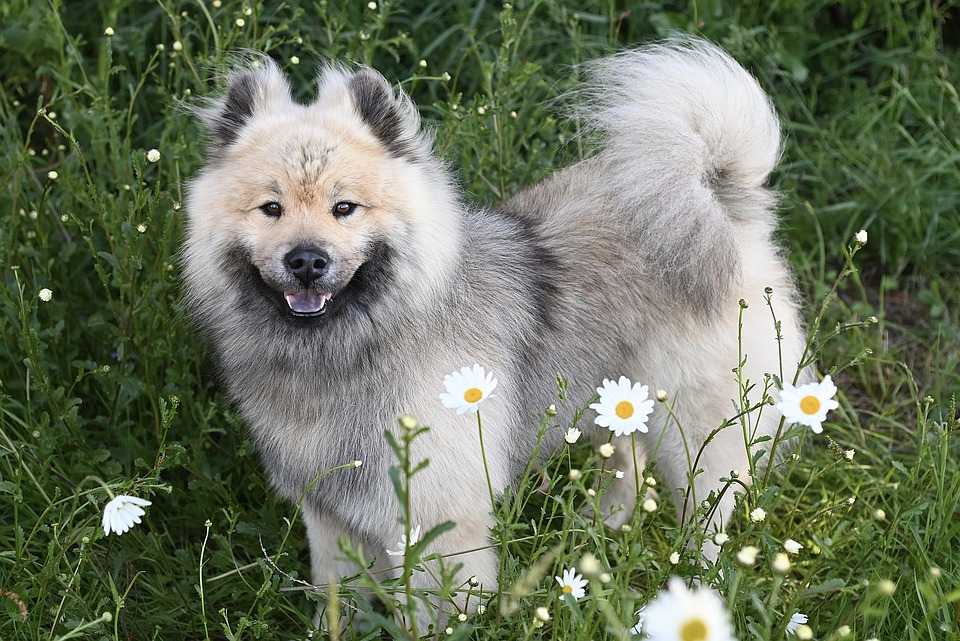
Big dogs often have big personalities to match their size. From gentle giant breeds that love lounging beside their families to energetic working dogs that seem ready for an adventure at any moment, large dogs can make wonderful companions.
But living with a large dog also requires thoughtful planning. A 70-pound dog can accidentally knock someone over, pull strongly on a leash, outgrow an undersized bed, or become difficult to manage if basic training isn’t established early.
Large and giant breeds also have some unique nutritional, exercise, and health considerations. Their growing bodies put different demands on bones and joints, and some are more susceptible to conditions such as hip and elbow problems or gastric dilatation-volvulus (GDV), commonly called bloat.
The good news is that responsible preparation can make life easier for both you and your dog.
1. Make Sure Your Home Can Accommodate a Large Dog
You don’t necessarily need a huge house to live successfully with a big dog. What matters more is whether your home allows your dog to move safely and whether you can provide appropriate daily exercise and enrichment.
Before bringing a large dog home, consider:
- Where they will sleep
- Where food and water bowls will go
- Whether doorways and walkways provide enough room
- Whether furniture and household items can withstand a large dog
- Where the dog can rest without being disturbed
- Whether outdoor areas are securely fenced
- Whether stairs present a challenge
- How you’ll transport the dog when necessary
A large dog can also reach countertops and tables that a small dog can’t, so household dog-proofing may need to extend higher than you expect.
Secure your outdoor space
If your dog will spend time in a yard, inspect the entire perimeter.
Look for:
- Gaps beneath fences
- Weak gates
- Loose fence panels
- Areas where the dog could dig underneath
- Objects that could help the dog climb over a barrier
A fence should be secure enough for your individual dog’s size, strength, and escape tendencies.
2. Choose Equipment Designed for Their Size
Standard puppy equipment can quickly become unsuitable as a large dog grows.
Invest in appropriately sized:
- Collar or harness
- Leash
- Food and water bowls
- Bed
- Crate
- Grooming equipment
- Toys
- Car restraint
- Identification tag
Don’t buy everything based solely on your dog’s current puppy size if they’re expected to grow substantially. Some equipment can be adjusted as they mature, while other items may need to be replaced.
A properly sized crate matters
Your dog should have enough room to stand up, turn around, lie down comfortably, and change positions.
However, excessively large crates aren’t always ideal for puppies during house training. A crate with an adjustable divider can allow the space to grow with the dog.
Most importantly, the crate should be used as a safe resting area rather than as punishment.
3. Feed a Diet Appropriate for Large-Breed Growth
Nutrition is particularly important while a large-breed puppy is growing.
Rapid growth doesn’t necessarily mean healthier growth. Feeding too many calories or using an inappropriate diet can contribute to excessive weight gain and developmental problems.
If you have a large-breed puppy, ask your veterinarian about a complete and balanced diet formulated for large-breed growth.
Your veterinarian can help determine:
- Appropriate calorie intake
- Feeding frequency
- Portion sizes
- Body-condition goals
- Treat allowances
- Whether dietary adjustments are needed as your dog grows
Avoid overfeeding
A chubby puppy may look adorable, but maintaining an appropriate body condition is much more important than maximizing growth speed.
Measure meals rather than constantly filling the bowl, and adjust portions as your dog’s weight and activity level change.
Regularly checking body condition with your veterinarian can be more useful than relying only on the number displayed on a scale.
4. Exercise According to Age and Individual Needs
Large dogs need exercise, but more exercise isn’t always better.
A young large-breed puppy has developing bones and joints, so strenuous or repetitive activity should be approached carefully. Puppies generally need opportunities for age-appropriate movement, play, exploration, and rest rather than forced endurance exercise.
For adult dogs, exercise requirements vary considerably by breed and individual.
A Great Dane may have very different exercise needs from a Belgian Malinois, even though both are large dogs.
Possible activities include:
- Walks
- Sniffing walks
- Controlled play
- Training games
- Swimming when appropriate
- Hiking for suitably conditioned adults
- Fetch in moderation
- Food puzzles
- Obedience practice
Watch for overexertion
Signs that your dog may need a break include:
- Excessive or prolonged panting
- Slowing down significantly
- Reluctance to continue
- Limping
- Stiffness
- Repeatedly lying down
- Unusual fatigue
If your dog develops persistent lameness or pain, contact your veterinarian.
5. Start Training Before Your Dog Becomes Stronger Than You
One of the biggest advantages of training a large dog early is that small behavioral problems are much easier to manage before your dog reaches full size.
A 15-pound puppy jumping on someone may be annoying.
A 100-pound adult doing the same thing can be dangerous.
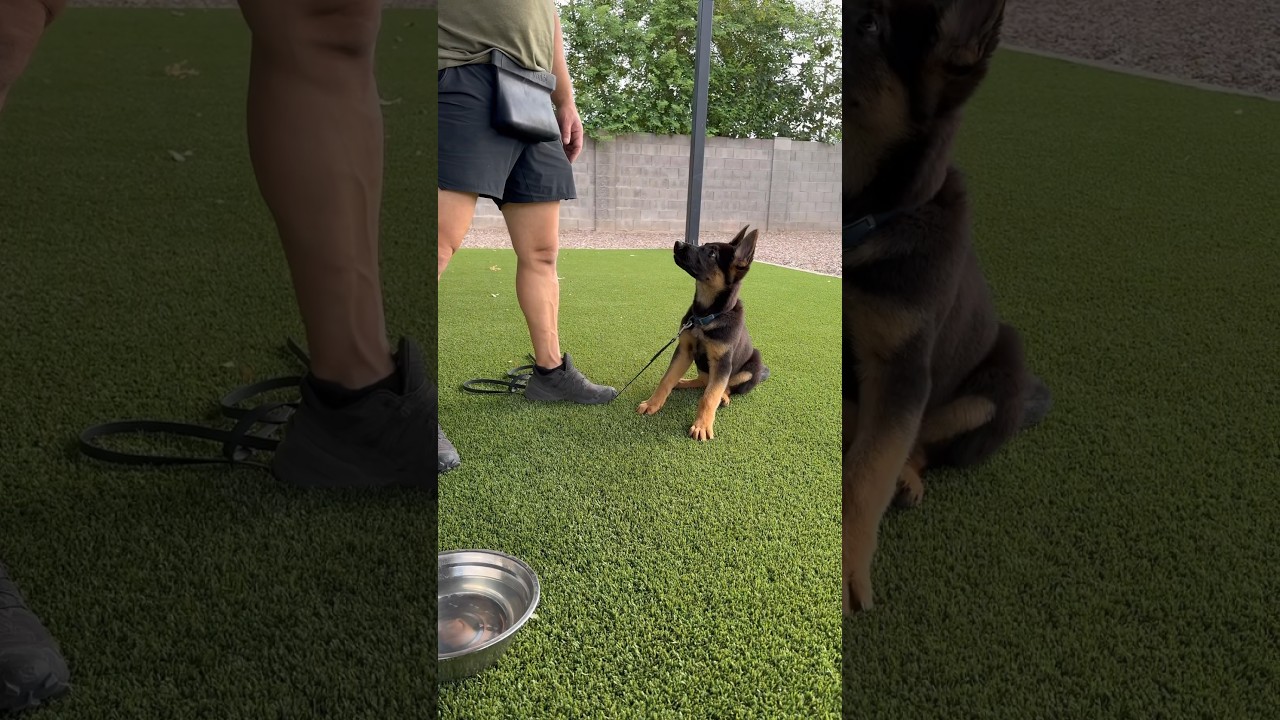
Begin teaching desirable behaviors as soon as your dog comes home.
Important skills include:
- Name recognition
- Sit
- Down
- Stay
- Wait
- Come
- Leave it
- Drop it
- Loose-leash walking
- Place or settle
- Calm greetings
- Appropriate chewing
- Handling tolerance
Use reward-based training to reinforce behaviors you want your dog to repeat.
6. Teach Your Dog Not to Jump on People
Large dogs should learn early that four paws on the floor is the polite way to greet people.
Avoid rewarding jumping with attention, even accidentally.
Instead:
- Ask for a calm behavior such as sitting.
- Reward the dog when all four paws are on the floor.
- Have visitors follow the same rule.
- Practice around increasingly exciting situations.
- Keep greetings calm rather than allowing chaotic interactions.
Consistency matters.
If jumping receives attention from some people but not others, your dog may have difficulty understanding what is expected.
7. Make Socialization Part of Everyday Life
Socialization isn’t simply allowing your dog to meet as many dogs and people as possible.
The broader goal is to help your dog learn how to remain comfortable around different people, animals, environments, sounds, surfaces, and experiences.
Depending on your dog’s age and health, gradually introduce them to:
- Different people
- Friendly, appropriate dogs
- Cars
- Traffic sounds
- Household appliances
- Veterinary handling
- Grooming
- Different walking environments
- New surfaces
- Visitors
- Being calmly handled
Don’t force interactions when your dog is frightened.
Give them distance, allow them to observe, and use positive reinforcement to create good associations.
8. Teach Calm Behavior, Not Just Physical Exercise
A common mistake with energetic large dogs is trying to solve every behavioral problem by adding more physical exercise.
Exercise is important, but dogs also need to learn how to settle.
Practice calm behaviors such as:
- Relaxing on a bed
- Waiting at doors
- Sitting before meals
- Remaining calm while visitors enter
- Chewing an appropriate toy
- Settling while you work
- Waiting quietly in the car
Mental enrichment can also help satisfy dogs without constantly increasing physical activity.
Puzzle feeders, scent games, obedience exercises, and simple training challenges can give your dog something productive to think about.
9. Pay Attention to Joint and Bone Health
Large dogs place significant loads on their joints simply because of their body size.
Some breeds are predisposed to orthopedic conditions, including hip and elbow dysplasia.
You can support healthy development and mobility by:
- Maintaining an appropriate body condition
- Feeding an appropriate diet
- Providing sensible exercise
- Avoiding unnecessary repetitive impact
- Giving your dog comfortable resting areas
- Keeping nails at an appropriate length
- Discussing orthopedic concerns with your veterinarian
Don’t automatically give your dog joint supplements just because they are a large breed.
Some supplements may be appropriate in specific situations, but your veterinarian should help determine whether a particular product is useful.
10. Learn About Bloat and GDV
Large and deep-chested dogs can be at increased risk of gastric dilatation-volvulus (GDV), a serious emergency in which the stomach becomes distended and may twist.
Possible warning signs can include:
- Repeated attempts to vomit without producing much
- Restlessness
- A swollen or painful abdomen
- Excessive drooling
- Rapid deterioration
- Weakness or collapse
GDV is a veterinary emergency.
If you suspect your dog is experiencing it, seek emergency veterinary care immediately rather than waiting to see whether the symptoms disappear.
Ask your veterinarian about your dog’s individual risk and whether preventive options, including gastropexy in selected dogs, should be discussed.
11. Be Careful During Hot Weather
A large body can make heat management particularly important, but breed anatomy and coat type also matter.
Dogs primarily cool themselves through panting, and they can become dangerously overheated when environmental conditions are too hot or humid.
During hot weather:
- Exercise during cooler periods.
- Provide plenty of fresh water.
- Use shaded or cool resting areas.
- Avoid hot pavement.
- Never leave your dog in a parked vehicle.
- Watch for excessive panting, weakness, confusion, vomiting, or collapse.
Flat-faced large dogs aren’t the only dogs at risk. Any dog can suffer heat-related illness under the wrong conditions.
12. Make Grooming Manageable From the Beginning
Large dogs can have a lot of fur, and grooming a full-grown dog is considerably easier when they already know how to cooperate.
Introduce grooming gradually.
Practice handling:
- Paws
- Ears
- Tail
- Mouth
- Legs
- Collar area
Depending on the coat, your dog may need regular brushing, bathing, nail care, ear care, or professional grooming.
Don’t forget dental care
Large dogs need dental care just like small dogs.
Regular tooth brushing with pet-safe toothpaste can help maintain oral hygiene. Veterinary dental examinations are also important because brushing doesn’t eliminate every dental problem.
13. Teach Leash Manners Before Your Dog Gets Strong
A powerful dog pulling on a leash can be difficult to control, even for a physically strong owner.
Start loose-leash training early.
Reward your dog for:
- Walking beside you
- Checking in with you
- Stopping when you stop
- Changing direction with you
- Ignoring distractions
Avoid relying entirely on physical strength to control your dog.
The goal should be to teach the dog how to walk politely rather than trying to overpower them when they pull.
A properly fitted harness can be useful for some dogs, depending on their individual needs and training.
14. Make Car Travel Safe
Large dogs need appropriate transportation arrangements.
Depending on your vehicle and your dog’s size, options may include:
- A properly secured crate
- A crash-tested harness
- A suitable barrier
- A dedicated travel area
Don’t allow your dog to ride loose where they can interfere with the driver.
A large dog can also become a serious projectile during a sudden stop or collision.
Practice short journeys before taking a long road trip, especially if your dog isn’t accustomed to car travel.
15. Give Your Dog a Comfortable Place to Rest
Large dogs spend plenty of time sleeping and resting, so their bed matters.
Choose a bed that:
- Fits your dog’s entire body
- Provides adequate support
- Is easy to clean
- Doesn’t become dangerously hot
- Can withstand regular use
Older dogs or dogs with mobility problems may benefit from additional orthopedic support, but your veterinarian can help you choose appropriate options if joint pain or arthritis becomes a concern.
16. Establish Household Rules Early
Dogs thrive when expectations are consistent.
Decide in advance:
- Whether your dog is allowed on furniture
- Where they sleep
- Which rooms are accessible
- Where they eat
- How visitors should interact with them
- What behaviors aren’t acceptable
For example, allowing a 10-pound puppy to jump on the sofa and then banning the behavior when the dog reaches 90 pounds can create unnecessary confusion.
Teach the rules from the beginning whenever possible.
17. Don’t Underestimate the Importance of Rest
Large dogs, especially puppies, need plenty of sleep and recovery time.
A puppy that becomes excessively tired may actually become more difficult to manage rather than calmer.
Signs your dog may need downtime include:
- Irritability
- Excessive biting
- Difficulty focusing
- Overexcitement
- Repeatedly ignoring familiar cues
- Trouble settling
Provide a quiet area where your dog can rest without being constantly disturbed.
18. Keep Training Positive and Consistent
Large dogs don’t need harsh treatment to learn.
Reward-based training can make learning more understandable and help build a cooperative relationship between dog and owner.
Keep sessions relatively short and focused.
For example, you might practice:
- Five recalls
- Several calm sits
- A few leash-walking repetitions
- A short “leave it” exercise
Then stop while your dog is still engaged.
Over time, these small sessions can produce reliable everyday skills.
Common Mistakes to Avoid With Large Dogs
Even experienced owners can make mistakes when raising a big dog.
Mistake 1: Waiting until the dog is full-grown to train
Training becomes harder when unwanted behaviors have already become habits.
Mistake 2: Overfeeding during puppyhood
Trying to maximize growth can contribute to unhealthy weight gain and developmental concerns.
Mistake 3: Assuming every large breed needs the same exercise
A giant companion breed and a high-drive working breed can have dramatically different requirements.
Mistake 4: Ignoring leash pulling
A small pulling problem can become a major safety issue as the dog gains strength.
Mistake 5: Using exercise as the only solution
Dogs need mental stimulation and training as well as physical activity.
Mistake 6: Skipping routine veterinary care
Large dogs can develop health problems that are easier to manage when detected early.
Mistake 7: Forgetting how powerful a large dog can be
Even a friendly dog can accidentally knock over a child, elderly person, or guest.
Teaching impulse control and polite greetings is therefore an important safety measure.
Large Dog Care Checklist
Before bringing a large dog into your household, make sure you’re prepared for:
- ☐ Appropriately sized crate
- ☐ Comfortable large-dog bed
- ☐ Secure leash and harness or collar
- ☐ Identification tag
- ☐ Complete and balanced food
- ☐ Food and water bowls
- ☐ Appropriate toys
- ☐ Grooming supplies
- ☐ Dental-care supplies
- ☐ Secure outdoor area
- ☐ Veterinary care plan
- ☐ Parasite prevention
- ☐ Training plan
- ☐ Safe transportation arrangement
- ☐ Emergency veterinary contact information
Frequently Asked Questions
Are large dogs difficult to train?
Not necessarily. Large dogs can learn extremely well, but their size makes early training particularly important. Teaching basic manners before they become physically powerful can prevent many everyday problems.
Do large dogs need a huge house?
No. Home size is only one factor. A large dog can live comfortably in a smaller home if their exercise, enrichment, rest, and behavioral needs are properly addressed.
How much exercise does a large dog need every day?
There is no universal number that applies to every large dog. Exercise needs depend on breed, age, health, conditioning, temperament, and lifestyle.
A veterinarian can help determine an appropriate routine for a growing puppy or a dog with health concerns.
Are large-breed puppies more difficult to raise?
They can require extra planning because they grow rapidly and may become physically strong before they have mature manners.
Early socialization, appropriate nutrition, sensible exercise, and consistent training are especially valuable.
What health problems are common in large dogs?
Depending on the breed, large dogs can be predisposed to conditions involving the joints, heart, stomach, and other body systems. Hip and elbow dysplasia, obesity, and GDV are examples of concerns that may occur in some large or giant breeds.
Breed-specific risks vary, so discuss your individual dog’s health needs with your veterinarian.
Should I use a crate for my large dog?
A crate can be a useful management and training tool when introduced positively and sized appropriately. It should provide a comfortable place for rest rather than being used as punishment.
How can I stop my big dog from pulling on the leash?
Begin with reward-based loose-leash training. Reinforce your dog whenever they walk near you without pulling, and gradually practice around distractions.
If your dog is extremely strong or reactive, working with a qualified positive-reinforcement trainer can provide additional support.
Final Thoughts
Living with a large dog can be incredibly rewarding, but responsible ownership starts with recognizing that size changes the practical side of pet care.
Large dogs need appropriately sized equipment, sensible nutrition, regular veterinary care, age-appropriate exercise, mental enrichment, and consistent training. Teaching good manners early is especially important because behaviors that seem harmless in a puppy can become difficult—or even dangerous—when that puppy grows into a powerful adult.
Most importantly, don’t measure good care by how much food, exercise, or training you can provide. Pay attention to your individual dog’s age, breed, health, temperament, and body condition, and adjust their routine as they mature.
With the right preparation and plenty of patience, your big dog can become a well-mannered, healthy, and wonderful member of the family.






Leave a comment