



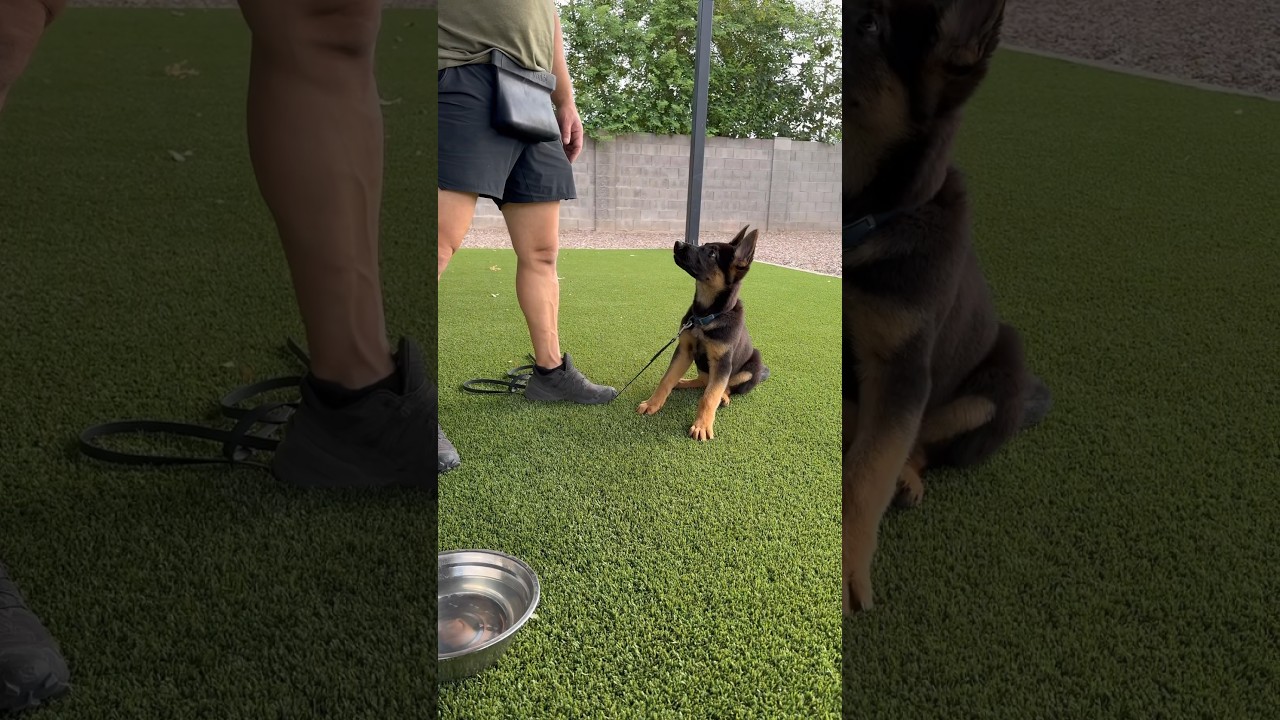



Barking is one of the main ways dogs communicate. A dog may bark when someone approaches the house, when they hear an unfamiliar sound, when they want attention, or when they feel excited, frustrated, frightened, or anxious.
Occasional barking is completely normal. The challenge begins when barking becomes frequent, intense, or difficult to interrupt. Constant barking can disrupt your household and may also create problems with neighbors.
The most effective way to address excessive barking isn’t simply to make your dog stop. First, you need to understand why your dog is barking. Once you identify the trigger, you can manage the environment and teach your dog a more appropriate response.
Why Do Dogs Bark?
Dogs bark for many different reasons, and the same dog may bark differently depending on the situation.
Common causes include:
- Alerting people to something unusual
- Territorial behavior
- Seeking attention
- Excitement or frustration
- Fear or anxiety
- Separation-related distress
- Boredom or lack of enrichment
- Responding to other dogs
- Noise sensitivity
Some barking problems can also be influenced by pain or other medical issues, particularly when a dog’s behavior changes suddenly. Veterinary evaluation can therefore be important when excessive barking appears unexpectedly or occurs alongside other unusual behaviors.
1. Territorial or Protective Barking
Some dogs bark when people approach their home, walk past a window, enter the property, or come near their owner.
You might notice barking when:
- Someone rings the doorbell
- A delivery person approaches
- People walk past the house
- Another dog passes the property
- A visitor enters the home
The first step is to reduce opportunities for your dog to repeatedly practice the behavior.
How to Help
If your dog barks at people outside the window, consider closing curtains, using a visual barrier, or moving their resting area away from the window.
You can also teach an alternative behavior such as going to a mat when the doorbell rings.
Reward your dog for noticing the trigger and then becoming quiet or focusing on you. With repetition, your dog can learn that seeing someone outside doesn’t always require a prolonged barking response.
2. Alert Barking
Dogs have excellent hearing and may react to sounds that humans barely notice.
Doorbells, footsteps, vehicles, construction noises, alarms, thunder, fireworks, and other sudden sounds can all trigger barking.
Sometimes alert barking is brief and ends once the dog realizes there is no further threat. Problems can arise when the dog becomes highly aroused or frightened and continues barking.
How to Help
Try to identify exactly which sounds trigger your dog.
Then manage the environment where possible. For example:
- Close windows during particularly noisy periods
- Use curtains or blinds
- Provide a quiet resting area
- Use background noise to reduce the impact of sudden sounds
- Reward calm behavior after a trigger occurs
For dogs that are genuinely fearful of particular noises, gradual desensitization and counterconditioning can help change their emotional response. These techniques should be introduced carefully rather than exposing a frightened dog to overwhelming levels of the trigger.
3. Attention-Seeking Barking
Some dogs discover that barking gets a reaction from their humans.
If barking is repeatedly followed by food, play, petting, opening a door, or even yelling, the dog may learn that barking produces a response.
Even negative attention can sometimes reinforce the behavior because the dog has achieved interaction.
How to Help
Instead of automatically responding to barking, teach your dog another way to request what they want.
For example:
- Reward sitting quietly before meals.
- Ask for a calm behavior before starting play.
- Reward your dog for approaching you without barking.
- Give attention when your dog is relaxed and quiet.
- Provide regular opportunities for play, exercise, and enrichment.
The goal isn’t to ignore your dog’s needs. It’s to teach them that calm communication works better than repeated barking.
Attention-seeking barking is a recognized example of a normal behavior that can become reinforced unintentionally.
4. Separation-Related Barking
Some dogs become distressed when their owner leaves.
Barking or howling may occur alongside other signs such as:
- Pacing
- Restlessness
- Destructive behavior
- Drooling
- Repeated attempts to escape
- Toileting indoors
- Difficulty settling
- Excessive excitement when the owner returns
Separation-related distress is different from ordinary boredom. A dog with genuine separation anxiety may experience significant distress when left alone.
How to Help
Treatment should generally involve gradual behavior modification rather than simply leaving the dog alone for increasingly long periods.
For some dogs, departures need to begin at very short durations that remain below the point where anxiety develops. Video monitoring can help you understand what your dog does after you leave and whether the training sessions are staying within their comfort level.
Puzzle feeders, special toys, and a comfortable resting area may also be useful, particularly for dogs with mild separation-related problems.
If your dog shows severe distress, speak with a veterinarian or qualified veterinary behavior professional. Moderate or severe cases may require a structured behavior plan and, in some cases, medication alongside training.
5. Fear-Based Barking
Fear is another common reason dogs bark.
A dog may bark when confronted with:
- Unfamiliar people
- Other dogs
- Strange objects
- New environments
- Loud noises
- Vehicles
- Certain surfaces
- Previous frightening experiences
Fear-based barking should not be treated as simple disobedience.
How to Help
First, give your dog enough distance from the trigger that they can remain relatively calm.
Then gradually create positive associations with the trigger using rewards.
For example, if your dog becomes nervous around unfamiliar people, you don’t necessarily need to make them approach strangers. Instead, you can reward calm behavior while the person remains at a comfortable distance.
Over time, the goal is to help your dog feel safer rather than simply suppressing the barking.
Desensitization and counterconditioning are commonly used for fear- and anxiety-related behavior problems.
6. Frustration or Excitement Barking
Some dogs bark when they desperately want access to something.
They might bark because:
- A toy is out of reach
- They want to greet another dog
- They see someone they know
- They want to go outside
- They are waiting for a walk
- They are excited about food
- They are frustrated by a barrier such as a fence
This type of barking can become particularly noticeable during walks or when a dog sees another animal through a window.
How to Help
Teach your dog an alternative behavior such as looking at you, sitting, or moving away from the trigger.
Start practicing in situations where your dog is calm. Once the behavior is reliable, gradually introduce mild distractions.
If your dog becomes extremely excited, increase distance from the trigger rather than forcing them to remain close to it.
7. Boredom and Lack of Enrichment
Dogs need opportunities to move, explore, sniff, play, rest, and use their brains.
A dog who spends long periods without meaningful activity may develop barking or other unwanted behaviors.
How to Help
Add variety to your dog’s routine with activities such as:
- Sniffing walks
- Food puzzles
- Scent games
- Training sessions
- Interactive toys
- Safe chewing activities
- Hide-and-seek games
- Supervised play
The right amount of activity depends on the individual dog. Age, breed, health, temperament, and lifestyle all matter.
Effective Ways to Reduce Excessive Barking
Once you’ve identified the trigger, combine behavior training with environmental management.
Identify the Pattern
Keep track of when barking occurs.
Ask yourself:
- What happened immediately before the barking?
- Where was my dog?
- Who or what triggered it?
- How long did it continue?
- What happened after the barking stopped?
- Does it happen when my dog is alone?
- Does it occur at a particular time of day?
Finding the pattern can reveal the real cause.
Prevent Repeated Triggering
Management is often an important first step.
If your dog spends hours barking at pedestrians through a window, repeatedly allowing that behavior gives them more opportunities to rehearse it.
Visual barriers, distance, quieter areas, and changes to the environment can help reduce repeated exposure while training takes place.
Teach an Alternative Behavior
Don’t focus only on what you want your dog to stop doing.
Teach them what you want them to do instead.
For example:
Trigger appears → dog looks at you → dog receives reward.
Or:
Doorbell rings → dog goes to mat → dog receives reward.
This gives your dog a clear behavior to perform instead of barking continuously.
Reward Quiet, Calm Behavior
Watch for moments when your dog is naturally calm.
When your dog notices a trigger without escalating, calmly reward that behavior.
Over time, your dog can learn that staying relaxed and responding to your cue produces better results than continuing to bark.
Reward-based training is widely recommended for behavior modification, while aversive punishment can increase fear, anxiety, and other unwanted responses.
Why Yelling at Your Dog Usually Isn’t the Answer
When barking becomes frustrating, it can be tempting to shout “Quiet!” repeatedly.
Unfortunately, yelling can make the situation worse.
Your dog may interpret your shouting as additional excitement or attention. If the barking is caused by fear, confrontation can also increase anxiety.
Veterinary behavior guidance recommends avoiding punishment-based and confrontational methods because they can contribute to fear, anxiety, avoidance, and aggression.
Instead, focus on:
- Identifying the trigger
- Reducing unnecessary exposure
- Teaching an alternative response
- Rewarding calm behavior
- Using gradual desensitization when appropriate
- Getting professional help when necessary
Be Consistent With Everyone in the Household
Training becomes confusing when every family member responds differently.
For example, if one person rewards barking with attention while another person tries to ignore it, your dog may receive mixed messages.
Agree on:
- Which cue to use
- Which calm behavior to reward
- When to provide attention
- How to manage common triggers
- Which training methods everyone will follow
Consistency makes learning easier.
When Should You Contact a Veterinarian?
Excessive barking deserves professional attention when it is sudden, severe, persistent, or accompanied by other changes.
Contact your veterinarian if:
- Your dog suddenly starts barking much more than usual.
- Barking occurs alongside signs of pain or illness.
- Your dog seems confused or unusually restless.
- Your dog shows intense fear or panic.
- Your dog becomes destructive when left alone.
- Your dog attempts to escape during barking episodes.
- Barking is accompanied by aggressive behavior.
- Your attempts to manage the behavior aren’t working.
Medical problems can sometimes contribute to behavior changes, so a veterinary assessment can be an important first step.
For serious fear, aggression, or separation-related problems, a veterinary behaviorist or appropriately qualified behavior professional can help create an individualized treatment plan.
A Simple Barking-Reduction Plan
You can start with this five-step approach:
Step 1: Identify what triggers the barking.
Step 2: Reduce your dog’s exposure to the trigger when possible.
Step 3: Teach an alternative behavior such as looking at you, sitting, or going to a mat.
Step 4: Reward calm responses immediately and consistently.
Step 5: Gradually increase the difficulty only when your dog can remain comfortable.
Behavior change can take time. Avoid expecting your dog to become completely quiet overnight.
Frequently Asked Questions
Is barking normal for dogs?
Yes. Barking is normal canine communication. The goal isn’t necessarily to eliminate barking but to manage excessive or inappropriate barking while understanding why it occurs.
How do I stop my dog from barking at people?
First identify whether your dog is excited, fearful, territorial, or seeking attention. Reduce exposure to the trigger when possible and reward calm alternative behaviors. Visual barriers can also help with dogs that bark at people outside windows.
Should I yell at my dog to stop barking?
It’s generally better to avoid yelling or punishment. These approaches can increase arousal or fear and may make some behavior problems worse. Reward-based training and management are preferred approaches.
How can I stop my dog barking when left alone?
First determine whether the barking is actually related to separation distress. If it is, treatment usually involves gradual departure training and behavior modification rather than simply leaving the dog alone for longer periods. Severe cases should be discussed with a veterinarian.
Does boredom cause excessive barking?
It can contribute to unwanted behavior in some dogs, especially when their physical and mental needs aren’t being met. Enrichment, appropriate exercise, training, and opportunities to explore can help.
Final Thoughts
Dog barking isn’t simply a bad habit that needs to disappear. It is a form of communication, and the meaning behind it matters.
A dog barking at a delivery person may have a very different motivation from a dog barking because they panic when left alone. Treating both situations exactly the same can make training unnecessarily difficult.
Start by identifying the trigger, manage the environment, teach a desirable alternative, and reward calm behavior. Be patient and consistent, and remember that serious anxiety, fear, aggression, or sudden behavior changes may require professional help.
With the right approach, you can reduce disruptive barking while helping your dog feel safer, calmer, and better understood.







Leave a comment