




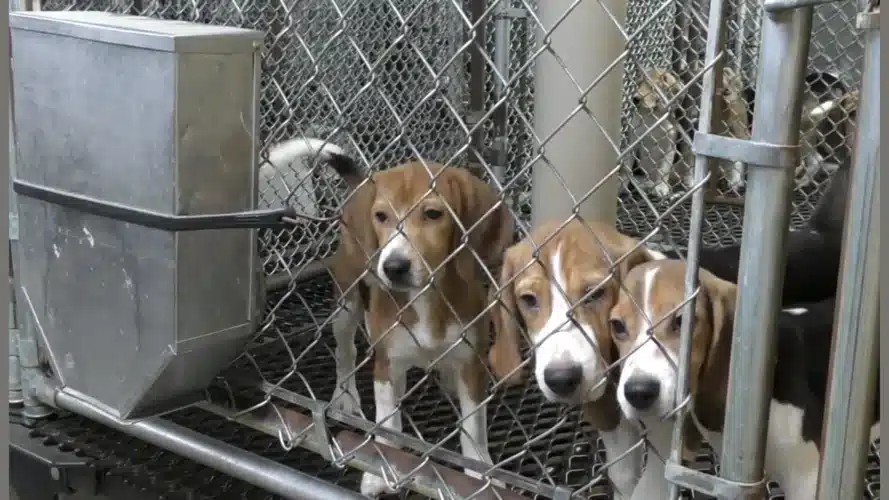
For years, animal advocates had gathered outside Ridglan Farms in Wisconsin, calling attention to the Beagles kept at the facility. In April 2026, a major agreement offered thousands of these dogs a path toward life outside the commercial breeding operation.
Big Dog Ranch Rescue and the Center for a Humane Economy announced an agreement to purchase nearly 1,500 Beagles from Ridglan Farms, a commercial breeding facility in Blue Mounds, Wisconsin.
The planned transfer represents one of the largest single rescue efforts involving research-bred dogs in the United States.
A Facility That Faced Serious Scrutiny
Ridglan Farms operated as a USDA-licensed Beagle breeding facility approximately 25 miles southwest of Madison. For decades, the facility supplied Beagles to biomedical and pharmaceutical research laboratories.
The facility came under significant scrutiny in 2024 following testimony from former employees concerning alleged animal welfare violations. Among the allegations were claims that painful eye procedures had been performed on dogs by people who were not veterinarians and without anesthesia.
A Dane County judge later found probable cause related to felony animal cruelty allegations.
In October 2025, Ridglan reached a settlement under which it agreed to surrender its state breeding license by July 1, 2026. The facility had also received more than 300 administrative code violations in 2024, according to the information surrounding the case.
A Major Rescue Agreement
The agreement announced in April covers approximately 1,500 of the estimated 2,000 Beagles at Ridglan Farms.
The purchase price was not publicly disclosed in the original announcement, although reports placed it below $1 million.
Big Dog Ranch Rescue is expected to take responsibility for approximately 1,000 dogs. The Center for a Humane Economy is working with several animal welfare organizations, including Beagle Freedom Project, Wisconsin Puppy Mill Project, and Dane County Humane Society, to help arrange placement for another 500.
The goal is to move the dogs into rescue care and ultimately connect them with adoptive families.
Lauree Simmons, president of Big Dog Ranch Rescue, described the opportunity to care for the dogs and prepare them for adoption as a long-awaited moment.
Wayne Pacelle of the Center for a Humane Economy also described the agreement as part of a broader effort by advocates seeking alternatives to the use of Beagles and primates in biomedical research.
The Beagles Begin Their Journey to New Lives
Transfers were scheduled to begin on May 1 and continue for approximately a week and a half.
Before being placed with rescue organizations, each dog is expected to receive important basic veterinary care, including:
- A medical examination
- Microchipping
- Vaccinations
- Individual assessment
- Preparation for placement with a rescue partner
For dogs that have spent much of their lives in a commercial breeding environment, ordinary experiences may be completely unfamiliar.
Some of the rescued Beagles may be experiencing things such as walking on grass, exploring open spaces, and spending time in a home environment for the first time.
Their transition will therefore involve more than simply transporting them from one location to another. Rescue organizations will need to give the dogs time to adjust to new surroundings, people, routines, and experiences.
Local Adoptions Are Also Planned
Approximately 50 of the rescued Beagles were expected to become available for adoption in Dane County in the weeks following the transfer.
Other dogs will be distributed among rescue partners, where they can receive additional care and eventually be matched with families.
For adopters, bringing home a former research or commercial breeding dog can require patience. Some dogs may need time to become comfortable with household noises, stairs, unfamiliar people, toys, and other everyday experiences.
With appropriate support, rescue organizations can help these dogs gradually learn what life in a home can look like.
What About the Beagles Left Behind?
While the agreement provides a path forward for approximately 1,500 dogs, questions remain about the Beagles who were not included in the initial deal.
The original information estimated that roughly 500 additional dogs could remain outside the agreement, although the exact number of dogs still at the property had not been publicly confirmed by Ridglan.
The Center for a Humane Economy said negotiations were continuing.
That means the April agreement was an important development, but it did not necessarily resolve the situation for every dog associated with the facility.
A Rescue With Broader Implications
The Ridglan Farms agreement comes amid ongoing discussion in the United States about alternatives to animal testing.
The U.S. Food and Drug Administration released a roadmap in 2025 outlining steps toward reducing reliance on animal testing during drug development.
Animal welfare advocates have also continued pushing for research methods that could reduce the number of dogs and other animals used in biomedical research.
The exact number of dogs involved in U.S. research can vary depending on the definition and data source used, but thousands of dogs continue to be part of research programs.
For advocates involved in the Ridglan rescue, helping these Beagles leave the facility is therefore both a direct rescue effort and part of a larger conversation about the future of animal research.
From Research Facility to Forever Home
For the nearly 1,500 Beagles covered by the agreement, the next chapter will look very different.
Instead of remaining at a commercial breeding facility, the dogs will have opportunities to receive veterinary attention, experience new environments, interact with caregivers, and eventually become companions in private homes.
The transition won’t happen overnight. Some dogs may need extensive socialization and patience as they learn to trust people and adjust to everyday life.
But each step—from the first walk outside to the first comfortable night in a home—can represent a significant change for a dog that has never experienced life as a family pet.
A New Beginning for Thousands of Beagles
The Ridglan Farms agreement gives nearly 1,500 Beagles a chance at a very different future.
Rescue organizations now face the enormous task of transporting, examining, caring for, and placing the dogs. At the same time, discussions continue about the dogs not included in the initial agreement.
For the Beagles who are leaving, however, the rescue represents the beginning of a new chapter.
After spending their lives in a commercial breeding environment, they can now begin learning about grass, toys, family life, and the simple comforts of a home.
Their journey from Ridglan Farms to rescue organizations and eventually to adoptive families will take time—but for thousands of dogs, it offers something they have never had before: the opportunity for a life beyond the facility.
Frequently Asked Questions
How many Beagles are included in the Ridglan Farms rescue?
The agreement covers approximately 1,500 Beagles out of an estimated 2,000 dogs associated with the facility.
Where is Ridglan Farms located?
Ridglan Farms is located in Blue Mounds, Wisconsin, roughly 25 miles southwest of Madison.
Will all of the rescued Beagles be available for adoption?
The dogs are being distributed among rescue organizations for evaluation and care. Adoption availability will depend on each dog’s medical and behavioral needs and the placement process.
What happens to the rescued Beagles before adoption?
The dogs are expected to receive veterinary examinations, vaccinations, microchips, and individual care before being transferred to rescue partners and considered for adoption.
Can rescued Beagles adjust to living in a home?
Many rescue dogs can learn to adapt to home life, but individual dogs progress at different speeds. Dogs with limited experience outside a facility may need patience, positive reinforcement, and gradual exposure to new situations.
What about the Beagles not included in the agreement?
The initial agreement does not cover every dog associated with Ridglan Farms. At the time of the announcement, discussions regarding additional dogs were reportedly continuing.
Conclusion
The planned rescue of nearly 1,500 Beagles from Ridglan Farms is a massive undertaking involving multiple rescue and animal welfare organizations.
For the dogs leaving the facility, the journey is only beginning. They will need medical care, patience, socialization, and supportive homes as they learn to navigate a completely different environment.
The hope is that each rescued Beagle will eventually have the chance to experience the ordinary things that make life as a companion dog special—a comfortable bed, a safe yard, a caring family, and the freedom to simply be a dog.






Leave a comment