




Bringing a dog to work can make the office feel more welcoming, but having a canine coworker isn’t automatically a good fit for every dog—or every workplace.
An office can contain unfamiliar people, ringing phones, meetings, food, elevators, other animals, and plenty of unexpected distractions. The ideal office dog isn’t simply a particular breed. A dog’s individual temperament, training, age, energy level, and ability to relax around people all matter.
That said, some breeds tend to have characteristics that can work well in a dog-friendly workplace. Smaller companion breeds may be easier to accommodate in limited spaces, while highly trainable breeds can learn office routines relatively quickly.
Here are 15 dog breeds that may adapt well to office life when their individual needs are properly met.
What Makes a Good Office Dog?
Before choosing a breed, consider the traits that can make a dog comfortable in a workplace.
A potentially suitable office companion may be:
- Comfortable around unfamiliar people
- Able to settle quietly for periods of time
- Responsive to basic training
- Comfortable with normal household and workplace noises
- Friendly without demanding constant attention
- Able to handle short periods without interaction
- Appropriate for the office’s available space
- Comfortable traveling to and from work
- Properly socialized and under control
Energy level is important, but it’s not the only consideration. Even a relatively calm breed still needs appropriate exercise, mental stimulation, bathroom breaks, and attention throughout the day.
1. French Bulldog
French Bulldogs are known for their affectionate personalities and tendency to enjoy spending time with their people. Their compact size can make them convenient companions in smaller workspaces.
A well-socialized Frenchie may be perfectly happy settling on a comfortable bed near a desk after receiving appropriate exercise and attention.
However, their flat-faced anatomy requires special consideration. French Bulldogs can be vulnerable to overheating and breathing difficulties, so offices and commutes should be kept comfortably cool, particularly in warm weather.
They may also snore, make various breathing sounds, and occasionally become vocal, so coworkers should be comfortable with those characteristics.
Office fit: Best for a climate-controlled workplace with a calm routine and nearby opportunities for short walks.
2. Cavalier King Charles Spaniel
Cavalier King Charles Spaniels are companion-oriented dogs that generally enjoy staying close to their owners.
Their small size makes them relatively easy to accommodate, while their affectionate nature can make them pleasant around familiar coworkers.
Cavaliers still need daily activity and mental stimulation, but many enjoy relaxing after a walk or play session.
Because they can become very attached to their people, it’s also important to teach them that being settled independently is okay.
Office fit: A social workplace where the dog can stay near its owner without being constantly handled by coworkers.
3. Shih Tzu
Shih Tzus were developed primarily as companion dogs and are often happiest when spending time with their families.
Their relatively small size makes them practical for many office environments, and they can enjoy relaxing on a bed beside their owner’s desk.
Their long coats do require regular grooming, however. Owners should also keep their facial area clean and pay attention to heat, especially in poorly ventilated environments.
Individual Shih Tzus can vary considerably in how vocal or outgoing they are.
Office fit: Quiet indoor offices where the dog can stay close to its owner.
4. Bichon Frise
The Bichon Frise is a cheerful, people-oriented breed with a playful personality.
A well-trained Bichon can be an entertaining addition to a workplace without needing to occupy a large amount of space. Their social nature can also make them comfortable meeting new people when introductions are handled appropriately.
Despite their small size, Bichons aren’t completely maintenance-free. They need regular grooming, exercise, training, and mental stimulation.
Their coat is often described as “hypoallergenic,” but no dog is completely allergen-free. People with allergies may still react to a Bichon.
Office fit: Social workplaces where the dog can interact appropriately without becoming overstimulated.
5. Pembroke Welsh Corgi
Corgis are intelligent, affectionate, and highly recognizable dogs with plenty of personality.
Their compact build can work well in an office, but don’t mistake their size for low energy. Corgis are herding dogs and often benefit from regular physical activity and mental challenges.
Before a workday, an appropriate walk, training session, or enrichment activity can help them settle more comfortably.
They can also be alert and vocal, so barking should be addressed through training and good management.
Office fit: Active owners who can provide sufficient exercise and mental stimulation outside working hours and during appropriate breaks.
6. Pug
Pugs are companion-focused dogs that often enjoy being close to their owners.
Their small size and tendency to appreciate relaxation can make them appealing office companions. Many Pugs are also naturally entertaining and can become popular with coworkers.
However, their short muzzle means heat and strenuous exercise require particular caution. Pugs can have difficulty cooling themselves efficiently, especially in hot or humid conditions.
A cool, well-ventilated workplace is important.
Office fit: Climate-controlled offices where the dog can remain comfortable and doesn’t need strenuous activity during the workday.
7. Maltese
The Maltese is a small companion breed known for its affectionate nature.
A Maltese may be comfortable resting beside its owner while work continues, particularly when it has been taught to settle calmly.
Their small size can also be convenient in offices where floor space is limited.
However, Maltese dogs can become vocal if they aren’t properly socialized or if they become anxious when separated from their owners. Early training and gradual independence are useful.
Office fit: Quiet workspaces where the dog can remain close to its owner.
8. Dachshund
Dachshunds may be small, but they have plenty of personality.
These curious dogs often enjoy investigating their surroundings and staying involved in whatever their owners are doing. Their compact size can make them convenient in smaller offices.
However, Dachshunds can be determined, vocal, and easily distracted by interesting smells. They also have a long-backed body structure, so owners should take care to avoid unnecessary jumping and situations that could put excessive strain on their backs.
Training and appropriate exercise are important for helping them settle during working hours.
Office fit: Owners who enjoy an interactive companion and are prepared to provide training and appropriate activity.
9. Lhasa Apso
Lhasa Apsos are small companion dogs with an independent streak.
They can enjoy spending time near their owners without necessarily demanding constant attention. Their alert nature can also make them aware of unusual sounds and visitors.
That alertness can become excessive barking in some individuals, however, so office manners should be established before bringing one into a shared workspace.
Their coat also requires regular grooming.
Office fit: Structured offices where barking and unnecessary interactions can be managed.
10. Boston Terrier
Boston Terriers are compact, playful, and generally people-oriented.
Their size can make them practical for an office, while their social personalities may help them enjoy interacting with coworkers.
They still need exercise and play, and some can become energetic or excitable when bored.
Like other short-nosed breeds, Boston Terriers can require extra attention in hot conditions.
Office fit: Friendly, climate-controlled workplaces with opportunities for exercise breaks.
11. Havanese
Havanese dogs are affectionate and adaptable companion dogs that often enjoy being around people.
Their intelligence can make training enjoyable, while their small size can be convenient in an office environment.
However, their strong attachment to people means owners should work on independence and calm separation skills. A dog that panics whenever its owner walks into another room may struggle with office routines.
Office fit: People-friendly offices where the dog can remain close to its owner while still learning appropriate independence.
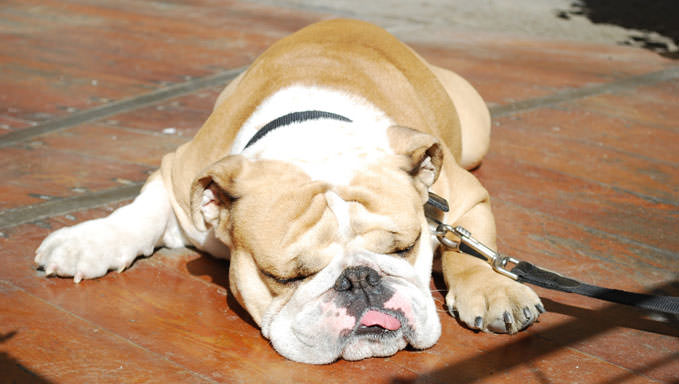
12. English Bulldog
English Bulldogs are often associated with a relaxed and easygoing temperament.
Many enjoy spending time lounging near their owners rather than constantly demanding activity, which can suit a desk-based environment.
However, Bulldogs require careful management in warm weather because their short muzzle and body structure can make heat particularly dangerous.
They can also be prone to various health concerns, so prospective owners should consider veterinary care and individual health status rather than choosing a dog based only on breed reputation.
Office fit: Cool, comfortable workplaces with easy access to water and regular opportunities for bathroom breaks.
13. Pekingese
Pekingese are small companion dogs that can enjoy a quiet environment.
Their compact size means they don’t require much physical space inside an office, and many are content to spend periods resting near their owners.
However, they can be independent and may not always welcome attention from unfamiliar people. Their long coats also require grooming.
Their short muzzle means heat management is another important consideration.
Office fit: Calm workplaces where the dog can have a designated quiet resting area.
14. Shetland Sheepdog
Shetland Sheepdogs, or Shelties, are intelligent and highly trainable.
Their ability to learn routines can be a major advantage in an office environment. A well-trained Sheltie may learn where to settle, how to greet people politely, and when it’s time to relax.
However, Shelties are still active herding dogs. They need physical exercise and mental stimulation, and some can be quite vocal.
A bored Sheltie may find its own entertainment, which isn’t always compatible with a professional workspace.
Office fit: Owners who can provide plenty of exercise, training, and enrichment before and after work.
15. Yorkshire Terrier
Yorkshire Terriers are tiny dogs with surprisingly confident personalities.
Their size makes them easy to accommodate in many workplaces, while their affectionate nature can make them enjoyable companions.
Yorkies can also be energetic and vocal. Their small stature doesn’t mean they can simply spend all day sitting in a lap without exercise or stimulation.
Consistent training can help teach them when it’s appropriate to bark, interact, play, and settle.
Like other dogs commonly described as hypoallergenic, Yorkies aren’t completely allergen-free.
Office fit: Owners who want a small companion and are willing to provide regular exercise and training.
Breed Isn’t the Only Factor
One of the biggest mistakes an owner can make is assuming that every dog of a particular breed will behave the same way.
Two dogs from the same breed can have very different personalities.
Before bringing your dog to work, consider:
Temperament
Does your dog remain relaxed around unfamiliar people?
Training
Can your dog reliably respond to basic cues such as “sit,” “stay,” “leave it,” and “come”?
Noise Level
Will your dog bark whenever someone walks past the desk?
Social Skills
Can your dog calmly share a space with coworkers and other animals?
Energy Level
Can your dog settle after receiving appropriate exercise?
Separation Skills
Can your dog relax if you briefly step away?
These factors may be more important than breed alone.
How to Prepare Your Dog for Office Life
Don’t make your dog’s first office visit a full eight-hour workday.
Start gradually.
Try practicing calm behavior in increasingly distracting environments. Take your dog to pet-friendly locations where appropriate and reward quiet, relaxed behavior.
Before the first full office day, make sure your dog is comfortable with:
- Wearing a collar or harness
- Traveling safely
- Walking on a leash
- Meeting unfamiliar people
- Settling on a mat or bed
- Basic obedience cues
- Being handled appropriately
- Taking bathroom breaks outside the home
- Ignoring food and objects that aren’t theirs
Create a Designated Dog Zone
Give your dog a specific place to rest.
A comfortable mat, bed, or crate—if your dog has been positively crate-trained—can help establish a clear boundary.
It also gives your dog somewhere to retreat when the office becomes overwhelming.
Don’t Let Everyone Pet Your Dog
A friendly dog isn’t automatically comfortable with unlimited attention.
Coworkers should be encouraged to let the dog approach when possible and respect signs that the dog wants space.
Watch for behaviors such as:
- Turning away
- Lip licking
- Yawning when not tired
- Hiding
- Avoiding eye contact
- Stiff body language
- Growling
- Repeated attempts to move away
These can indicate discomfort or stress.
Keep a Workplace Dog Routine
A predictable schedule can help your dog settle.
Depending on the individual dog, a workday may include:
- Exercise before arriving
- Bathroom break
- Quiet work period
- Short enrichment or interaction break
- Bathroom break
- Lunch-time activity
- Another quiet work period
- Final bathroom break before heading home
The exact schedule should be adapted to the dog’s age, health, and individual needs.
Office Safety Tips for Dog Owners
A workplace contains hazards that aren’t always obvious to pets.
Keep your dog away from:
- Electrical cords
- Toxic plants
- Human medications
- Cleaning products
- Small objects
- Hot drinks
- Unsecured food
- Open doors
- Stairways or elevators when unsupervised
Keep identification information current and make sure your dog cannot accidentally escape through an open office door.
It’s also wise to keep a basic dog-care kit nearby with items such as water, treats, waste bags, cleaning supplies, and any necessary routine medications.
What If Your Dog Doesn’t Like the Office?
Not every dog enjoys workplace environments.
A dog may become stressed by:
- Constant noise
- Crowded rooms
- Other dogs
- Frequent visitors
- Elevator rides
- Lack of quiet space
- Too much handling
- Being unable to rest
If your dog repeatedly shows signs of stress, don’t assume they simply need more exposure.
A workplace may genuinely not be the right environment for that particular dog.
Your dog’s welfare should come before the convenience of having them beside you.
Frequently Asked Questions
What is the best dog breed for an office?
There isn’t one universally ideal office breed. Individual temperament, training, energy level, social behavior, and the specific workplace environment all matter.
Are small dogs automatically better office dogs?
No. Small dogs can be easier to accommodate physically, but some small breeds are energetic, vocal, or highly demanding. Size alone doesn’t determine whether a dog will enjoy office life.
Can a high-energy dog be an office companion?
Potentially, yes, provided the dog’s exercise and mental needs are properly met. An active dog may be able to relax at work after appropriate activity, but this varies by individual.
How can I stop my dog from barking at coworkers?
Identify what triggers the barking and work on rewarding calm behavior. Avoid simply shouting at the dog, which can increase excitement or confusion. If barking is persistent, a qualified reward-based trainer can help identify the underlying cause.
Should my dog interact with everyone at the office?
No. Your dog doesn’t need to greet every person. Allowing your pet to have quiet time and respecting their boundaries can make the workplace more comfortable.
Can dogs improve the workplace atmosphere?
A friendly, well-managed dog may provide companionship and enjoyable social interaction, but workplace policies, coworker preferences, allergies, and safety considerations should always be respected.
Final Thoughts
A dog can be a wonderful office companion, but successful workplace life depends on more than choosing a popular breed.
French Bulldogs, Cavalier King Charles Spaniels, Shih Tzus, Bichon Frises, Corgis, Pugs, Maltese, Dachshunds, Lhasa Apsos, Boston Terriers, Havanese, English Bulldogs, Pekingese, Shetland Sheepdogs, and Yorkshire Terriers can all have qualities that may suit certain office environments. However, every dog is an individual.
The most important goal is to create an environment where your dog can feel safe, comfortable, and appropriately occupied while you work.
With thoughtful preparation, consistent training, regular breaks, and respect for your dog’s boundaries, sharing the workday with a four-legged coworker can be a rewarding experience for both of you.
This Article Was Generated By AI.








Leave a comment