



Training a pet isn’t simply about teaching commands such as “sit,” “stay,” or “come.” It is a way of communicating, building trust, encouraging desirable behaviors, and helping an animal understand how to live comfortably alongside people.
One of the most widely used approaches in modern companion-animal training is positive reinforcement. Instead of focusing primarily on punishment when an animal makes a mistake, this approach increases the likelihood of desirable behavior by following it with something the animal values.
That reward might be a small treat, a favorite toy, access to something enjoyable, praise, or another meaningful reward.
Understanding why this approach works can make training more effective and enjoyable. It can also help pet owners avoid common mistakes such as repeating commands, rewarding behavior too late, or expecting an animal to understand something it hasn’t been taught.
Here’s how positive reinforcement works and how you can use it in everyday training.
What Is Positive Reinforcement?
Positive reinforcement is a learning principle in which a consequence is added after a behavior, making that behavior more likely to happen again.
For example, imagine teaching your dog to sit.
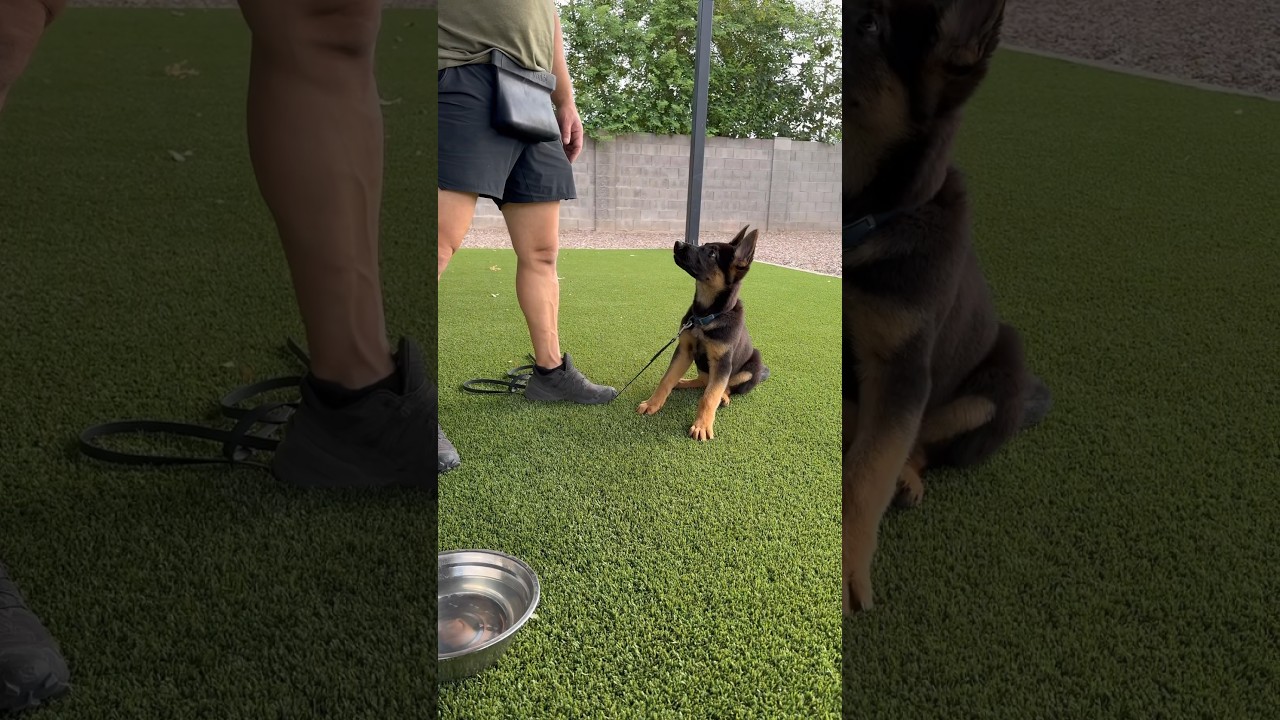
You ask your dog to sit. Their bottom touches the floor. You immediately provide a small treat.
Over repeated sessions, your dog learns that sitting when prompted can lead to something they value.
The important part is the timing and association between the behavior and its consequence.
Positive reinforcement isn’t simply “giving treats for everything.” Effective training involves deliberately reinforcing behaviors you want to see repeated.
Why Does Positive Reinforcement Work?
Animals constantly learn from the consequences of their behavior.
If a behavior consistently produces something desirable, the animal has a reason to repeat it. If a behavior doesn’t produce the expected result, it may become less frequent.
This is one reason training can be viewed as a communication process.
Rather than expecting your pet to understand human language automatically, you can create predictable associations between specific behaviors and consequences.
For example:
Behavior → reward → increased likelihood of repeating the behavior
This learning process can be applied to basic obedience, household manners, handling, tricks, recall, leash skills, and many other behaviors.
1. Discover What Your Pet Actually Values
Not every animal is motivated by the same reward.
Some dogs become extremely enthusiastic about tiny food treats. Others would rather chase a toy, play tug, sniff outside, or receive attention from their owner.
Cats may respond to treats, play with a wand toy, access to a preferred resting location, or another reward they find valuable.
Create a reward menu
Experiment with several options:
- Small treats
- Favorite toys
- Short play sessions
- Verbal praise
- Petting, if your animal enjoys it
- Access to sniffing or exploring
- Permission to perform a favorite activity
The best reward depends on the animal and the situation.
For example, a treat that works wonderfully at home may not be motivating enough when your dog is surrounded by exciting outdoor distractions.
2. Reward the Behavior Quickly
Timing is one of the most important parts of successful reinforcement training.
If you want to reward your dog for sitting but wait several seconds before delivering the reward, your dog may not understand exactly what earned it.
Try to deliver the reward immediately after the desired behavior occurs.
As your timing improves, your pet can more easily connect:
“I did this → something good happened.”
This doesn’t mean you need to be perfect. But the clearer the timing, the easier the learning process can become.
3. Start With Simple Behaviors
Training becomes much easier when you break complicated behaviors into manageable steps.
Suppose you want your dog to stay calmly on a bed.
Don’t immediately expect them to remain there for 30 minutes while guests walk around the house.
Start with something easier:
- Reward the dog for approaching the bed.
- Reward them for stepping onto it.
- Reward them for remaining there briefly.
- Gradually increase the duration.
- Add small distractions.
- Increase difficulty slowly.
This process is sometimes called shaping, where successive steps toward a desired behavior are reinforced.
4. Keep Training Sessions Short
Long training sessions can become frustrating for both pets and owners.
Instead of trying to teach everything in one sitting, use short sessions throughout the day.
For example, you might practice:
- Sit for a few repetitions
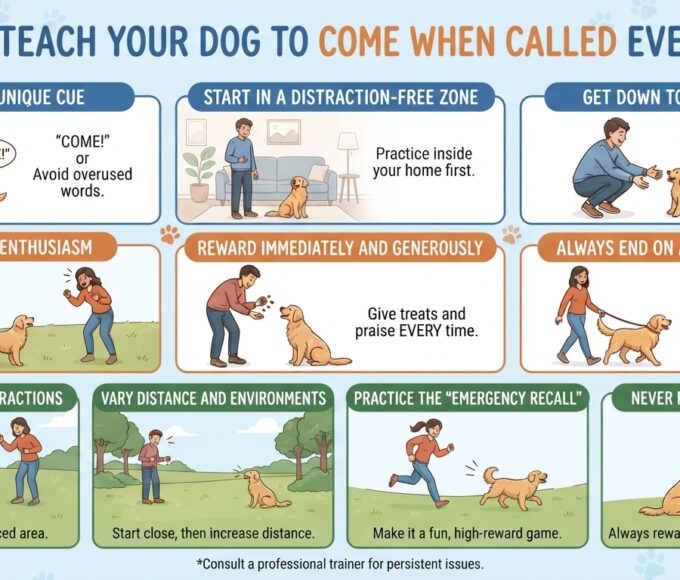
- Recall during a quiet moment
- Calmly waiting at a door
- Walking beside you
- Going to a mat
- Handling paws
- Looking toward you when called
Several short, successful sessions can be more productive than one long session in which your pet becomes tired or distracted.
5. Make the Environment Easier at First
One of the biggest mistakes owners make is increasing difficulty too quickly.
A dog that performs a behavior perfectly in the living room may struggle to do the same thing at a busy park.
That’s normal.
The environment has changed, and there are new distractions.
Begin training in a relatively quiet environment. Once your pet understands the behavior, gradually introduce more distractions.
You can increase difficulty by changing:
- Location
- Distance
- Duration
- Distractions
- People nearby
- Other animals nearby
Change one major factor at a time when possible.
6. Use a Marker to Improve Communication
A marker can help identify the exact moment your pet performs the behavior you want.
A clicker is one common option.
The basic process is:
Desired behavior → click → reward
Before using a clicker during training, the animal needs to learn that the click predicts something valuable.
A consistent verbal marker, such as a short word like “yes,” can also be used.
Why markers are useful
Imagine you’re teaching your dog to touch your hand with their nose.
The instant their nose touches your hand, you mark the behavior and then provide the reward.
The marker can make the timing more precise, especially when the desired behavior happens very quickly.
7. Don’t Repeat Commands Over and Over
If you say “sit, sit, sit, sit” while waiting for your dog to respond, your pet may learn that the cue doesn’t require an immediate response.
Instead, give the cue once when possible and then help your pet succeed.
If the behavior doesn’t happen, consider why.
Maybe:
- The behavior isn’t fully learned yet.
- The environment is too distracting.
- The reward isn’t motivating enough.
- Your pet is tired.
- The cue hasn’t been clearly taught.
- Your pet doesn’t understand what you’re asking.
Training problems often provide information about what needs to change.
8. Reinforce Good Behavior You Didn’t Ask For
Training doesn’t only happen during formal sessions.
Your pet may naturally perform behaviors that you want to encourage.
For example, your dog lies quietly while you’re working.
You can calmly reward that behavior.
Your puppy chooses to chew their toy instead of your furniture.
Reward the appropriate choice.
Your cat calmly enters their carrier.
That can be reinforced too.
This teaches your pet that desirable behaviors can produce good outcomes even when nobody has given a formal command.
9. Use Rewards Strategically
Treats can be extremely useful, but they aren’t the only form of reinforcement.
As a behavior becomes reliable, you can vary the rewards while continuing to reinforce the behavior.
For example, sometimes the reward might be:
- A treat
- A toy
- Praise
- A short game
- Access to the yard
- Permission to sniff
- Attention
This can help your pet learn that responding correctly remains worthwhile even when the exact reward varies.
However, don’t rush to eliminate rewards simply because you want your pet to “obey without treats.” Reinforcement is part of learning and maintaining behavior.
10. Avoid Turning Training Into a Bribe
There’s an important difference between reinforcing behavior and constantly showing a treat before asking for it.
If your dog only responds when they see a treat in your hand, they may learn to wait for the visible reward before performing the behavior.
Instead, work toward giving the cue first and delivering the reward afterward.
You can gradually keep treats less visible while continuing to reward successful responses.
Positive Reinforcement Doesn’t Mean Ignoring Unwanted Behavior
A common misconception is that positive reinforcement means allowing unwanted behavior to continue.
That’s not the goal.
Good training involves managing the environment, preventing opportunities for unwanted behavior, teaching alternative behaviors, and reinforcing appropriate choices.
For example, if your puppy constantly jumps on visitors, simply saying “don’t jump” isn’t enough.
You can instead:
- Manage the puppy’s access to visitors
- Teach a compatible behavior such as sitting
- Reward calm greetings
- Ask visitors not to reward jumping with attention
- Practice the behavior in controlled situations
The goal is to make the desired behavior easier to perform and more rewarding.
What About Punishment?
Punishment-based techniques can suppress some behaviors, but they can also create fear, stress, avoidance, or other unwanted associations depending on how they are used.
Physical punishment and intimidation can damage the relationship between an animal and their owner and may make some behavior problems more complicated.
A reward-based approach focuses on teaching the animal what you want them to do rather than relying on fear or pain to control behavior.
For serious aggression, severe anxiety, resource guarding, or other complex behavior problems, professional guidance is particularly important.
Training Different Types of Pets
Positive reinforcement isn’t limited to dogs.
Cats
Cats can learn behaviors such as:
- Coming when called
- Entering a carrier
- Sitting on a scale
- Target training
- Cooperating with handling
- Using scratching posts
Because cats can be highly individual in what motivates them, finding an appropriate reward is especially important.
Birds
Many companion birds can learn behaviors through carefully structured reinforcement. Training can help with handling, target behaviors, and cooperative care.
Rabbits
Rabbits can also learn behaviors using food rewards and other forms of positive reinforcement, including coming when called and using appropriate litter areas.
The specific training technique should always take the animal’s species, temperament, physical abilities, and welfare into account.
How to Train a New Behavior Step by Step
Let’s say you want to teach your dog to touch your hand with their nose.
Step 1: Present your hand
Hold your hand close enough that your dog is likely to investigate it.
Step 2: Wait for interaction
When your dog moves toward or touches your hand, mark the desired moment.
Step 3: Reward
Immediately provide a small reward.
Step 4: Repeat
Repeat several times until your dog begins deliberately touching your hand.
Step 5: Add a cue
Once the behavior is becoming predictable, introduce a verbal cue such as “touch.”
Step 6: Practice in different places
Gradually practice in different rooms and environments.
This example demonstrates an important training principle: teach the behavior before expecting the cue to control it reliably.
Common Positive Reinforcement Mistakes
Even well-intentioned owners can make training harder than it needs to be.
Rewarding too late
Delayed rewards can make it difficult for your pet to understand what earned them.
Making sessions too long
Fatigue and frustration can reduce learning quality.
Changing rules constantly
If jumping is allowed sometimes but punished at other times, your pet receives confusing information.
Increasing distractions too quickly
Mastering a behavior in a quiet home doesn’t automatically mean your pet can perform it in a crowded environment.
Using rewards that aren’t motivating
The reward needs to matter to the individual animal.
Expecting perfection
Learning takes repetition. Puppies, kittens, adult pets, and senior animals may all progress at different rates.
Training Is Also About Prevention
Some of the most effective training happens before a problem begins.
For example, puppy owners can proactively teach:
- Calm handling
- Appropriate chewing
- Polite greetings
- Leash skills
- Recall
- Settling on a mat
- Comfortable crate use
- Cooperative grooming
- Calm car travel
Teaching these skills early can make everyday life easier as your pet grows.
When Should You Get Professional Help?
Some training problems can be handled at home, but professional assistance is valuable when behavior becomes difficult or potentially dangerous.
Consider consulting a qualified, reward-based professional if your pet shows:
- Serious aggression
- Severe fear
- Persistent separation-related distress
- Resource guarding
- Dangerous chasing
- Repeated escape behavior
- Significant reactivity
- Behavior that suddenly changes
A sudden behavior change can sometimes have an underlying medical cause, so a veterinary examination may also be appropriate.
Frequently Asked Questions
How long does positive reinforcement training take?
There is no universal timeline. Some behaviors can be learned in a few sessions, while others require weeks or months of consistent practice. The animal’s age, temperament, previous experiences, environment, and complexity of the behavior all influence progress.
Can I use positive reinforcement without treats?
Yes. Food is only one possible reinforcer. Toys, play, attention, praise, access to preferred activities, and opportunities to explore can also be rewarding depending on the individual pet.
Should I reward my pet every time?
During early learning, frequent reinforcement can help establish a new behavior. As the behavior becomes reliable, you can vary the type and frequency of rewards while continuing to reinforce good performance.
Is clicker training necessary?
No. A clicker is simply a precise marker. A consistent verbal marker can also work. What matters most is clear timing and following the marker with an appropriate reward.
Can older pets learn new behaviors?
Yes. Older animals can learn new behaviors. Training may need to be adjusted for their physical abilities, previous experiences, hearing or vision changes, and health.
What should I do if my pet doesn’t respond to a command?
Don’t assume the animal is being stubborn. Consider whether the behavior has been properly taught, whether the environment is too distracting, whether the reward is motivating, or whether your pet is tired, frightened, uncomfortable, or confused.
Is positive reinforcement the same as giving treats all day?
No. Effective positive reinforcement is intentional. You identify a desirable behavior, provide an appropriate consequence, and gradually build reliable behavior through practice and repetition.
Final Thoughts
Training your pet is an ongoing process rather than a one-time lesson. Every interaction provides an opportunity to teach your animal what behaviors are useful, safe, and rewarding.
Positive reinforcement works by making desirable behaviors worth repeating. When you combine clear communication, good timing, appropriate rewards, short training sessions, and realistic expectations, training can become an enjoyable part of everyday life.
Most importantly, remember that your pet isn’t trying to make training difficult. If something isn’t working, look at the environment, the training step, the reward, and the animal’s individual needs.
Patience, consistency, and kindness can turn training from a frustrating chore into one of the best ways to strengthen the bond between you and your furry companion.







Leave a comment