



Training your pet is about much more than teaching commands such as “sit” or “stay.” Good training helps animals understand what you expect, gives them appropriate ways to behave, and can make everyday life safer and less stressful for everyone in the household.
Whether you are bringing home a young puppy or kitten, adopting an adult animal, or simply trying to improve your pet’s manners, training can be a rewarding part of building your relationship. The most effective approach usually combines patience, consistency, clear communication, and rewards for desirable behavior.
The good news is that you do not need to train for hours every day. Small, regular sessions and opportunities to reward good behavior throughout daily life can make a significant difference.
1. Start Training as Soon as Possible
Training can begin as soon as your pet arrives home.
Young animals are often eager to explore and learn, but that does not mean older pets cannot be trained. Adult and senior animals can also learn new behaviors when lessons are adapted to their abilities and experience.
Instead of trying to teach everything at once, begin with simple skills:
- Responding to their name
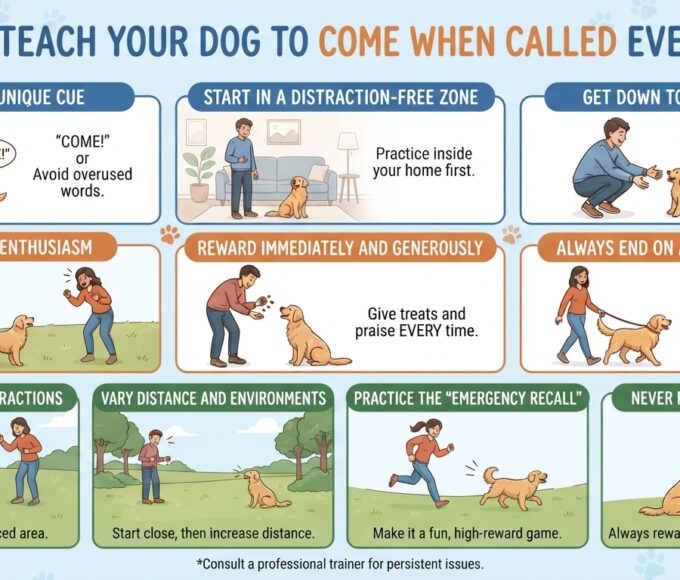
- Coming when called
- Sitting on cue
- Waiting briefly before receiving food
- Walking calmly on a leash
- Settling in a designated area
- Accepting gentle handling
- Going to an appropriate bathroom area
Early training also gives you an opportunity to establish household routines before unwanted habits become deeply practiced.
Keep expectations realistic
A puppy may only be able to concentrate for a short period. A newly adopted adult dog may need time to feel comfortable before responding consistently to training.
Learning is a process rather than a race.
2. Focus on Positive Reinforcement
Positive reinforcement is one of the most useful training techniques for companion animals.
The basic idea is simple: when your pet performs a behavior you want, provide something they value.
Depending on the individual animal, that reward might be:
- A small food treat
- Praise
- Petting
- A favorite toy
- A short play session
- Access to something they enjoy
For example, if your dog sits when you ask, immediately reward the behavior. Over repeated practice, the dog can begin to understand that sitting when asked leads to something enjoyable.
Timing matters
Rewards work best when they happen close to the desired behavior. If several seconds pass before the reward, your pet may not understand which action earned it.
You can also use a clicker or a consistent verbal marker to identify the exact moment your pet does something correctly.
3. Make Your Training Commands Clear
Pets do not automatically understand human language. They learn associations between sounds, gestures, situations, and consequences.
Choose simple cues and use them consistently.
For example, if you use “come” for recall, avoid constantly switching between:
- “Come here!”
- “Get over here!”
- “Come on!”
- “Over here!”
Your pet may eventually learn several phrases, but consistent cues make the learning process easier.
Keep your voice calm and avoid turning every training session into a loud or emotional interaction.
Teach one behavior at a time
If your pet is learning “down,” for example, focus on that skill before immediately adding several other commands.
Once a behavior is reliable, gradually practice it in different locations and situations.
4. Everyone in the Household Should Follow the Same Rules
Imagine one person allows a dog on the sofa while another person repeatedly tells the dog to stay off it.
From the dog’s perspective, the rules are confusing.
Household members should agree on basic expectations, including:
- Where the pet is allowed to sleep
- Whether furniture is allowed
- Where meals are served
- Which words are used for commands
- How jumping is handled
- Where the pet should go to relax
- What behavior earns rewards
Consistency does not mean every interaction has to be identical. It simply means your pet should not receive completely contradictory messages from different people.
5. Reward Good Behavior You See Naturally
Training does not have to happen only during formal sessions.
If your dog quietly lies on their bed while you work, reward the calm behavior.
If your cat uses their scratching post instead of the sofa, reinforce that choice.
If your puppy waits patiently instead of jumping when someone enters the room, acknowledge the behavior.
These moments are valuable because your pet learns that desirable behavior has benefits even when nobody has formally asked for a command.
Look for opportunities to reinforce:
- Calmness
- Appropriate chewing
- Quiet behavior
- Gentle greetings
- Relaxing around distractions
- Choosing appropriate toys
- Coming when called
- Sitting politely
- Using designated bathroom areas
Rewarding desirable behavior throughout the day can help make good manners part of your pet’s normal routine.
6. Keep Training Sessions Short and Frequent
Long training sessions can become frustrating for both you and your pet.
Instead, try several short sessions throughout the day.
For example:
Morning: Practice name recognition and recall.
Afternoon: Work on leash manners or a simple command.
Evening: Practice settling calmly or handling exercises.
Even a few minutes of focused practice can be productive when repeated consistently.
Stop while your pet is still engaged rather than continuing until they become exhausted or frustrated.
7. Use Rewards Strategically
Treats can be extremely helpful, but they should be used thoughtfully.
Choose small rewards so your pet does not consume excessive calories during training. You can also use part of your pet’s normal daily food allowance for training when appropriate.
Over time, you can gradually vary the rewards instead of giving a food treat every single time.
For example, once a behavior is well established, you might sometimes reward it with:
- Praise
- A toy
- Play
- A food reward
- Permission to explore
- Access to another favorite activity
The goal is to build reliable behavior rather than making your pet dependent on seeing a treat before responding.
8. Teach Your Pet What to Do Instead
Stopping unwanted behavior is often easier when you provide an acceptable alternative.
For example, if your dog jumps on visitors, simply pushing the dog away may not teach what you actually want.
Instead, teach a replacement behavior such as:
Four paws on the floor → calm greeting → reward.
If your dog grabs something inappropriate, teach “drop it” and offer an appropriate toy.
If your cat scratches furniture, provide an appealing scratching post nearby and reward its use.
The more clearly you show your pet what behavior will work, the easier it becomes to change habits.
9. Avoid Punishment-Based Training
Fear and physical punishment can create additional problems, including anxiety, avoidance, or defensive behavior.
Training is generally more productive when the animal understands which behavior earns a desirable outcome.
This does not mean ignoring dangerous behavior. If your pet is doing something unsafe, calmly interrupt the situation and manage the environment while teaching a safer alternative.
For serious aggression, biting, extreme fear, or other difficult behavior, professional assistance from a qualified trainer or veterinary behavior professional may be appropriate.
10. Practice in Different Environments
A dog that responds perfectly to “sit” in your quiet living room may struggle to respond at a busy park.
This happens because pets do not automatically generalize learned behaviors to every environment.
Once your pet understands a behavior in a quiet location, gradually add distractions.
You might progress from:
- Quiet room
- Different room
- Yard or hallway
- Quiet outdoor location
- More distracting environment
Increase difficulty gradually rather than expecting immediate perfection.
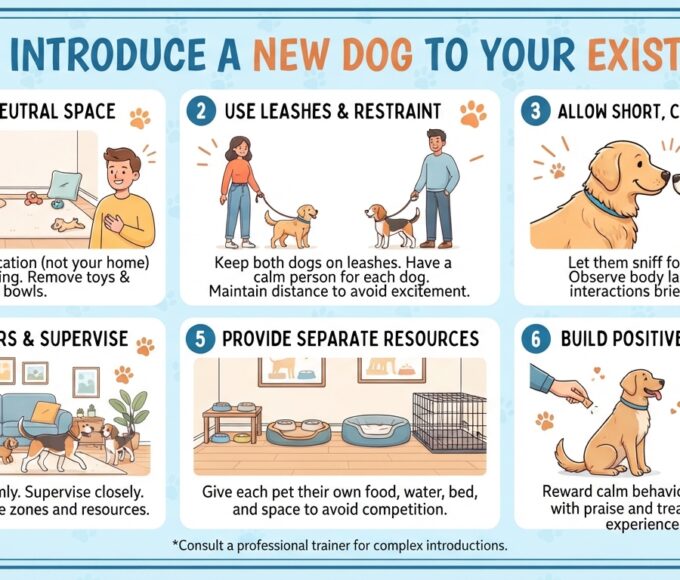
11. Socialization Is Part of Good Training
Socialization is not simply making your pet meet as many people and animals as possible.
Good socialization means helping your pet have safe, positive experiences with different sights, sounds, people, environments, surfaces, and situations.
For puppies and kittens, appropriate early experiences can be particularly valuable, but adult pets can also benefit from carefully managed exposure.
Watch your pet’s body language.
Signs that an animal may be overwhelmed can include:
- Hiding
- Freezing
- Excessive panting
- Repeated lip licking
- Avoiding eye contact
- Trying to escape
- Growling
- Excessive barking
- Tucked tail or tense posture
If your pet is uncomfortable, increase distance or reduce the intensity of the situation rather than forcing interaction.
12. Teach Handling Skills
Being comfortable with gentle handling can make veterinary visits and grooming much easier.
Gradually teach your pet to tolerate activities such as:
- Touching paws
- Looking inside the ears
- Examining the mouth
- Brushing
- Nail trimming
- Wearing a harness or collar
- Being gently restrained when necessary
Pair these experiences with rewards and keep sessions brief.
Never force an animal through severe fear when you can instead use gradual desensitization and professional guidance.
13. Manage the Environment While Training
Training is only one part of behavior management.
If your puppy repeatedly chews shoes, leaving shoes scattered around the house gives the puppy countless opportunities to practice the unwanted behavior.
Instead:
- Put tempting objects away
- Use baby gates where appropriate
- Provide safe chew toys
- Keep food out of reach
- Secure trash cans
- Create a comfortable resting area
- Supervise young or newly adopted pets
- Provide appropriate enrichment
Preventing mistakes while teaching better alternatives can make training considerably easier.
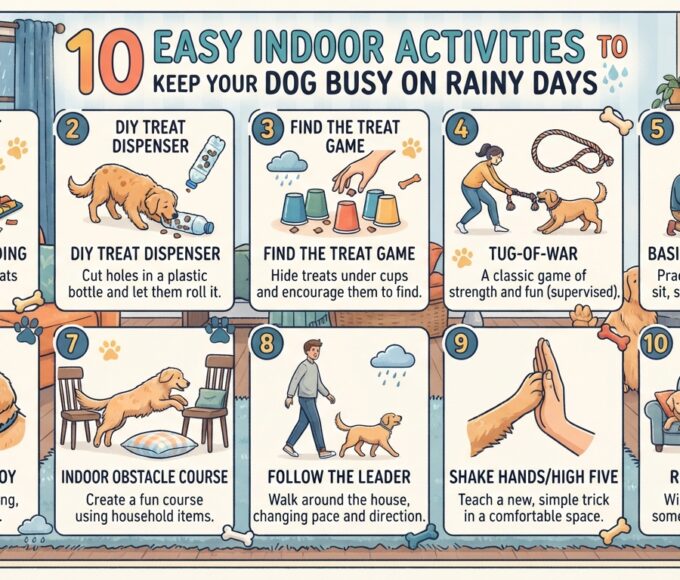
14. Give Your Pet Enough Mental and Physical Enrichment
Some behavior problems are made worse by boredom or insufficient stimulation.
Dogs may benefit from activities such as:
- Sniffing walks
- Puzzle feeders
- Training games
- Fetch
- Tug
- Food-search games
- Appropriate chewing
- Supervised exploration
Cats may enjoy:
- Wand toys
- Climbing structures
- Scratching posts
- Food puzzles
- Interactive play
- Safe places to observe their surroundings
The right amount of activity depends on the animal’s age, health, breed tendencies, temperament, and lifestyle.
More exercise is not automatically the answer to every behavior problem.
15. Be Patient With Setbacks
Training rarely follows a perfectly straight line.
Your pet may perform a behavior correctly several times and then struggle the next day.
Possible reasons include:
- Distractions
- Excitement
- Fear
- Fatigue
- Changes in environment
- Lack of practice
- Physical discomfort
- Confusing training signals
Instead of becoming frustrated, make the exercise easier and rebuild success.
If a behavior suddenly changes in an otherwise trained pet, consider whether pain, illness, anxiety, or another underlying issue could be contributing. A veterinarian can help investigate unexpected behavioral changes.
16. Know When to Ask for Professional Help
There is no shame in asking for assistance.
Professional guidance can be especially useful when dealing with:
- Aggression
- Severe fear
- Separation-related problems
- Resource guarding
- Persistent destructive behavior
- Serious leash reactivity
- Biting
- Complex household behavior problems
Look for professionals who use humane, evidence-informed methods and who can explain their approach clearly.
For significant behavior changes or suspected pain-related problems, veterinary evaluation may also be important.
A Simple Daily Training Routine
You can incorporate training into normal life without setting aside hours.
| Time | Training Opportunity |
|---|---|
| Morning | Name recognition, recall, or calm greetings |
| Mealtime | Waiting politely and basic cues |
| Walk | Leash manners and attention |
| Afternoon | Puzzle toy or short training session |
| Evening | Handling, settling, or trick training |
| Throughout the day | Reward naturally occurring good behavior |
The exact routine should be adjusted to your pet’s age, health, energy level, and individual needs.
Common Pet Training Mistakes to Avoid
Even well-intentioned owners can accidentally make training harder.
Changing commands frequently
Using different words for the same behavior can create confusion.
Training only when something goes wrong
Training should also happen when your pet is calm and successful.
Expecting instant results
Animals need repetition and practice to build reliable habits.
Overusing treats
Rewards are useful, but they should fit into an appropriate overall diet.
Making sessions too long
Short, successful sessions are often more productive than exhausting drills.
Ignoring the environment
Removing opportunities for unwanted behavior can be just as important as teaching new skills.
Getting frustrated
Anger can make training less productive and may damage your pet’s trust.
Frequently Asked Questions
How long does it take to train a pet?
There is no universal timeline. Some behaviors may be learned quickly, while others require weeks or months of consistent practice. Age, previous experiences, temperament, health, environment, and the complexity of the behavior can all affect progress.
Can an older dog or cat still be trained?
Absolutely. Older pets can learn new behaviors. Training may need to move at a slower pace if the animal has physical limitations, sensory changes, or established habits.
Should I use treats every time my pet obeys?
Treats can be very useful during learning. Once a behavior becomes reliable, you can gradually introduce other rewards and vary when food is provided.
What should I do if my pet ignores a command?
First, make sure your pet actually understands the behavior in that environment. Reduce distractions, make the task easier, and reward successful attempts. Avoid repeatedly saying the command louder and louder.
Why does my pet behave well at home but not outside?
The environment may be much more distracting. Practice the same behavior in gradually more challenging locations rather than assuming your pet has completely forgotten the training.
Is professional training worth considering?
Professional help can be valuable, particularly for complicated or potentially dangerous behavior. A qualified professional can identify contributing factors and create a training plan suited to your pet.
Final Thoughts
Mastering pet training is less about controlling your animal and more about developing clear communication and reliable habits.
Start with simple behaviors, reward the choices you want to see, keep training sessions manageable, and make expectations consistent throughout the household. Give your pet opportunities to succeed rather than waiting for mistakes before intervening.
Most importantly, remember that every animal learns at a different pace. Patience, repetition, appropriate enrichment, and a positive relationship can turn training from a frustrating chore into one of the most rewarding parts of life with your companion.
A well-trained pet is not a perfect pet. The goal is to help your animal understand how to navigate everyday life safely and confidently while strengthening the bond you share.






Leave a comment