




There is something remarkable about a dog that can handle rugged trails, cold weather, steep terrain, and demanding outdoor work.
Mountain dog breeds have been shaped by generations of purposeful breeding. Some were developed to guard livestock from predators, others to pull carts or sleds, and some became famous for helping people in difficult alpine environments. Their impressive physical abilities are often matched by distinctive personalities—from the independent nature of a Tibetan Mastiff to the affectionate temperament of a Newfoundland.
Many of these dogs have thick coats, strong bodies, excellent endurance, and a natural confidence that helps them cope with challenging environments. However, that doesn’t mean every mountain-associated breed is suitable for every owner.
Some require substantial exercise, while others are more independent and protective. Some shed heavily, and many large breeds can be expensive to feed and care for. Hot climates can also be challenging for heavily coated dogs, so owners need to consider temperature as carefully as terrain.
Here are 13 mountain dog breeds worth getting to know.
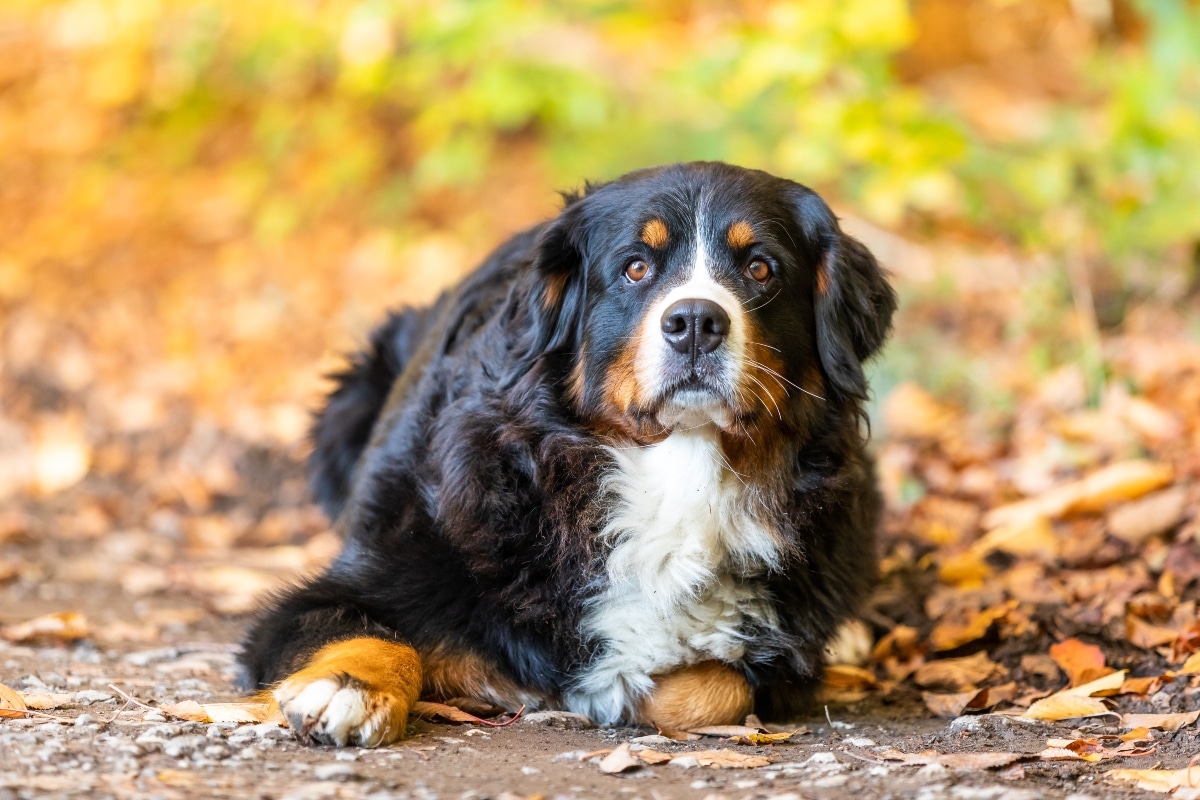
1. Bernese Mountain Dog
The Bernese Mountain Dog is one of the most recognizable Swiss mountain breeds.
Originally developed in Switzerland, these sturdy dogs helped farmers with a variety of jobs, including pulling carts, driving livestock, and general farm work. Their substantial build and thick double coat helped them work in cool alpine conditions.
Today, Bernese Mountain Dogs are often appreciated for their affectionate and family-oriented personalities.
What makes them suited to mountain life?
Their combination of strength, endurance, and a weather-resistant coat makes them well equipped for outdoor activities. They can enjoy hiking, walking, and other adventures when conditioned appropriately.
They also tend to form strong bonds with their families and generally prefer being involved in household life rather than spending all their time outside.
Things owners should know
Their long coat requires regular brushing, and shedding can be significant. Prospective owners should also research the breed’s health considerations and be prepared for the expenses associated with caring for a large dog.
2. Saint Bernard
The Saint Bernard is perhaps the breed most closely associated with mountain rescue.
The breed’s history is connected to the Great St Bernard Pass in the Swiss Alps, where dogs were used by monks and other workers at the hospice. They became famous for helping locate and assist travelers in dangerous alpine conditions.
Modern Saint Bernards are generally known as gentle, affectionate companion dogs rather than active rescue dogs.
A powerful but patient companion
Saint Bernards are large, strong dogs that can be remarkably calm around their families.
Their size alone, however, makes early training important. A poorly mannered adult Saint Bernard can be difficult to control simply because of its physical strength.
They may also drool considerably, and their coats require regular maintenance.
Mountain adventures?
A healthy adult Saint Bernard can enjoy outdoor walks and appropriate activities, but they aren’t necessarily the ideal choice for someone looking for a high-endurance hiking partner.
Their heavy build also means owners need to be particularly careful with heat.
3. Great Pyrenees
The Great Pyrenees was developed as a livestock guardian in the Pyrenees Mountains between France and Spain.
Rather than constantly herding animals, these dogs were expected to stay with livestock and deter predators. This history helps explain their combination of patience, independence, and strong protective instincts.
Natural guardians
A Great Pyrenees may be affectionate with its family while remaining cautious about unfamiliar people.
They can also be alert at night and may bark when they detect something unusual. This behavior can be useful on a farm but may become challenging in densely populated neighborhoods.
Coat and weather
Their thick double coat provides excellent insulation in cold conditions.
However, a heavy coat doesn’t mean a dog should be exposed to excessive heat. Great Pyrenees owners in warm climates should provide shade, water, ventilation, and exercise during cooler parts of the day.
4. Tibetan Mastiff
The Tibetan Mastiff is a powerful guardian breed associated with the Himalayan region and surrounding areas.
Historically, these dogs were used to protect livestock, property, and settlements. Their independent nature reflects the kind of work they were expected to perform.
Unlike breeds bred primarily to work closely with a handler, Tibetan Mastiffs can be highly self-directed.
Strong protective instincts
They can be deeply devoted to their families but may be reserved around strangers.
For this reason, early socialization and consistent training are particularly important.
Owners should also have secure fencing because a powerful guardian breed shouldn’t be allowed to roam freely.
A striking coat
Their thick coat gives them an unmistakable appearance and provides insulation in cold weather.
Regular grooming is necessary, particularly during periods of heavy shedding.
5. Newfoundland
The Newfoundland is famous for its swimming ability and lifesaving history, but this large Canadian working breed is also remarkably versatile.
Newfoundlands were developed to assist fishermen and perform demanding tasks in cold environments. Their strength, endurance, webbed feet, and water-resistant double coat contributed to their reputation as powerful working dogs.
The gentle giant
Despite their size, Newfoundlands are often affectionate and people-oriented.
They can enjoy outdoor adventures, particularly activities involving water, but responsible supervision is still essential.
Even an excellent canine swimmer can become exhausted, injured, or trapped in dangerous water.
Grooming requirements
Their dense coat needs regular brushing to reduce mats and manage shedding.
They also need plenty of fresh water and a comfortable place to rest after outdoor activity.
6. Leonberger
The Leonberger is a large German breed with an impressive mane, powerful frame, and graceful movement.
The breed was developed as a versatile working and companion dog. Its combination of strength, athleticism, and sociability makes it suitable for owners who want a large dog capable of participating in outdoor activities.
Active without being frantic
Leonbergers can enjoy hiking, walking, swimming, training, and other activities when introduced appropriately.
However, their exercise requirements should be tailored to the individual dog.
Young giant-breed dogs especially need carefully managed activity while their bodies are developing.
Coat care
Their long double coat needs consistent grooming.
Owners should expect regular shedding and should pay attention to areas where tangles can develop.
7. Kuvasz
The Kuvasz is a large Hungarian livestock guardian with a beautiful white coat and a strong independent streak.
Although Hungary is not usually the first place people associate with mountain dogs, Kuvaszok were used to protect livestock and were valued for their ability to work independently in demanding environments.
Independent by design
The Kuvasz wasn’t developed to wait for constant instructions from a handler.
That means training can require patience and consistency.
A well-socialized Kuvasz can be deeply loyal to its family, but owners should not expect the same easygoing stranger-friendly behavior found in some companion breeds.
A natural working dog
These dogs generally need more than occasional walks around the block. They benefit from purposeful activity, training, exploration, and an environment where their natural instincts can be managed appropriately.
8. Alaskan Malamute
The Alaskan Malamute is a powerful sled dog developed for hauling heavy loads over snowy terrain.
Strength and endurance are two of the breed’s defining characteristics.
Unlike racing sled dogs that are selected primarily for speed, Malamutes were historically valued for their ability to pull substantial loads over distance.
Built for hard work
A well-conditioned Malamute can be an excellent outdoor companion for an active owner.
Activities might include:
- Hiking
- Canicross
- Sledding
- Backpacking with appropriate preparation
- Obedience and training
- Other structured outdoor activities
However, they aren’t a good match for someone looking for a low-energy dog.
Training matters
Malamutes can be intelligent and affectionate but also independent.
Consistent training, secure containment, and plenty of appropriate enrichment are essential.
Their thick coat also makes hot weather a serious consideration.
9. Anatolian Shepherd
The Anatolian Shepherd is a powerful livestock guardian originating from Turkey.
These dogs were developed to protect flocks and make independent decisions in environments where predators could pose a serious threat.
That working background is reflected in their confidence and protective nature.
Not just a large pet
Anatolian Shepherds can be excellent working dogs, but their instincts can make them challenging for inexperienced owners.
They may be naturally suspicious of unfamiliar people and animals, making socialization and responsible management extremely important.
A secure property and clearly established boundaries are particularly useful for this breed.
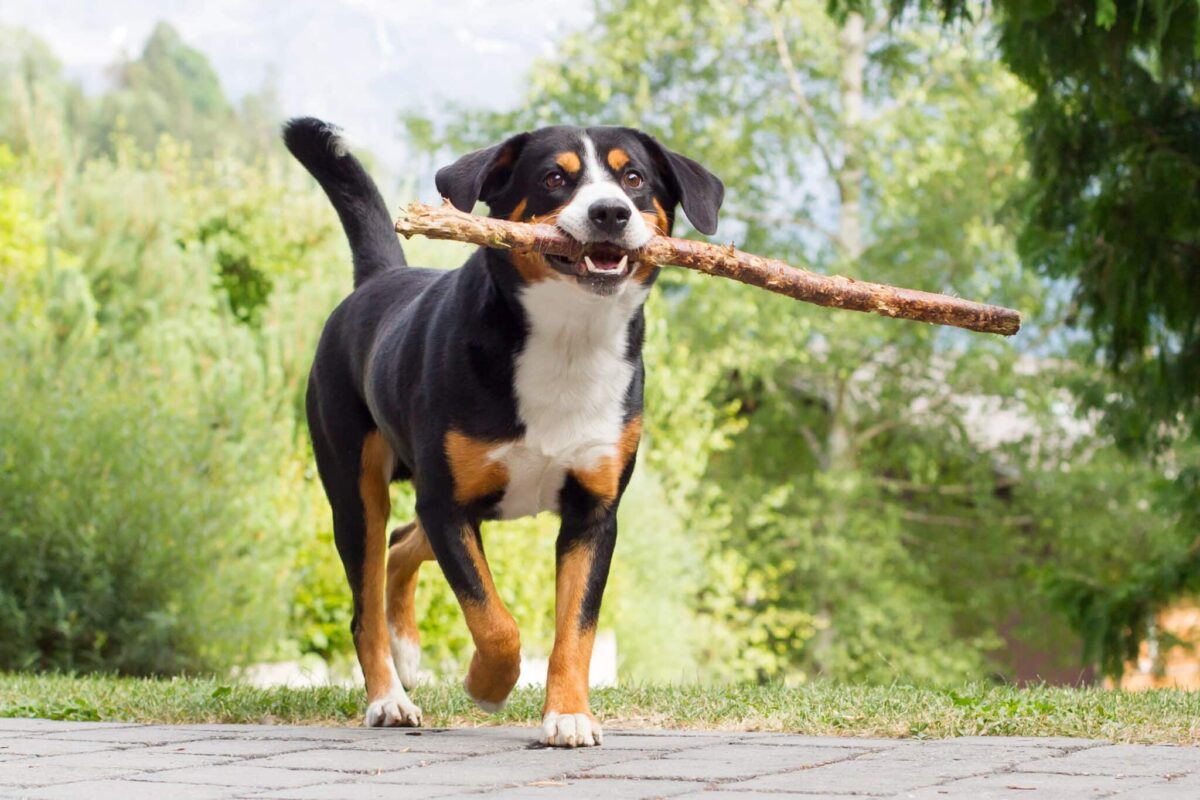
10. Entlebucher Mountain Dog
The Entlebucher Mountain Dog is the smallest of the four Swiss mountain dog breeds.
Don’t let its smaller stature fool you.
This compact, muscular dog was developed for demanding farm work, particularly cattle driving. It combines agility with considerable energy and determination.
An energetic mountain companion
Compared with some of the giant breeds on this list, the Entlebucher is easier to physically manage.
However, it can be much more energetic than someone might expect from a medium-sized dog.
They generally benefit from:
- Long walks
- Hiking
- Training
- Interactive games
- Scent activities
- Herding-style activities
- Regular mental stimulation
This is a breed for an active household rather than someone looking for a couch potato.
11. Greater Swiss Mountain Dog
The Greater Swiss Mountain Dog is one of the four Swiss Sennenhund breeds.
These large, sturdy dogs were historically used for farm work and draft duties, including pulling carts.
Their powerful bodies made them valuable working partners in agricultural communities.
Strong and steady
Greater Swiss Mountain Dogs can be affectionate and devoted to their families while retaining the confidence expected of a working breed.
They can enjoy hiking and other outdoor activities, but their exercise should be appropriate for their age and physical condition.
Training is important
Because of their size and strength, basic manners are more than a convenience.
Teaching loose-leash walking, calm greetings, recall, and reliable household behaviors can make everyday life much easier.
12. Appenzeller Sennenhund
The Appenzeller Sennenhund is another Swiss working breed.
Compared with the giant mountain breeds, the Appenzeller is smaller and considerably more athletic in appearance.
Historically, these dogs were used for livestock work, farm duties, and other tasks requiring agility and endurance.
A dog that likes to stay busy
Appenzellers tend to be energetic and alert.
They may thrive with owners who enjoy:
- Hiking
- Running
- Outdoor games
- Obedience training
- Dog sports
- Interactive enrichment
Simply providing a yard isn’t necessarily enough.
They need opportunities to use both their bodies and their minds.
13. Bernedoodle
The Bernedoodle is a cross between a Bernese Mountain Dog and a Poodle rather than a traditionally established purebred mountain breed.
It is included here because it combines characteristics from a classic Swiss mountain dog with the Poodle’s highly trainable and versatile background.
What can you expect?
Bernedoodles can vary substantially in size, coat, temperament, and energy level depending on their genetics.
Some may have a wavy or curly coat, while others can have different coat characteristics.
It’s also important not to assume that every Bernedoodle will be hypoallergenic. No dog is guaranteed to be completely allergen-free.
Outdoor potential
Many Bernedoodles enjoy walks, hikes, play, and family adventures.
However, individual dogs can differ considerably, so owners should evaluate the actual dog’s temperament and physical abilities rather than relying entirely on breed labels.
What Makes a Good Mountain Dog?
Being large and furry doesn’t automatically make a dog a mountain breed.
Many of the breeds traditionally associated with mountain environments share several characteristics developed for practical reasons.
1. Weather-resistant coats
Thick or weather-resistant coats can provide protection against cold, snow, wind, and wet conditions.
However, coat type doesn’t eliminate the risk of hypothermia or heat illness.
2. Physical strength
Working in mountainous terrain often requires a dog to move across uneven ground while performing physically demanding tasks.
Strong bodies and sturdy feet can therefore be valuable characteristics.
3. Endurance
Some mountain breeds were expected to travel considerable distances while guarding livestock, transporting goods, or performing other work.
4. Confidence
A livestock guardian may need to confront predators or investigate unfamiliar situations without waiting for constant human direction.
5. Independence
Many mountain working dogs were developed to make decisions without continuous supervision.
That can be useful on a farm but challenging for owners who expect an extremely obedient, handler-focused pet.
Are Mountain Dogs Good Hiking Companions?
Some are excellent hiking partners, but breed alone doesn’t determine whether a dog is ready for mountain trails.
Consider:
- The dog’s age
- Fitness level
- Breed characteristics
- Joint health
- Weather
- Trail difficulty
- Elevation
- Distance
- Access to water
- Paw condition
- Training and recall
A giant breed should not suddenly be taken on an extremely demanding hike simply because it was historically used for outdoor work.
Build endurance gradually.
Young dogs also require additional caution because their musculoskeletal systems are still developing.
Mountain Dogs and Hot Weather
One of the biggest misconceptions about these breeds is that a dog built for cold weather can simply tolerate any climate.
That’s not the case.
Dogs with heavy coats and large bodies can be vulnerable to overheating, especially during hot or humid weather.
If you live somewhere with very warm summers, plan outdoor activities carefully.
Practical hot-weather tips
- Walk during cooler hours.
- Carry water on longer outings.
- Provide shade during breaks.
- Avoid hot pavement.
- Watch for excessive panting or weakness.
- Don’t exercise intensely during extreme heat.
- Never leave a dog inside a parked vehicle.
- Seek veterinary help if heat illness is suspected.
This is especially important for large, heavily coated breeds.
What Should You Pack for a Mountain Dog Adventure?
If you’re taking your dog hiking or camping, preparation is essential.
A useful dog adventure kit can include:
- Fresh drinking water
- Collapsible water bowl
- Regular food
- Treats
- Leash
- Backup leash
- Identification tags
- First-aid supplies
- Waste bags
- Towel
- Paw protection if appropriate
- Tick-checking supplies
- Portable bed or blanket
- Reflective gear
- Emergency contact information
For remote trips, make sure someone knows your route and expected return time.
Mountain Dogs Need More Than a Beautiful Backyard
A common mistake is assuming that a large property automatically satisfies a working dog’s needs.
A yard provides space, but it doesn’t necessarily provide meaningful stimulation.
Many mountain breeds were developed to work for hours, make decisions, guard animals, pull loads, or travel across challenging landscapes.
They may therefore need:
- Training
- Scent games
- Structured walks
- Hiking
- Interactive toys
- Obedience work
- Appropriate dog sports
- Socialization
- Family interaction
A dog that is physically tired but mentally frustrated may still develop unwanted behaviors.
Choosing the Right Mountain Breed for Your Lifestyle
Before bringing one of these dogs home, consider the breed’s original purpose.
If you want a highly active hiking partner, an energetic working breed may be more suitable than a giant guardian breed.
If you’re looking for a calm family companion, a different breed may fit your household better.
If you live in a warm climate, heavy-coated breeds require particularly careful consideration.
And if you live in an apartment, don’t automatically assume that a smaller mountain breed will be easy. Energy level, barking, training needs, and exercise requirements matter just as much as physical size.
Frequently Asked Questions
What is the best mountain dog breed?
There isn’t one universally best mountain dog breed. Different breeds were developed for different jobs, and their exercise, temperament, grooming, and training requirements vary considerably.
Are mountain dogs good family pets?
Many can be wonderful family companions when appropriately trained and socialized. However, large size, guardian instincts, energy levels, and individual temperament should all be considered before choosing a breed.
Can mountain dogs live in warm climates?
Some can adapt, but heavily coated breeds may face greater heat-management challenges. Owners in hot climates need to provide shade, water, ventilation, and carefully timed exercise.
Are mountain dogs difficult to train?
It depends on the breed. Some are highly responsive to people, while others were intentionally bred to work independently. Consistent, reward-based training is useful across breeds.
Can I take a giant dog hiking?
A healthy adult dog of an appropriate breed can often enjoy hiking, but distance and intensity should be increased gradually. Veterinary advice can be particularly valuable for giant breeds or dogs with known orthopedic concerns.
Do all mountain dogs have thick coats?
No. Mountain-associated breeds have different coat types. Some have heavy double coats, while others have shorter or more moderate coats adapted to their historical work.
Final Thoughts
Mountain dogs represent some of the most impressive working breeds in the canine world.
From the powerful Alaskan Malamute pulling through snow to the Great Pyrenees standing watch over livestock, these dogs were shaped by environments where strength, endurance, confidence, and resilience mattered.
But their rugged appearance shouldn’t be the only reason to choose one.
A mountain dog can bring incredible companionship to the right household, but prospective owners should consider exercise, grooming, training, temperament, climate, space, health care, and long-term costs before making a commitment.
Whether you’re looking for a hiking companion, a working livestock guardian, or simply fascinated by these remarkable breeds, learning about their history and natural instincts is the first step toward understanding what makes them so special.
This Article Was Generated By AI.








Leave a comment