





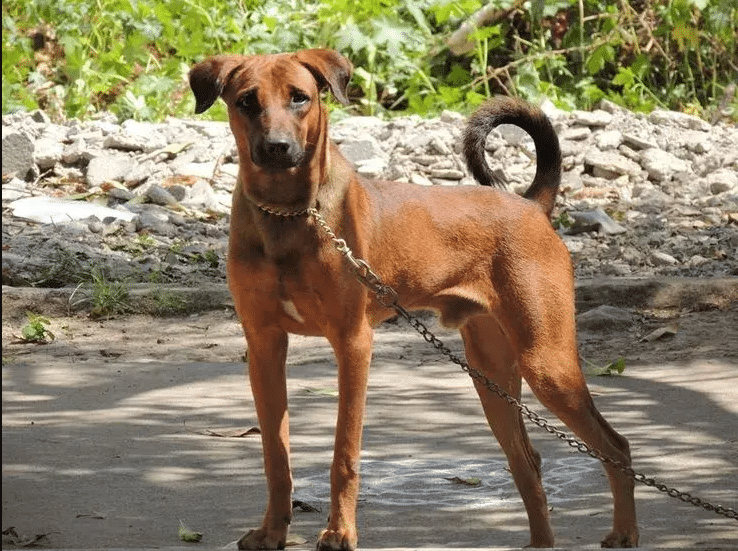
The Kombai dog is one of India’s distinctive native working dogs, known for its muscular build, courage, loyalty, and strong guarding instincts.
Native to Tamil Nadu in southern India, particularly the Theni region and the foothills of the Western Ghats, the Kombai has traditionally been associated with hunting, property protection, and rural life. Modern research describes it as a powerful, intelligent, territorial working dog with a strong bond to its owners.
The breed is sometimes called the Polygar Dog or Indian/Tamil Bear Hound, reflecting its long association with the history and working traditions of southern India.
Today, the Kombai remains relatively uncommon. Its story is therefore about more than an impressive dog—it is also about preserving a piece of India’s native canine heritage.
The Origins of the Kombai Dog
The Kombai is closely associated with the town of Kombai in Theni district, Tamil Nadu, and surrounding areas.
A 2024 study of the breed identifies its traditional breeding area around parts of Theni district, including Kombai, Uthamapalayam, Pannaipuram, Thevaram, Periyakulam, Bodinayakanur, Cumbum, and Kudalur. From this region, the dogs spread to other parts of southern India.
Much of the breed’s early history was preserved through local traditions rather than extensive written records. As a result, some stories about exactly how old the Kombai is or how it developed should be treated as historical tradition rather than established fact.
What is better documented is its long-standing role as a working dog in Tamil Nadu.
A Dog Bred for Work
The Kombai was not developed simply as a companion animal.
Its traditional roles included hunting and guarding, and its physical characteristics reflect those jobs. The breed is muscular, athletic, alert, and capable of moving quickly when necessary.
Historical accounts associate Kombais with hunting large game and with guarding estates and rural properties.
Their combination of courage and territorial behavior made them useful to communities that needed dogs capable of protecting people, livestock, and property.
A modern scientific study likewise describes the Kombai as powerful, courageous, protective, resilient, and territorial.
The Kombai and Tamil Nadu’s History
The Kombai’s reputation has become closely connected with stories about southern Indian rulers and warrior communities.
Some historical accounts associate the dogs with the Poligar or Palayakkarar traditions of Tamil Nadu. Stories also describe their use in warfare and their ability to attack or deter enemy horses.
There are also popular accounts linking Kombai dogs with the Marudhu brothers, who led resistance against British rule in the early 19th century.
These stories are an important part of the breed’s cultural image, but not every detail has been independently established by modern historical research.
That distinction matters because the Kombai is interesting enough without turning every traditional story into a proven fact.
What Does a Kombai Look Like?
The Kombai has a distinctive appearance that reflects its working background.
Typical characteristics include:
- A muscular, athletic body
- A relatively short coat
- Red, reddish-brown, or tan coloration
- A characteristic dark or black facial mask
- Strong jaws
- Alert eyes
- Medium-sized ears
- A powerful neck and chest
- An athletic build suited to active work
A 2023 phenotypic study of Kombai dogs in their traditional breeding area recorded light-brown to tan coats and found average adult heights of approximately 60 cm for males and 56 cm for females in the population studied.
Individual dogs can naturally vary, so appearance alone shouldn’t be used as the only way to determine whether a dog is a true Kombai.
The Kombai’s Personality
The Kombai is known for forming strong bonds with its familiar people.
Research describing the breed notes that Kombais can be obedient with their owners while remaining highly wary or aggressive toward unfamiliar people.
This combination can make the breed effective as a guard dog, but it also means that ownership requires responsibility.
A Kombai isn’t necessarily suited to someone looking for a dog that immediately welcomes every stranger.
Loyal to Its Family
Kombais can develop strong attachments to the people they know.
Their loyalty is one reason the breed has traditionally been valued as a guardian.
Naturally Alert
A Kombai is likely to pay close attention to unfamiliar people, animals, sounds, and activity around its territory.
Independent and Confident
Working dogs often need to make decisions in challenging environments. The Kombai’s independent nature can therefore be an advantage in its traditional role but may require patience during training.
Protective Instincts
Protection is deeply connected to the breed’s working background.
However, protective behavior should be managed through appropriate socialization and reward-based training rather than encouraging unnecessary aggression.
Training a Kombai Dog
Training is particularly important for a powerful, protective breed.
Early socialization can help a Kombai become familiar with different people, environments, sounds, handling experiences, and appropriate canine interactions.
Reward-based training can also help build cooperation without relying on intimidation.
Useful skills include:
- Name recognition
- Recall
- Loose-leash walking
- Sit and down
- Wait
- Leave it
- Drop it
- Calm behavior around visitors
- Appropriate responses around other animals
Because individual Kombais can have strong personalities, consistency is important.
Exercise and Mental Stimulation
A Kombai is a working-type dog, so simply providing food and a small space may not be enough.
Daily activity can include:
- Walks
- Supervised outdoor exercise
- Scent games
- Training sessions
- Structured play
- Food puzzles
- Recall practice
- Exploration in safe environments
The exact amount of activity should depend on the dog’s age, health, temperament, and lifestyle.
A young, healthy working dog generally needs more physical and mental engagement than an older dog.
Grooming the Kombai
One advantage of the Kombai’s short coat is that grooming is relatively straightforward.
Regular brushing can help remove loose hair and keep the coat clean.
Owners should also routinely check:
- Ears
- Teeth
- Nails
- Skin
- Paw pads
- Parasites
Bathing doesn’t need to happen excessively. A dog-specific shampoo can be used when a bath is actually needed.
Feeding a Kombai
Like any dog, a Kombai needs a nutritionally complete and balanced diet appropriate for its age, size, activity level, and health.
Working dogs can have significant energy requirements, but feeding too much can contribute to excess body weight.
A healthy body condition is particularly important for an active breed.
Fresh water should always be available, especially in hot weather or after exercise.
For puppies, pregnant dogs, older dogs, or dogs with medical conditions, feeding plans should be discussed with a veterinarian.
Is the Kombai a Good Family Dog?
That depends heavily on the individual dog and the owner’s experience.
A well-socialized Kombai can form a strong relationship with its family, but its guarding instincts and wariness of unfamiliar people should not be overlooked.
Potential owners should consider:
- Their experience with strong working breeds
- Whether they can provide consistent training
- Their ability to manage visitors
- The dog’s exercise needs
- Their living environment
- Their ability to provide secure fencing
- Whether there are other pets in the household
- Their willingness to socialize the dog responsibly
The breed’s protective nature can be an advantage for an experienced owner but may create challenges without appropriate management.
The Kombai’s Conservation Story
One of the biggest concerns surrounding the breed is preservation.
The Kombai is a native Tamil Nadu dog, but maintaining a healthy population can be challenging when breeding populations are limited.
A 2024 scientific paper specifically examined the characterization, conservation, and sustainable utilization of the Kombai, describing it as an important genetic resource of India.
Tamil Nadu’s animal husbandry authorities have also maintained programs involving native breeds. Government documents state that a dog breeding unit was established at Saidapet in Chennai to conserve and propagate native breeds including the Rajapalayam, Chippiparai, Kombai, and Kanni. More recent government policy material describes plans for a conservation center for native dog breeds.
These efforts highlight that preserving native breeds involves more than simply producing puppies.
It requires maintaining healthy breeding populations, documenting the breed, educating owners, and protecting genetic diversity.
Why Genetic Diversity Matters
When a rare breed has a small breeding population, simply producing more puppies isn’t enough.
Breeding programs also need to consider genetic diversity and avoid excessive reliance on a small number of closely related dogs.
Research on the Kombai has specifically examined its physical characteristics and breeding practices in its native region, helping create a more reliable record of the population.
Responsible breeding should therefore prioritize:
- Healthy breeding animals
- Accurate identification
- Genetic diversity
- Sound temperament
- Appropriate socialization
- Veterinary health screening
- Accurate record keeping
The Kombai in Modern India
Modern life has changed the roles that many traditional working dogs once performed.
Dogs that were once essential for hunting, guarding estates, or protecting livestock may now be kept primarily as companions or property guardians.
At the same time, native Indian breeds have received renewed attention from researchers, government programs, breeders, and dog enthusiasts.
The Kombai is part of that larger story.
Preserving it doesn’t mean keeping the breed frozen in the past. It means ensuring that future generations can still learn about, responsibly breed, and appreciate this distinctive native dog.
How People Can Support Native Dog Conservation
People interested in the Kombai can contribute to responsible preservation in several ways.
Learn About the Breed
Understanding the breed’s real history and working characteristics helps prevent myths from replacing accurate information.
Support Responsible Breeders
Anyone purchasing a Kombai should ask about the dog’s lineage, health, temperament, socialization, and breeding practices.
Consider Adoption
Where appropriate, adoption or rescue can provide a home for a dog that already needs one.
Don’t Breed for Appearance Alone
Preservation should focus on healthy, functional dogs rather than simply producing puppies that look impressive.
Support Research and Conservation
Scientific documentation and organized conservation programs can help protect native breeds for the long term.
The Kombai Is More Than a Guard Dog
It can be tempting to describe the Kombai only as a fierce guardian.
But its story is much broader.
It is a native working dog shaped by the environment, people, and traditions of southern India. Its physical strength helped it perform demanding jobs, while its loyalty and alert nature made it valuable to the communities that depended on it.
Today, its greatest challenge may not be protecting a fort or farm.
It may be ensuring that the breed itself continues to have a future.
Final Thoughts
The Kombai is a remarkable part of Tamil Nadu’s canine heritage.
Its muscular appearance, confidence, loyalty, and protective instincts reflect a long history as a working dog. At the same time, some of the most dramatic stories surrounding the breed come from oral traditions and historical accounts that should be distinguished from firmly documented facts.
What is clear is that the Kombai remains an important native dog worthy of study and responsible preservation.
Protecting this breed isn’t simply about saving a rare dog.
It’s also about preserving a living connection to India’s rich history of native working dogs.









Leave a comment