


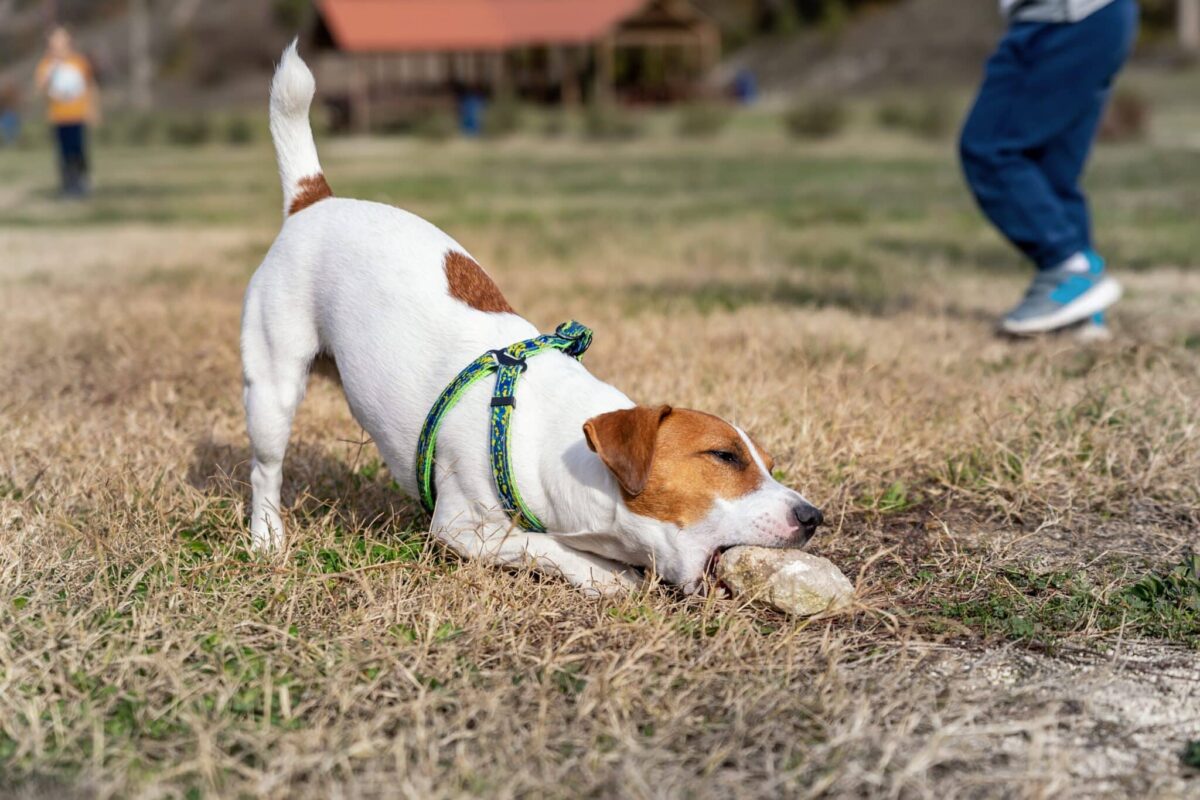
Finding your dog chewing on a rock, swallowing dirt, or trying to eat a sock can be both confusing and frightening.
Dogs naturally investigate their surroundings with their mouths, especially when they’re young. But repeatedly eating objects that aren’t food is different. This behavior is commonly referred to as pica, which describes persistent ingestion of non-food items such as rocks, fabric, plastic, sticks, paper, or other objects.
Pica can have several possible causes. Sometimes it is connected to normal exploratory behavior, boredom, or scavenging. In other cases, anxiety, nutritional problems, gastrointestinal disease, or another medical condition may be involved.
Most importantly, eating non-food objects isn’t harmless simply because a dog seems fine afterward. Rocks and other indigestible materials can cause choking, broken teeth, intestinal obstruction, or damage to the digestive tract.
Here are some possible reasons dogs eat rocks and other strange things—and what owners should know.
1. Puppies Explore the World With Their Mouths
Puppies are naturally curious.
They investigate unfamiliar objects by sniffing, licking, chewing, and sometimes swallowing them. This exploratory behavior can include rocks, sticks, leaves, paper, and household objects.
Teething can also make puppies particularly interested in chewing.
However, normal puppy exploration doesn’t mean every object is safe. A rock can damage developing or adult teeth, become lodged in the digestive tract, or create an obstruction.
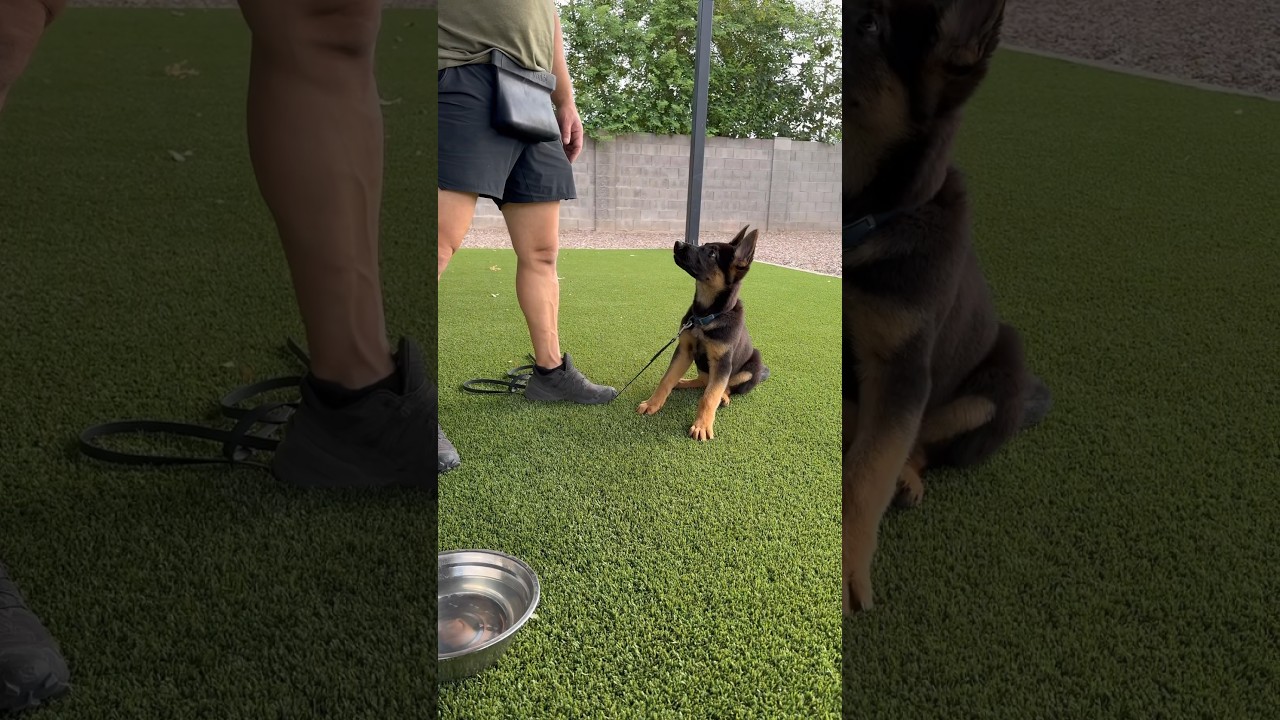
If your puppy repeatedly tries to pick up dangerous objects, management and early training are important.
Useful cues such as “leave it” and “drop it” can eventually help your dog make safer choices. Positive reinforcement is generally preferred over punishment.
2. Boredom May Encourage Unusual Chewing
A dog that doesn’t receive enough physical activity or mental stimulation may find its own entertainment.
Unfortunately, the entertainment it chooses may be something you would rather keep out of its mouth.
Rocks, sticks, mulch, cardboard, clothing, and other objects can become interesting simply because they’re available.
Providing appropriate outlets can help:
- Sniffing walks
- Food puzzles
- Training sessions
- Safe chew toys
- Interactive games
- Fetch
- Scent games
- Supervised exploration
Food puzzles and other forms of enrichment can provide dogs with opportunities to work for food and stay mentally engaged.
3. Anxiety or Frustration Can Play a Role
Stress can sometimes contribute to repetitive or unusual behaviors.
A dog experiencing anxiety or frustration may develop habits such as chewing, licking, or ingesting inappropriate objects. Changes in the household, separation from an owner, confinement, or other stressful situations can influence behavior.
Pay attention to when the behavior happens.
Does your dog eat rocks primarily:
- When left alone?
- During stressful situations?
- When visitors arrive?
- After a major household change?
- When confined?
- When bored?
The pattern can provide useful information for your veterinarian or behavior professional.
Don’t assume that calming supplements are the answer. If anxiety appears to be driving the behavior, the underlying problem should be assessed rather than simply masking the symptoms.
4. An Underlying Medical Problem Could Be Involved
Persistent pica isn’t always behavioral.
Veterinary sources list several medical conditions that can contribute to abnormal ingestion, including gastrointestinal disorders, anemia, nutritional insufficiency, diabetes, certain endocrine diseases, and other health problems.
This is one reason persistent or newly developed pica shouldn’t simply be dismissed as a quirky habit.
A veterinarian may consider your dog’s:
- Diet
- Appetite
- Weight
- Digestive health
- Bloodwork
- Medication history
- Other symptoms
- Frequency and type of objects being eaten
Treating an underlying medical problem may reduce the abnormal eating behavior.
5. Nutritional Problems May Contribute
Nutritional deficiency is sometimes mentioned as a reason dogs eat non-food objects, and it can be relevant in certain cases.
However, it’s too simplistic to assume that a dog eating rocks automatically needs more minerals.
Dogs fed an appropriate complete and balanced diet generally shouldn’t need to obtain essential nutrients from rocks or dirt.
Nutritional insufficiency can nevertheless occur because of inadequate feeding, starvation, an improperly formulated diet, or certain medical conditions. Veterinary evaluation is the best way to determine whether nutrition is actually contributing.
Don’t start adding mineral or vitamin supplements simply because your dog eats rocks.
Too much of some nutrients can also cause health problems.
6. Scavenging Can Turn Into a Learned Habit
Some dogs are enthusiastic scavengers.
They investigate anything that smells interesting, and if grabbing an object results in a rewarding experience, the behavior may become more likely to happen again.
For example, a dog may discover that picking up objects leads to a chase with its owner.
From the dog’s perspective, the game itself can become rewarding.
That’s why repeatedly chasing your dog around the yard for a stolen rock may accidentally make the behavior more exciting.
Instead, teaching “drop it” and rewarding the dog for releasing the object can create a safer alternative.
7. Attention From Humans Can Reinforce the Behavior
Dogs quickly learn which behaviors produce reactions from their owners.
If picking up a rock immediately causes everyone to shout, run over, or chase the dog, the interaction itself may become rewarding for some dogs.
That doesn’t mean the dog is deliberately trying to annoy you.
It means the behavior may have been unintentionally reinforced.
Rather than making dangerous object-stealing into a dramatic game, calmly redirect your dog toward an appropriate toy or behavior and reward cooperation.
At the same time, physically prevent access to rocks whenever possible.
8. Some Dogs Develop Compulsive Eating Behaviors
In some dogs, repetitive ingestion of non-food objects can be part of a compulsive behavior pattern.
Veterinary behavior sources describe compulsive disorders as repetitive behaviors that occur frequently enough to interfere with normal life. Ingesting non-food objects can be one manifestation.
A compulsive disorder should not be diagnosed simply because a dog eats a rock once.
Veterinarians generally need to rule out medical causes first because physical health problems can produce behaviors that look compulsive.
If the behavior is persistent, difficult to interrupt, or becoming increasingly frequent, veterinary and behavioral guidance can help.
9. Hunger or Increased Appetite May Be Part of the Picture
Some dogs become unusually focused on finding and consuming anything that resembles food.
Increased appetite can occur for several reasons, including inadequate calorie intake and certain medical conditions. Some medications can also increase appetite.
If your dog suddenly seems hungry all the time and starts eating unusual objects, don’t assume they’re simply being greedy.
Watch for other changes such as:
- Weight loss
- Increased thirst
- Increased urination
- Digestive problems
- Changes in energy
- Increased begging or food-seeking
- Vomiting or diarrhea
A veterinarian can determine whether the change in appetite needs investigation.
10. The Object Itself May Simply Be Interesting
Not every strange object has a complicated explanation.
Dogs explore through smell, taste, and texture. A particular rock may have an interesting scent. A stick may have been exposed to another animal’s scent. A piece of fabric may smell strongly like a family member.
Curiosity can therefore be enough to explain occasional investigation of unusual objects.
The problem begins when your dog repeatedly swallows these materials.
Exploration is one thing.
Persistent ingestion is another.
Why Is Eating Rocks So Dangerous?
Rocks are especially concerning because they don’t break down like normal food.
A swallowed rock can potentially:
- Become lodged in the throat
- Cause choking
- Break or damage teeth
- Become stuck in the stomach
- Cause an intestinal obstruction
- Injure the digestive tract
- Contribute to vomiting, pain, or loss of appetite
Foreign-body obstruction can become a potentially life-threatening emergency, and some cases require surgery.
Sharp or irregular objects can be particularly dangerous because they may damage the intestinal wall.
That’s why preventing access is much safer than waiting to see whether a swallowed object passes naturally.
What Should You Do If Your Dog Swallows a Rock?
If you know or strongly suspect that your dog swallowed a rock, contact your veterinarian for advice rather than simply waiting for symptoms.
The appropriate response depends on the object’s size, shape, location, the dog’s size and health, and how long ago it was swallowed.
Watch carefully for warning signs such as:
- Repeated vomiting
- Loss of appetite
- Lethargy or weakness
- Abdominal pain
- Difficulty passing stool
- Diarrhea
- Regurgitation
- A swollen or painful abdomen
- Significant changes in behavior
These signs can occur with gastrointestinal obstruction and require prompt veterinary attention.
Do not try to make your dog vomit unless a veterinarian specifically instructs you to do so. Some objects can cause more damage when brought back up.
How Can You Stop Your Dog From Eating Rocks?
The best approach usually combines management, training, enrichment, and veterinary evaluation when necessary.
Remove Access to Rocks
If your dog eats rocks in the yard, make the area safer by removing loose stones where practical.
Supervise your dog outdoors until the behavior is under control.
Teach “Leave It”
Reward your dog for ignoring an object rather than waiting until they have already picked it up.
Start with safe, low-value objects and gradually increase difficulty.
Teach “Drop It”
Practice trading an appropriate toy for a high-value reward.
The goal is to teach your dog that releasing an object results in something positive.
Provide Safe Chewing Alternatives
Offer appropriate chew toys that match your dog’s size and chewing style.
Rotate toys to keep them interesting.
Increase Mental Enrichment
Food puzzles, scent games, training, and supervised exploration can provide alternatives to scavenging.
Avoid Punishment
Punishment can increase anxiety and may make some behavior problems worse. Reward-based training provides a clearer alternative behavior for the dog to perform.
Keep Track of Patterns
Write down when the behavior occurs.
You may discover that your dog is most likely to eat objects during certain situations, such as boredom, stressful events, outdoor walks, or when left alone.
That information can be extremely useful when discussing the behavior with a veterinarian.
When Should You Contact a Veterinarian?
A veterinary evaluation is particularly important when:
- Your dog repeatedly eats non-food objects.
- The behavior suddenly appears in an adult dog.
- Your dog has swallowed a rock or another potentially dangerous object.
- Your dog is vomiting or refusing food.
- Your dog seems painful or unusually tired.
- Your dog has lost weight.
- Your dog has unusual thirst or urination.
- The behavior is becoming more frequent.
- You suspect anxiety or compulsive behavior.
- Your dog has another medical condition.
Persistent pica warrants investigation because medical and behavioral causes can overlap.
Final Thoughts
Dogs can eat rocks and other non-food objects for many different reasons.
Puppy exploration, scavenging, boredom, anxiety, attention-seeking, increased appetite, medical conditions, nutritional problems, and compulsive behaviors can all potentially play a role.
The important thing is not to assume that every dog eating rocks is simply being mischievous—or that every case is caused by a nutritional deficiency.
If your dog repeatedly consumes non-food objects, take the behavior seriously.
Prevent access to dangerous items, provide safe alternatives, use positive training, and speak with your veterinarian when the behavior is persistent or accompanied by other symptoms.
A strange eating habit may turn out to be nothing more than curiosity, but it can also be a sign that your dog needs medical or behavioral support. Acting early can help keep a puzzling habit from becoming a dangerous one.







Leave a comment